

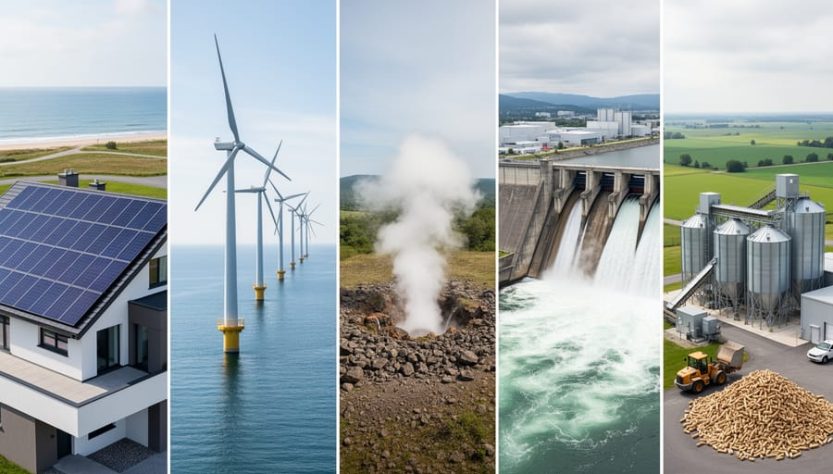
The Department of Energy’s fiscal 2026 appropriations package, signed into law in January, preserved federal funding for all five major renewable energy resources but at strategically reduced levels that signal a shift in clean energy priorities. Solar, wind, geothermal, hydropower, and bioenergy programs under the DOE’s Office of Energy Efficiency and Renewable Energy (EERE) will receive $3.1 billion in total appropriations, though net new budget authority stands at approximately $1.95 billion after transfers from the 2021 Infrastructure Investment and Jobs Act. The cuts reveal a nuanced landscape: wind energy faces the steepest reduction at 27%, while solar experiences a modest 3% decrease, and most other EERE offices see cuts limited to 15% or less.
This recalibration comes as President Biden’s broader clean energy plan positions the United States to invest more than half a trillion dollars in climate action over the coming years, creating a paradox of ambition meeting fiscal constraint. Understanding how these budget shifts affect each renewable technology is essential for professionals navigating project development, policy advocacy, and investment decisions in 2026. The appropriations law avoided eliminating critical programs such as weatherization assistance, demonstrating congressional commitment to maintaining the renewable energy infrastructure even as funding levels face pressure.
The following analysis examines what changed in the 2026 budget, how each of the five renewable resources will be affected, and what industry stakeholders should monitor as implementation proceeds throughout the year.
What Changed: The 2026 Federal Spending Package
On January 23, 2026, President Biden signed the fiscal 2026 minibus package (H.R.6938) into law, marking a pivotal moment for federal renewable energy funding. The legislation preserved many Department of Energy programs that faced elimination in earlier budget proposals, though most survived with reduced appropriations. Critical initiatives like weatherization assistance weathered the budget negotiations intact, signaling continued federal commitment to energy efficiency and clean power despite fiscal pressures.
The Office of Energy Efficiency and Renewable Energy (EERE) received $3.1 billion in total funding under the new law. However, the financial picture is more nuanced than the top-line number suggests. After accounting for transfers of balances from the 2021 Infrastructure Investment and Jobs Act (IIJA), the EERE FY2026 funding level includes approximately $1.95 billion in net new appropriated budget authority, the actual fresh funding available for ongoing and new initiatives.
Most offices within EERE face cuts of 15% or less compared to the previous year’s levels, a relatively modest reduction given the broader fiscal environment. These cuts vary significantly by technology area, with some renewable resources experiencing deeper reductions than others. The funding structure reflects a strategic balancing act: maintaining the core infrastructure of Biden’s clean energy agenda while responding to budgetary constraints. The preservation of program continuity, rather than wholesale elimination, allows research and deployment efforts to continue across all five major renewable energy resources, even as agencies adjust to tighter operating budgets.
Key Developments Across Five Renewable Energy Resources
1. Solar Energy: Navigating a 3% Funding Reduction
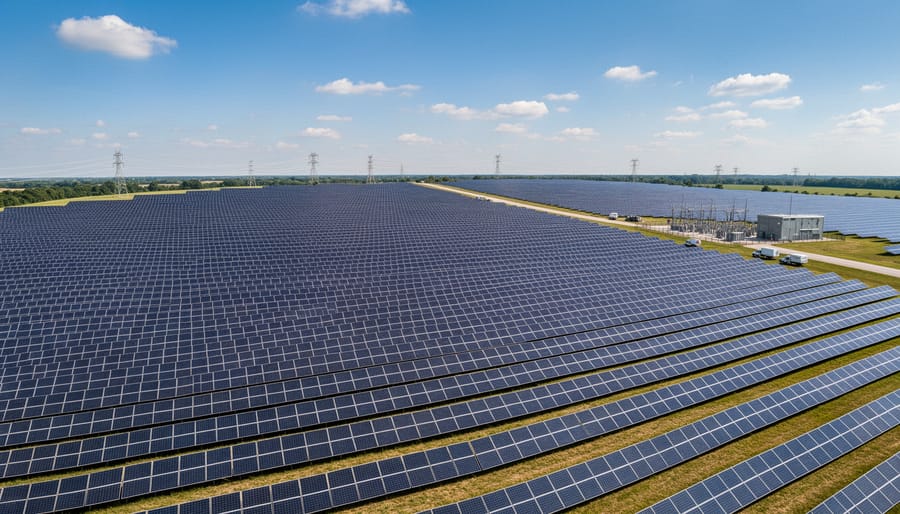
The fiscal 2026 appropriations package delivered a relatively modest setback for solar energy, with the solar office budget declining 3% from the previous year’s levels. While any reduction challenges program administrators, this cut ranks among the smallest across the Office of Energy Efficiency and Renewable Energy (EERE), signaling continued federal confidence in photovoltaic technology as a pillar of the clean energy transition.
The reduction primarily affects research budgets rather than deployment incentives already locked into multi-year commitments under the Infrastructure Investment and Jobs Act. Solar remains the most mature and cost-competitive renewable technology, which insulates it from severe disruption when budgets tighten. Most ongoing initiatives, from advanced perovskite cell research to grid integration studies, will proceed at slightly reduced scale rather than face termination.
This resilience stems partly from solar’s diversified funding streams. Tax credits, state programs, and private capital continue to drive deployment at record pace, independent of direct federal research spending. The technology’s proven track record and declining costs make it attractive to investors even when federal R&D support contracts. Both utility-scale projects and distributed generation, including off-grid solar applications, benefit from established supply chains and competitive economics that no longer depend on heavy subsidization.
Biden’s broader half-trillion-dollar clean energy investment plan positions solar as a cornerstone technology precisely because it requires less per-watt support than emerging alternatives. The 3% cut reflects fiscal constraint, not strategic abandonment. Program managers will prioritize high-impact research areas, such as grid flexibility and energy storage integration, where federal dollars unlock the greatest private leverage, ensuring solar maintains its trajectory as the fastest-growing electricity source in the American portfolio.
2. Wind Energy: Addressing a 27% Budget Cut
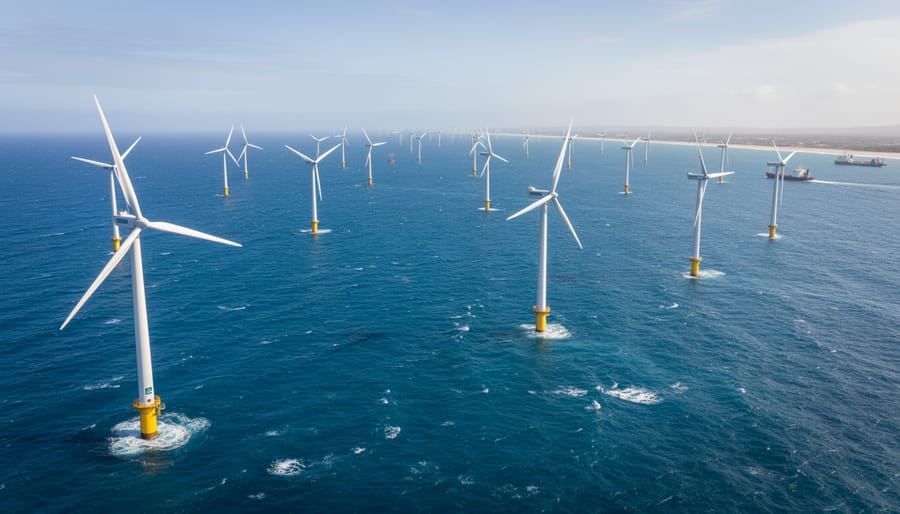
The wind sector faces the sharpest budgetary challenge among the five major renewable resources in 2026, with a 27% reduction in funding for the Department of Energy’s wind office. This cut stands in stark contrast to the more modest 3% decrease in solar funding and the 15% or less reductions across most other EERE offices. The magnitude of this reduction signals a significant shift in near-term federal priorities, even as wind energy remains essential to achieving Biden’s clean energy targets.
The offshore wind sector likely bears the most concentrated impact from this funding pullback. Offshore programs demand substantial research investment for advancing turbine technology capable of withstanding marine environments, developing specialized installation vessels, and addressing grid interconnection challenges unique to ocean-based generation. Research and development initiatives exploring floating turbine platforms, critical for deploying wind farms in deeper waters where fixed-bottom structures aren’t viable, may experience slower progress under constrained budgets. These floating systems represent the frontier of wind technology and require sustained federal support to reach commercial viability.
Onshore wind research faces similar headwinds, though the mature nature of land-based turbine technology provides some buffer against funding reductions. Programs focused on improving blade aerodynamics, enhancing turbine efficiency in low-wind conditions, and extending the operational lifespan of aging wind farms must now compete for a smaller pool of federal dollars. The industry’s understanding of how wind works continues to advance through private sector innovation, yet federal research remains vital for breakthrough improvements that individual companies cannot pursue alone.
The wind industry is adapting to this fiscal reality by leveraging state-level incentives, private capital markets, and strategic partnerships that reduce reliance on federal research grants. Many developers are accelerating projects already in advanced planning stages to capitalize on existing tax credits and locked-in financing before potential future policy shifts.
3. Geothermal Energy: Steady Support for Baseload Power
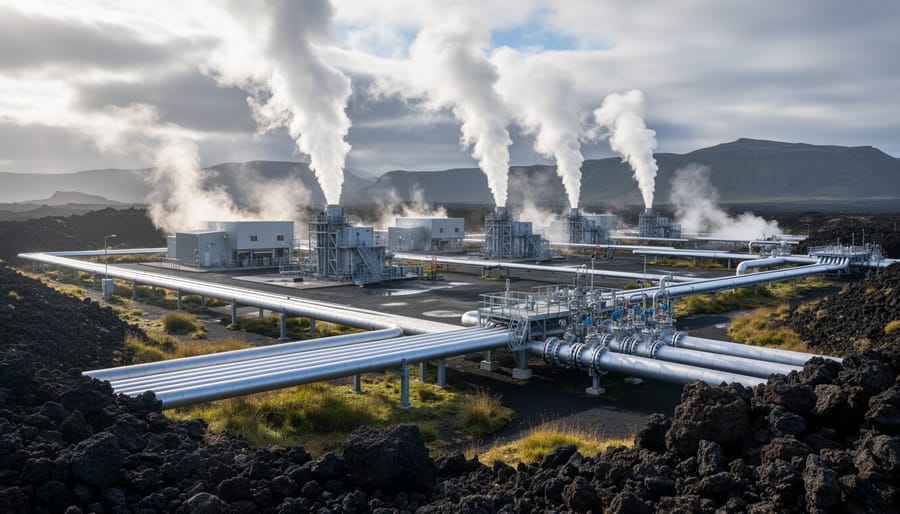
Geothermal energy emerged from the 2026 budget process in comparatively favorable position, experiencing cuts within the 15% range that most EERE offices absorbed, significantly better than the 27% reduction that hit wind programs. This relative stability reflects federal recognition of geothermal’s unique value proposition: it provides continuous baseload power regardless of weather conditions or time of day, filling a critical gap that intermittent renewables like solar and wind cannot address alone.
Unlike wind and solar installations that produce electricity only when environmental conditions align, geothermal facilities tap heat from beneath the Earth’s surface to generate power 24 hours daily. This reliability makes geothermal particularly valuable for grid stability as utilities phase out fossil fuel baseload plants. The technology requires no fuel, produces minimal emissions, and occupies a small physical footprint compared to solar farms or wind arrays.
Recent advances in enhanced geothermal systems (EGS) have dramatically expanded the technology’s potential reach. Traditional geothermal required naturally occurring underground reservoirs of steam or hot water, limiting development to volcanic regions and geological hotspots. EGS technology creates artificial reservoirs by fracturing hot rock formations and circulating fluid through them, effectively turning any location with adequate subsurface heat into a potential geothermal resource. This breakthrough has opened vast swaths of the United States to geothermal development, particularly in western states.
The 2026 funding, while reduced from previous levels, sustains critical research into drilling techniques, reservoir characterization, and heat extraction efficiency, the engineering challenges that will determine whether EGS can scale from demonstration projects to commercial deployment. Federal support for geothermal remains essential because the technology’s high upfront drilling costs and geological uncertainties require sustained investment that private capital alone won’t shoulder.
4. Hydropower: Modernization and Environmental Balance
Hydropower occupies a unique position in Biden’s renewable energy portfolio as the nation’s largest source of clean electricity and a technology mature enough to provide grid stability while newer resources scale up. Unlike solar and wind, which faced modest to steep budget cuts in the 2026 spending package, hydropower modernization programs maintained relatively stable funding within EERE’s constrained budget. Most offices saw reductions of 15% or less, allowing critical infrastructure upgrades to proceed even as wind funding dropped 27% and solar declined 3%.
The strategic focus for hydropower in 2026 centers on upgrading the nation’s aging fleet of dams rather than building new facilities. Federal funding targets turbine efficiency improvements, digital control systems, and environmental mitigation technologies that allow existing plants to generate more power with less ecological disruption. This approach reflects the reality that most viable dam sites already have infrastructure in place, making modernization more cost-effective and environmentally acceptable than greenfield development.
Environmental balance remains the defining challenge for expanding hydropower renewable capacity. Fish passage systems now receive substantial attention in federal funding allocations, with advanced bypass channels, fish-friendly turbines, and seasonal flow management protocols designed to protect salmon, sturgeon, and other migratory species. These environmental retrofits add cost but prove essential for maintaining hydropower’s social license, particularly in the Pacific Northwest where Indigenous communities and environmental advocates have long contested dam operations.
The 2026 budget signals that hydropower’s role is less about dramatic expansion and more about optimizing what exists while minimizing harm to river ecosystems that support both wildlife and human communities dependent on healthy watersheds.
5. Bioenergy: Sustainable Fuels and Agricultural Integration
Bioenergy occupies a distinct niche in Biden’s clean energy portfolio, targeting sectors where electrification remains impractical or decades away. Under the fiscal 2026 appropriations, bioenergy research within EERE sustained funding levels broadly consistent with other renewable programs, experiencing cuts in the 15% range rather than the steeper reductions imposed on wind. This relative stability reflects bioenergy’s strategic importance for decarbonizing aviation fuel, long-haul trucking, and maritime transport, applications where battery technology cannot yet deliver the energy density or operational range required.
Federal bioenergy programs concentrate on advanced biofuels derived from non-food feedstocks, including agricultural residues, algae, and purpose-grown energy crops. These initiatives intersect directly with agricultural policy, creating revenue opportunities for farmers through biomass cultivation and waste stream monetization. The 2026 budget maintains support for pilot-scale facilities testing conversion pathways such as thermochemical processing and fermentation technologies that transform cellulosic materials into drop-in fuels compatible with existing infrastructure.
Biomass utilization extends beyond liquid fuels to combined heat and power applications in industrial settings, where organic waste streams generate both electricity and process heat. For rural communities and agricultural regions, distributed bioenergy systems offer economic diversification while contributing to grid resilience. The funding preserved in the 2026 package allows EERE to continue refining these technologies, positioning bioenergy as a bridging solution until breakthrough alternatives emerge for hard-to-electrify sectors. The integration with agricultural systems creates a circular economy model where energy production supports rather than competes with food security objectives.
Why It Matters: Strategic Implications for Clean Energy Transition
The fiscal 2026 appropriations represent more than a budget document, they constitute a crucial test of federal resolve in the face of competing priorities. Despite the nuanced cuts reflected in the January 23, 2026 law, Biden’s half-trillion-dollar climate investment plan remains structurally intact. The $3.1 billion allocated to EERE, while representing strategic reductions in certain offices, preserves the core architecture needed to advance all five renewable resources simultaneously. This approach signals that the administration views renewable energy not as a discretionary expense but as foundational infrastructure for economic competitiveness.
The budget’s implications ripple across multiple dimensions of the clean energy transition:
- Emissions reduction timelines may experience modest delays in wind deployment due to the 27% office cut, though other pathways remain on track
- Private investors receive a mixed signal, federal commitment persists but at tempered growth rates, potentially affecting venture capital flows into early-stage technologies
- State and local programs must compensate for reduced federal support, likely accelerating policy innovation at regional levels
- Workforce development priorities shift toward cost-effective training models as weatherization assistance survives but operates under tighter margins
- Technology commercialization pathways face longer timelines for wind innovations while solar and geothermal maintain steadier progress
The net new appropriated budget authority of approximately $1.95 billion, after accounting for Infrastructure Investment and Jobs Act balance transfers, demonstrates fiscal pragmatism without abandoning strategic direction. For emissions targets, the diversified approach across five resources creates redundancy, slower progress in one area can be offset by acceleration elsewhere. State programs, particularly those in California, New York, and Texas, are already positioning themselves to fill gaps, transforming federal constraints into catalysts for decentralized innovation. The real question is not whether the transition continues, but how responsibility redistributes among federal, state, and private actors.
What to Watch: Outlook for Renewable Energy Development
Several factors will shape the trajectory of federal renewable energy programs following the 2026 appropriations. Stakeholders should monitor how DOE allocates the $3.1 billion EERE budget across competing priorities and whether efficiency gains or program consolidations emerge to offset reduced funding. The implementation timeline for remaining IIJA balances, roughly $1.1 billion transferred from the infrastructure law, warrants close attention, as these funds represent critical continuity for multi-year projects already underway.
Industry adaptation strategies offer another bellwether. Companies affected by the 27% wind office cut and 3% solar reduction may accelerate partnerships with state programs, shift toward private capital markets, or prioritize technologies with stronger near-term commercialization prospects. Watch for announcements of joint ventures, consolidated research consortia, or pivots toward applications that can proceed with less federal support.
How will reduced funding affect project timelines?
Most existing projects backed by IIJA funds should proceed on schedule, though new initiatives may face delays or require phased approaches. The cuts vary significantly by resource, with wind programs most affected.
What alternative funding sources exist?
State-level clean energy programs, private investment tax credits, and direct corporate investment in R&D can partially offset federal reductions. Many states have their own renewable energy mandates driving independent funding streams.
How are industry players responding?
Companies are exploring efficiency improvements, public-private partnerships, and focusing resources on technologies closest to commercial viability. Some are also expanding international collaborations to share development costs.
What role will states play in filling gaps?
States with ambitious climate targets are likely to increase their own appropriations and may coordinate regional approaches to maintain momentum on renewable deployment and research initiatives.
State-level responses merit particular scrutiny. California, New York, and other states with statutory renewable energy targets may boost their own appropriations to maintain progress toward mandated goals. Regional collaborations could emerge where multiple states pool resources for shared objectives like offshore wind development or transmission infrastructure.
Technology breakthroughs remain the wild card that could reshape funding priorities mid-cycle. Advances in energy storage, grid integration, enhanced geothermal systems, or breakthrough manufacturing processes could attract supplemental Congressional attention regardless of baseline budget constraints. Following renewable trends in cost reduction and efficiency gains provides context for understanding which technologies may attract renewed investment interest.
The fiscal 2026 appropriations package presents a study in contrasts, ambitious climate commitments colliding with budgetary pragmatism. While specific renewable offices faced cuts ranging from 3% for solar to 27% for wind, the federal government’s $1.95 billion in new appropriations to EERE preserves the infrastructure necessary to drive America’s energy transformation. This is not retreat; it’s recalibration within the framework of Biden’s half-trillion-dollar clean energy investment plan.
The resilience of the renewable sector extends beyond federal budgets. State policies, private investment momentum, and technological maturation across all five renewable resources, solar, wind, geothermal, hydropower, and bioenergy, have created a self-sustaining ecosystem that can absorb fiscal fluctuations without derailing progress. The preservation of critical programs like weatherization assistance and the avoidance of wholesale eliminations signal continued federal commitment even amid competing priorities.
For professionals and policymakers, the 2026 budget establishes important guardrails rather than endpoints. Implementation of existing IIJA funds, evolving state-level responses, and the interplay between reduced federal outlays and accelerating private deployment will define the near-term trajectory. The renewable energy transition remains on track, but its pace and character will depend on sustained attention to how these fiscal constraints translate into real-world outcomes across technologies, regions, and communities.