

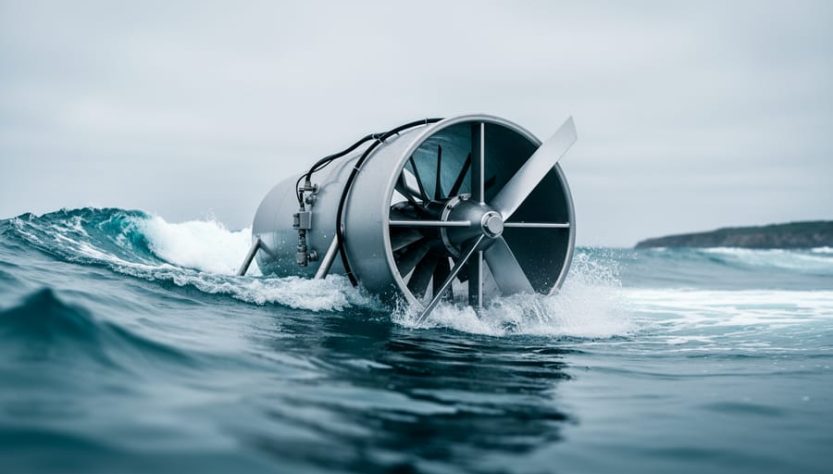
Marine renewable energy has transitioned from experimental concept to operational reality, with wave and tidal technologies now generating electricity at commercial pilot sites across multiple continents. The sector achieved a significant milestone when the US Department of Energy’s 2026 assessments confirmed that waves and tidal currents could theoretically generate approximately 1,420 TWh of electricity annually from American coastlines alone, representing a substantial untapped resource that rivals established renewable sectors in scale.
This transformation reflects more than improved turbine designs or better wave energy converters. Companies like Mocean Energy, C-Power, ORPC, Tidal Energy Corp, and Eco Wave Power have deployed systems that are weathering real ocean conditions, gathering performance data, and proving that marine energy can maintain operational uptime in one of Earth’s harshest environments. Eco Wave Power’s EDF One pilot project, for instance, has achieved zero downtime during its operational period, a benchmark that signals growing technical maturity.
Yet challenges remain. The approximately 80 projects currently planned in US waters must navigate complex permitting processes, demonstrate cost competitiveness with wind and solar, and prove long-term durability. Marine energy’s path forward depends on translating theoretical potential into grid-connected megawatts, a process now underway as feasibility studies expand and deployment sites multiply. For professionals tracking this sector, the question has shifted from whether marine energy works to how quickly it can scale and where it fits within broader decarbonization strategies.
The Untapped Power Beneath the Waves
The ocean covers more than 70 percent of Earth’s surface, constantly moving in waves, tides, and currents that carry enormous quantities of kinetic and thermal energy. Yet this vast renewable resource remains largely unharvested, its potential dwarfing many land-based alternatives. According to a DOE wave and tidal assessment the maximum theoretical electric generation from waves and tidal currents off US coasts alone reaches approximately 1,420 TWh per year, enough to power roughly 130 million homes if fully captured.
Marine renewable energy harnesses several distinct phenomena, each with unique characteristics and conversion methods:
- Wave Energy
- Generated by wind passing over open water, creating oscillating surface motion that can be captured through various converter designs, floating buoys, oscillating water columns, or hinged structures. The energy density varies with wave height, period, and frequency.
- Tidal Stream Energy
- Exploits the predictable horizontal flow of tidal currents using underwater turbines similar in principle to how turbines work in wind farms. Unlike waves, tidal patterns follow precise astronomical cycles, offering unmatched predictability among renewable sources.
- Ocean Thermal Energy Conversion
- Uses temperature differences between warm surface water and cold deep water to drive heat engines. Requires a minimum temperature gradient of about 20°C, typically found in tropical regions.
- Salinity Gradient Power
- Generates electricity from the chemical potential difference where freshwater rivers meet saline ocean water. Technologies include pressure-retarded osmosis and reverse electrodialysis membranes.
Despite this potential, marine energy has lagged behind wind and solar for decades. The ocean environment is brutally hostile to equipment: saltwater corrodes materials, biofouling clogs moving parts, storms generate extreme loads, and maintenance requires specialized vessels in difficult conditions. Early devices frequently failed, and the economics couldn’t justify the high capital costs and unpredictable reliability. Grid connection for offshore installations added another layer of complexity and expense that discouraged investment.
What’s changed is a convergence of technological advances in materials science, control systems, and manufacturing precision. Engineers now design for survivability first, efficiency second, a lesson learned from costly early failures.
Breakthrough Technologies Changing the Game
Wave Energy Converters: From Concept to Deployment
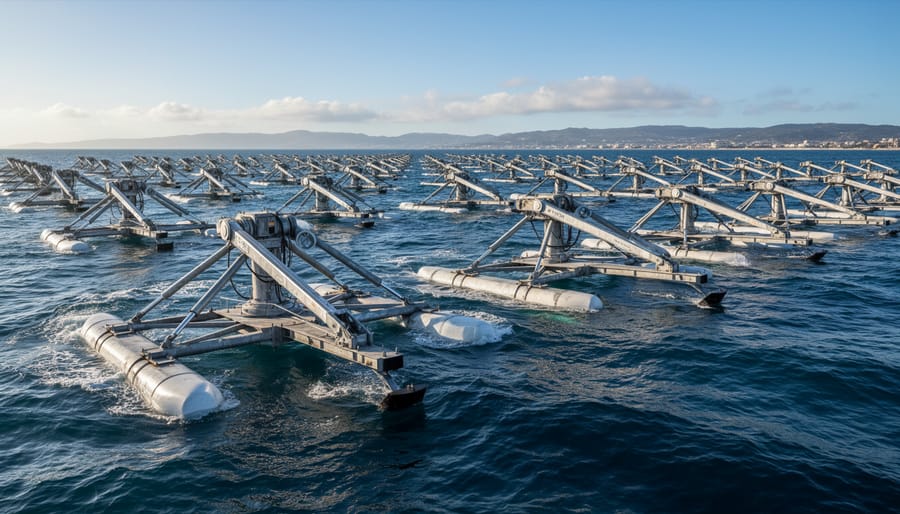
Wave energy converters have evolved from theoretical concepts into commercially viable technologies through systematic refinement of three primary design approaches: point absorbers that bob with wave motion, oscillating water columns that harness air pressure changes, and attenuators that ride parallel to wave direction. Each design extracts kinetic energy from ocean swells differently, with recent innovations focusing on durability, efficiency, and integration with energy storage innovations to smooth power delivery.
The transition from wave energy prototypes to commercial deployment requires proven survivability in extreme marine conditions and consistent performance across varying sea states.
Real-world deployment data now validates these technologies. The EWP-EDF One zero downtime achievement demonstrates operational reliability once considered impossible in harsh ocean environments. This pilot project’s continuous operation without system failures marks a turning point for investor confidence and grid integration planning.
Eco Wave Power’s three-month feasibility study expansion across the United States and key global regions signals industry readiness to scale beyond demonstration projects. Companies are now moving from proving concepts to identifying optimal deployment sites, securing grid connections, and refining business models. These renewable breakthroughs in wave energy technology combine modular designs that reduce installation costs with advanced materials that withstand saltwater corrosion and storm forces, addressing the primary barriers that previously kept wave energy in the experimental phase.
Tidal Energy Systems: Harnessing Predictable Power
Tidal energy stands apart from other marine renewables through one defining characteristic: predictability. Unlike wind or solar, tidal flows follow astronomical cycles mapped centuries in advance, allowing grid operators to forecast power generation with near-perfect accuracy. This reliability makes tidal systems particularly valuable for baseload power and grid stability.
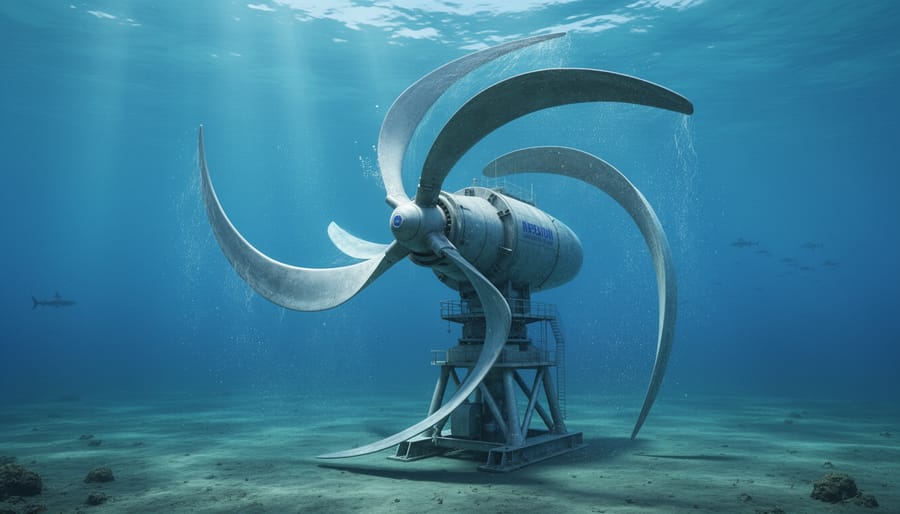
Two primary technologies dominate the field. Tidal stream systems function like underwater wind turbines, capturing kinetic energy from moving water through coastal straits and channels. These turbines operate in both flood and ebb tides, generating power as currents reverse direction. Tidal range systems, meanwhile, exploit the height difference between high and low tides, typically through barrages or lagoons that release water through turbines as tides change.
Recent deployments have validated both approaches. Organizations like ORPC and Tidal Energy Corp are advancing stream technologies with improved turbine designs that withstand harsh marine conditions while maintaining efficiency. The sector benefits from momentum built by wave energy successes, the same marine engineering advances that enabled projects like EWP-EDF One’s zero-downtime pilot inform tidal system durability.
The predictability advantage extends beyond generation forecasting. Maintenance windows can be scheduled around slack tides, and equipment sizing becomes more precise when power curves are known years ahead. As the 80 planned marine energy projects move forward, tidal systems offer utilities something rare in renewables: the certainty that power will arrive exactly when calculations predict.
Hybrid and Emerging Approaches
Hybrid systems represent one of the most promising frontiers in marine energy, combining wave, tidal, and even offshore wind generation within a single platform to maximize output and improve cost-effectiveness. These integrated approaches address the intermittency challenge by capturing energy from multiple sources that often peak at different times. Some platforms pair wave energy converters with tidal turbines, leveraging shared infrastructure for mooring, cabling, and grid connection. Others integrate floating solar panels or small wind turbines with wave devices, creating truly multi-source ocean energy farms. Beyond hybrids, emerging renewable trends include salinity gradient power and ocean thermal energy conversion, both extracting energy from natural ocean processes rather than mechanical movement. These technologies remain largely experimental but demonstrate the sector’s expanding toolkit and relentless innovation toward making marine energy a practical, scalable reality.
Projects Leading the Marine Energy Revolution
The marine renewable energy sector has moved beyond experimental prototypes to a portfolio of operational and planned projects demonstrating commercial viability. With 80 projects in development across global waters, industry leaders are proving that ocean energy can deliver reliable power at scale while navigating the unique challenges of the marine environment.
Mocean Energy has emerged as a frontrunner in wave energy technology, developing oscillating wave surge converters designed for extreme conditions. Their systems use a hinged structure that moves with the waves, converting that motion into electricity through power take-off units. The company’s focus on survivability and simplicity addresses two critical barriers that have plagued earlier wave energy attempts: mechanical complexity and vulnerability to storm damage.
C-Power has taken a different approach with point absorber technology that captures energy from wave motion in multiple directions. Their systems feature floating buoys connected to seafloor-anchored generators, offering modularity and scalability advantages. This design flexibility allows deployment in varying water depths and wave climates, making the technology adaptable to different coastal environments.
Ocean Renewable Power Company (ORPC) focuses on tidal and river current energy, deploying cross-flow turbines that operate in lower-velocity flows than traditional tidal systems require. Their projects in Alaska and Maine have demonstrated that even modest currents can generate meaningful power for remote coastal communities, reducing diesel dependency in locations where grid connection remains impractical or prohibitively expensive.
Tidal Energy Corp is advancing tidal stream technology through turbine systems optimized for high-velocity tidal flows. Their work centers on developing robust, low-maintenance platforms that can withstand the punishing forces in tidal channels while maximizing energy capture during flood and ebb cycles. The predictability of tidal resources gives these systems a distinct advantage in grid planning compared to intermittent renewables.
Eco Wave Power represents innovation in nearshore wave energy, attaching floaters to existing structures like breakwaters and piers rather than deploying offshore. This approach significantly reduces installation costs and simplifies maintenance access. The company recently initiated an in-depth feasibility study across the United States and key international markets to identify optimal deployment sites, while their EWP-EDF One pilot project has achieved zero downtime, a critical milestone for proving reliability.
These companies represent diverse technological approaches unified by a common goal: transforming ocean energy from promising concept to dependable electricity source. The variety of systems under development reflects the sector’s maturity and recognition that different marine environments demand tailored solutions rather than one-size-fits-all technology.
Overcoming the Challenges
Despite promising technological advances and growing project pipelines, marine renewable energy faces formidable obstacles that demand clear-eyed recognition alongside optimism. The ocean environment itself presents extraordinary engineering challenges. Saltwater corrosion attacks metals and electronics relentlessly, while storm-driven waves exert forces far exceeding typical design loads. Biofouling, the accumulation of marine organisms on submerged equipment, reduces efficiency and necessitates frequent cleaning or specialized coatings. These harsh conditions drive up both capital costs and ongoing maintenance expenses, creating a cost gap that remains wider than for wind or solar installations.
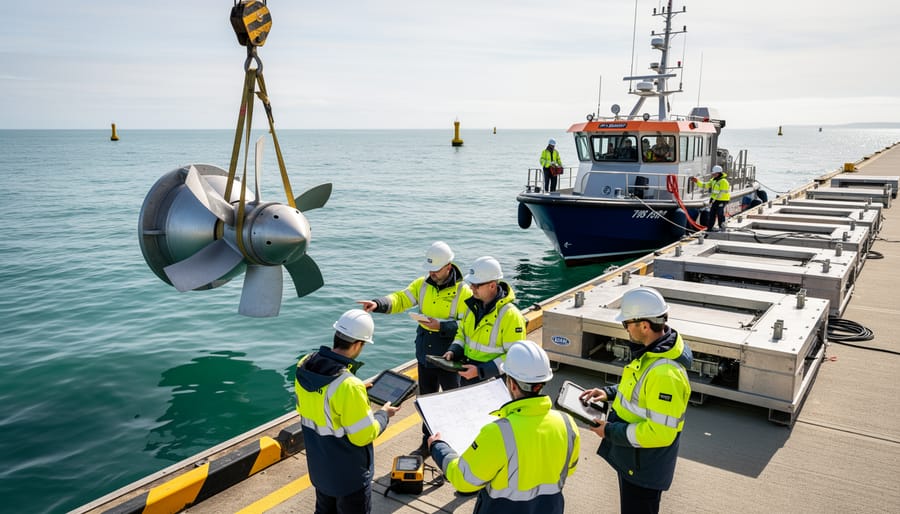
Grid connection poses another significant hurdle. Prime marine energy sites often sit far from existing transmission infrastructure, requiring expensive undersea cables and grid upgrades. The intermittent nature of wave energy, though more predictable than wind, still demands sophisticated energy storage or grid management systems to ensure reliable power delivery. Maintenance logistics compound the difficulty: accessing offshore equipment requires specialized vessels, weather-dependent operations, and trained technicians, pushing operational costs higher than land-based renewables.
Environmental impact assessments have raised legitimate concerns about marine ecosystem disruption. Questions persist about how turbines and converters affect fish migration, marine mammal behavior, and seafloor habitats. While initial studies suggest impacts are manageable with proper siting and design, comprehensive long-term data remains limited. Regulatory frameworks have struggled to keep pace with technology development, leaving project developers navigating unclear permitting processes across multiple agencies. This uncertainty discourages investment and slows deployment timelines.
Economic viability hinges on achieving scale, yet the sector faces a chicken-and-egg problem: costs won’t drop significantly without large-scale deployment, but deployment won’t accelerate until costs become competitive. Securing financing remains challenging when investors can choose mature renewable technologies with proven returns. The integration of ESG for clean energy frameworks into marine projects helps attract capital, but the sector still competes for limited funding against more established options.
These challenges are substantial but not insurmountable. Lessons from offshore wind’s cost reductions, advances in materials science, and growing climate urgency are creating pathways forward. Success requires sustained research funding, streamlined regulatory processes, and patient capital willing to support this technology through its maturation phase.
Economic Viability and Market Potential
The economics of marine renewable energy are undergoing a fundamental transformation. While costs remain higher than mature renewables like solar and wind, the trajectory points decisively downward. Early pilot projects demonstrated technical feasibility at eye-watering expense, but scaled deployment and technological iteration are driving substantial cost reductions. Improved materials resist corrosion longer, reducing maintenance cycles. Standardized turbine designs cut manufacturing costs. Better resource mapping allows developers to site projects where energy yield justifies infrastructure investment.
The investment landscape reflects growing confidence in commercial viability. Government funding programs have de-risked early-stage development, allowing private capital to enter the sector. The eighty planned projects identified across various markets signal investor belief that marine energy is transitioning from research novelty to deployable technology. Utilities and energy companies increasingly view ocean power not as speculative gamble but as portfolio diversification with unique advantages.
Marine energy’s market potential extends beyond raw generation capacity. The DOE’s assessment of 1,420 TWh per year theoretical potential represents substantial electricity generation, but the technology’s strategic value lies in complementary timing and geography. Ocean energy peaks during different periods than solar, filling generation gaps in renewable portfolios. Coastal placement reduces transmission distance to population centers where electricity demand concentrates. Tidal power’s exceptional predictability allows grid operators to schedule baseload capacity days in advance, something intermittent renewables cannot offer.
This predictability addresses a critical grid stability challenge. As renewable penetration increases, system operators struggle to balance variable generation with inflexible demand. Marine energy, particularly tidal systems, provides scheduled, reliable generation that smooths renewable integration. That grid service value commands premium pricing in electricity markets that reward dispatchability, improving project economics beyond simple kilowatt-hour rates. The sector stands poised for accelerated growth as costs decline and markets increasingly value the unique attributes ocean energy brings to decarbonized grids.
Policy Support and Pathway Forward
Government support has emerged as a critical catalyst for marine renewable energy development, with agencies recognizing the sector’s potential to diversify national energy portfolios. The US Department of Energy’s comprehensive resource assessments, revealing a theoretical generation capacity of approximately 1,420 TWh per year from waves and tidal currents, have provided the foundational data policymakers need to justify strategic investments. These assessments move marine energy from abstract possibility to quantifiable opportunity, informing funding priorities and regulatory frameworks designed to accelerate commercialization.
Federal programs have channeled substantial resources into demonstration projects and technology validation. The DOE’s Water Power Technologies Office has supported testing facilities, funded prototype development, and facilitated partnerships between developers and utilities. Tax incentives similar to those that propelled wind and solar expansion are gradually extending to marine energy projects, though the sector still lacks the comprehensive policy support enjoyed by more mature renewables. State-level initiatives, particularly in coastal regions with strong marine energy resources, have introduced streamlined permitting processes and renewable energy mandates that explicitly include ocean energy in their targets.
The pathway to commercial scale demands coordinated action across multiple fronts. Regulatory frameworks must evolve to accommodate marine energy’s unique characteristics while maintaining environmental safeguards. Standardized testing protocols and certification processes would reduce development costs and investor risk. International collaboration on technical standards and shared research infrastructure can prevent duplicated efforts and accelerate learning curves. With 80 projects currently planned, the industry stands at an inflection point where consistent policy support and strategic investment can transform nascent technology into a reliable contributor to clean energy targets within the next decade.
The ocean’s vast energy potential, estimated at 1,420 TWh per year from waves and tidal currents alone, is no longer just theoretical promise. The innovations explored throughout this article demonstrate that marine renewable energy has reached a critical inflection point. Zero downtime achievements in pilot projects, expanding feasibility studies across global markets, and 80 planned deployments signal a sector transitioning from experimentation to viable implementation.
Yet technology alone won’t unlock this resource. Realizing marine energy’s transformative potential demands coordinated action: continued R&D investment to drive down costs, streamlined regulatory frameworks that balance environmental protection with deployment speed, and grid infrastructure capable of integrating this predictable power source. Policymakers must provide stable long-term support mechanisms, while industry players need to scale manufacturing and share operational learnings openly.
The path forward requires researchers, energy companies, coastal communities, and government agencies working in concert. Marine renewable energy isn’t replacing established renewables, it’s completing the portfolio, offering baseload stability and coastal resilience that solar and wind alone can’t provide. The question isn’t whether ocean energy will contribute meaningfully to our clean energy future, but how quickly we’ll act to make it happen. The technology is ready. Now we need the collective will to deploy it.