

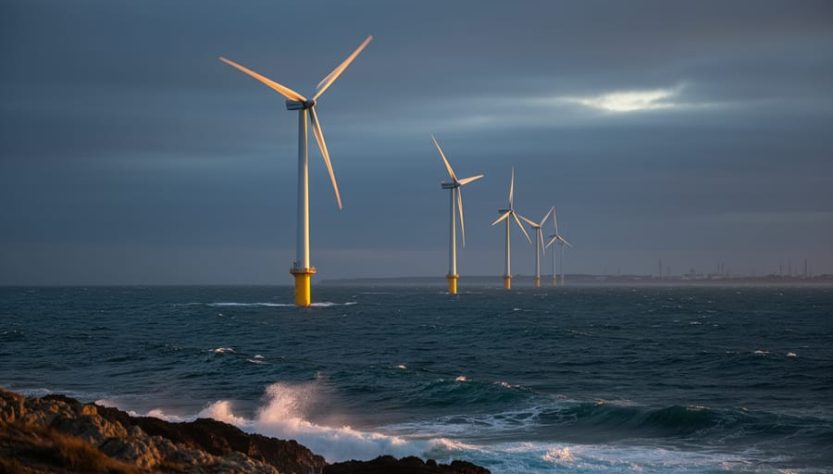
On December 22, 2025, the Department of the Interior halted construction on five major offshore wind projects along the U.S. East Coast, citing national security concerns identified in classified reports from the Department of War. The pause affects Vineyard Wind 1, Revolution Wind, CVOW, Commercial, Sunrise Wind, and Empire Wind 1, representing the largest disruption to the American offshore wind sector since the industry’s launch.
The federal action marks an abrupt shift in policy for an administration that had previously accelerated offshore wind lease approvals. While the specific security concerns remain classified, the decision has effectively frozen billions in private investment and delayed the deployment of several gigawatts of planned clean energy capacity. For professionals tracking renewable energy infrastructure, this development raises critical questions about the viability of long-term offshore wind basics in U.S. waters and the regulatory stability developers need to secure project financing.
The immediate implications extend beyond the five named projects. Supply chain partners, coastal communities expecting economic benefits, and utilities that had signed power purchase agreements now face uncertainty. The pause also threatens near-term climate targets that relied on offshore wind as a cornerstone of grid decarbonization. Whether these leases will resume, require modifications, or face permanent cancellation remains the central question for an industry that had positioned 2026 as a breakthrough year for American offshore wind deployment.
What Changed: Federal Pause on Offshore Wind Construction
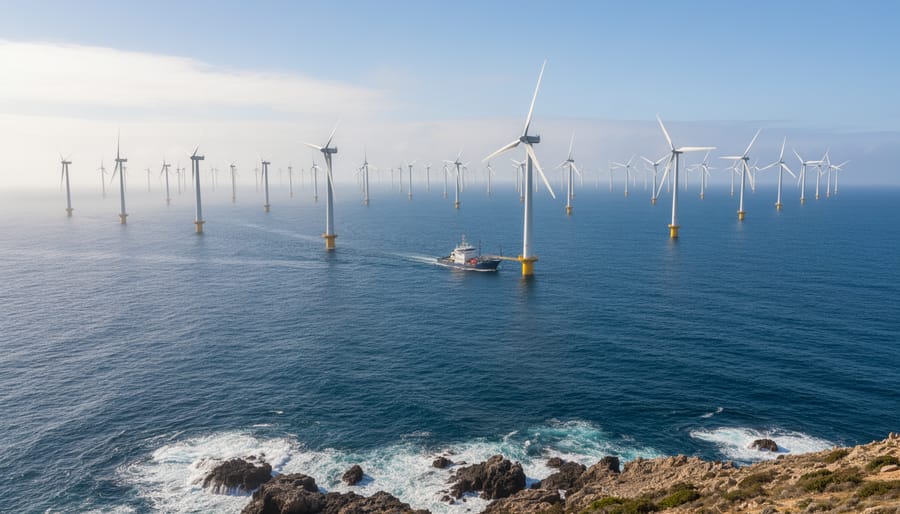
On December 22, 2025, the Department of the Interior took an unprecedented step that halted momentum across the offshore wind sector. The agency paused offshore wind leases for all large-scale projects actively under construction in U.S. waters, citing national security risks identified in classified reports from the Department of War. This action marked the first time the federal government has suspended active offshore wind construction at such a scale, affecting billions of dollars in infrastructure investment and thousands of jobs tied to turbine installation, vessel operations, and supply chain logistics.
The pause applies specifically to projects that had reached construction phases, not to earlier-stage developments still in planning or permitting. Five major wind farms fell under the directive: Vineyard Wind 1, Revolution Wind, CVOW, Commercial, Sunrise Wind, and Empire Wind 1. Each had moved beyond site surveys and regulatory approvals to actual foundation installation or turbine assembly, making the sudden halt operationally complex. Contractors faced immediate questions about vessel demobilization, equipment storage, and crew assignments.
What sets this decision apart is its timing and scope. Previous offshore wind delays stemmed from permitting backlogs, environmental reviews, or financial restructuring by developers. A national security pause across multiple active construction sites, however, introduced a new dynamic to an industry that had been accelerating rapidly. The Interior Department provided no public timeline for resolution, leaving project sponsors, investors, and coastal communities in a state of uncertainty about when, or under what conditions, construction might resume.
Key Developments: Five Projects Affected
1. Vineyard Wind 1
Vineyard Wind 1, located approximately 15 miles south of Martha’s Vineyard, Massachusetts, stands as a landmark project in U.S. offshore wind development. At the time of the December 2025 pause, the 800-megawatt facility had already installed dozens of turbines and was generating power for the New England grid. The project represents a critical milestone: it was the first commercial-scale offshore wind farm to begin construction in federal waters and serves as a proof-of-concept for the viability of large-scale wind energy along the Atlantic coast. The pause halts installation of remaining turbines and associated infrastructure work, leaving the project in partial operation while its lease undergoes the national security review.
2. Revolution Wind
Revolution Wind is a joint venture offshore wind project developed by Ørsted and Eversource, located in federal waters between Martha’s Vineyard and Block Island. The project is designed to generate 704 megawatts of renewable energy, enough to power approximately 350,000 homes in Rhode Island and Connecticut. It plays a central role in both states’ renewable energy portfolios: Rhode Island has contracted for 400 MW through long-term power purchase agreements, while Connecticut has secured the remaining 304 MW. At the time of the December 22, 2025 pause, Revolution Wind had begun offshore construction activities, including foundation installation and turbine component staging. The project represents a critical stepping stone for New England’s transition away from fossil fuel dependence and toward meeting aggressive state-level decarbonization targets.
3. CVOW, Commercial
The Coastal Virginia Offshore Wind Commercial project represents one of the largest planned offshore wind developments in federal waters, with a target capacity of 2.6 gigawatts, enough to power roughly 660,000 homes. Located approximately 27 miles off the Virginia coast, CVOW Commercial builds on a successful two-turbine pilot project completed in 2020, making it a critical test case for scaling offshore wind technology in mid-Atlantic waters. Virginia positioned the project as central to its clean energy transition, aiming for 100 percent carbon-free electricity by 2050. The December 2025 pause halted construction at a pivotal moment, with foundation installations underway and millions already invested in specialized vessels and supply chain infrastructure. The project’s strategic location near major naval installations in Hampton Roads adds complexity to the national security review, as regulators weigh regional energy independence against the concerns raised in classified Department of War assessments.
4. Sunrise Wind
Sunrise Wind is a joint venture offshore wind project developed by Ørsted and Eversource Energy, located approximately 30 miles east of Montauk Point, New York. The project was designed to deliver 924 megawatts of renewable energy capacity to New York and Connecticut, enough to power roughly half a million homes. At the time of the December 22, 2025 pause, Sunrise Wind was in the construction phase with significant offshore work underway. The project had advanced through federal permitting, secured power purchase agreements with both states, and begun assembling the offshore infrastructure needed to achieve its planned 2026 commercial operation date before the Department of the Interior’s action halted progress.
5. Empire Wind 1
Empire Wind 1, developed to serve New York State’s renewable energy ambitions, was slated to deliver 816 megawatts of capacity once operational. Located approximately 15 to 30 miles southeast of Long Island, the project represented a significant component of New York’s strategy to generate 9,000 megawatts of offshore wind power by 2035. At the time of the December 2025 pause, Empire Wind 1 had completed foundation installations and was advancing turbine deployment. The project’s suspension directly impacts New York’s ability to meet near-term renewable energy targets and complicates the state’s broader offshore wind pipeline, which depends on establishing proven operational models at scale.
Why the Pause Happened: National Security Concerns
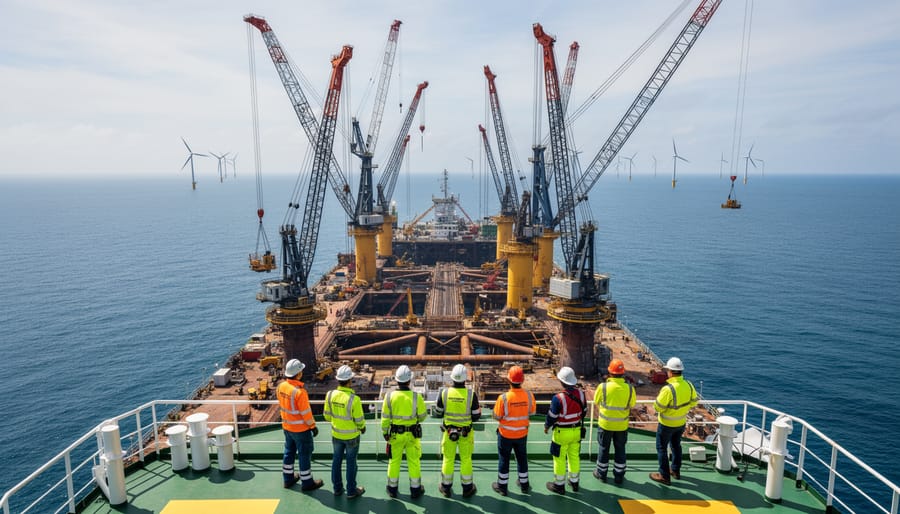
The December 2025 pause stems from national security risks identified by the Department of War in recently completed classified reports submitted to the Department of the Interior. While the specific nature of these risks has not been publicly disclosed, the decision to halt all large-scale offshore wind construction simultaneously indicates that the concerns extend across multiple projects rather than being isolated to a single developer or location.
The intersection of critical infrastructure and national security is not new to the energy sector. Offshore wind installations involve substantial physical infrastructure in strategic maritime zones, complex supply chains that may include international components, and digital control systems that manage grid integration. Any of these elements could theoretically present vulnerabilities that warrant security review, particularly as offshore wind scales from demonstration projects to commercial-scale deployment.
What makes this pause unprecedented is its breadth and timing. Previous security reviews of energy infrastructure have typically focused on specific facilities or technologies, often during the planning phase rather than mid-construction. The simultaneous suspension of five active projects suggests a systemic concern identified through the Department of War’s review process, though without access to the classified findings, the precise nature of the identified risks remains unknown to the public and potentially to the project developers themselves.
For the offshore wind sector, this creates significant uncertainty. Developers, investors, and supply chain partners must now navigate a landscape where established projects can face sudden regulatory action based on undisclosed security criteria. The lack of public guidance on what security standards these projects must meet to resume operations makes forward planning difficult and raises questions about how future offshore wind developments will be evaluated for similar risks.
Why It Matters: Implications for Renewable Energy Goals
The December 2025 pause carries weight far beyond five construction sites. The United States had set a target of deploying 30 gigawatts of offshore wind capacity by 2030, a cornerstone of federal climate strategy. These five projects alone represented roughly 4 gigawatts of planned capacity, more than 13% of that goal. Halting them mid-construction creates a cascade of consequences that ripple through investment markets, supply chains, and workforce development.
Investor confidence takes an immediate hit when projects already under way face indefinite suspension. Offshore wind demands massive upfront capital, often billions per project, and investors price in regulatory stability. An unscheduled federal pause introduces political risk that venture funds and equity partners must now factor into future offshore bids. If the United States appears less predictable than European markets where offshore wind is established, capital will flow elsewhere.
Supply chains face similar disruption. Turbine manufacturers, installation vessels, cable suppliers, and specialized fabricators had locked in contracts and production schedules around these projects’ timelines. Pausing construction means warehousing expensive components, renegotiating delivery windows, and potentially reassigning scarce installation vessels to other regions. This uncertainty makes it harder for domestic suppliers to scale operations, which in turn slows progress toward the renewable breakthroughs needed to meet 2030 targets.
Employment in the offshore wind sector, still emerging in the U.S., suffers as well. Construction crews, engineers, port workers, and operations staff face layoffs or reassignments. Training programs designed to build a domestic offshore wind workforce lose momentum when projects stall, making it harder to retain skilled workers who may seek steadier opportunities in other industries or countries.
The tension here is real. National security concerns are legitimate infrastructure considerations, but addressing them through broad construction halts rather than project-specific remediation plans slows the energy transition without clear timelines for resolution. Offshore wind complements energy storage solutions and other renewables in a diversified grid; delays compound the challenge of replacing fossil generation at the pace climate commitments demand.
The broader message is that aligning security reviews with energy goals requires transparent processes and predictable timelines. Without them, the U.S. risks falling behind in offshore wind deployment while other nations advance.
What to Watch: Next Steps and Unresolved Questions
The December 2025 pause leaves numerous critical questions unanswered, and stakeholders across the offshore wind sector should monitor several key developments in the coming months.
Timeline for Resolution
No official timetable has been provided for when the security reviews will conclude or what conditions must be met for construction to resume. The Department of the Interior has not indicated whether the pause will last weeks, months, or extend into late 2026. Industry observers should watch for announcements from Interior and the Department of War regarding review progress and any interim guidance.
Security Remediation Requirements
The specific security concerns identified in the classified reports remain undisclosed, making it unclear what remedial measures project developers must implement. Whether the issues involve supply chain adjustments, technology changes, operational protocols, or ownership restructuring will shape both resolution timelines and the future of renewables in U.S. waters.
How long will the pause last?
The Department of the Interior has not provided a timeline, and the duration depends on completing classified security reviews and any required remediation measures.
Will the projects be permanently cancelled?
The action is described as a lease pause, not a cancellation, though the ultimate outcome depends on the security review findings and whether concerns can be addressed.
What happens to workers and existing contracts?
Construction halts affect thousands of jobs and supplier agreements, though specific contract implications vary by project and are being assessed by individual developers.
Can new offshore wind projects still be proposed?
The pause applies only to these five projects under construction; the status of new lease auctions and proposals remains unclear pending policy clarification.
Legal and Industry Response
Watch for potential legal challenges from developers and investors who face substantial financial exposure. Industry coalitions may seek legislative or regulatory clarification on how national security reviews will be conducted for renewable infrastructure going forward, potentially establishing precedents for future projects.
The December 2025 federal pause on offshore wind construction has thrust the renewable energy sector into uncharted territory, forcing a difficult reckoning between climate ambitions and national security imperatives. With five major projects halted indefinitely and no public timeline for resolution, the offshore wind industry faces genuine uncertainty at a critical growth phase. Yet this tension need not be zero-sum. Transparent dialogue between security agencies, energy developers, and policymakers can yield solutions that protect both critical infrastructure and climate progress.
What happens next will shape offshore wind deployment for years. Stakeholders across the renewable energy ecosystem should monitor developments closely: watch for policy clarifications from the Department of the Interior, track how project operators respond to classified security findings, and pay attention to whether legislative action or legal challenges emerge. The path forward requires balancing legitimate security concerns with the urgent need to expand clean energy capacity. How regulators, industry leaders, and elected officials navigate this balance will determine whether 2026 marks a temporary setback or a fundamental recalibration of America’s offshore wind ambitions.