

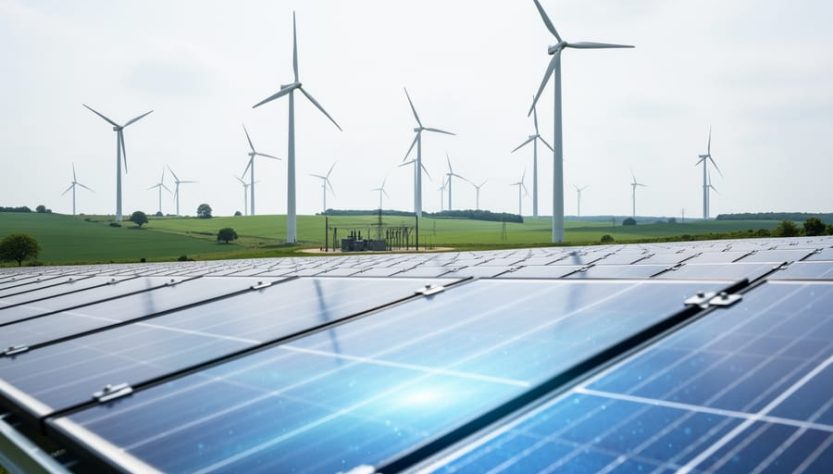
The future of renewable energy refers to the trajectory and evolution of power generation systems that harness naturally replenishing resources, solar, wind, hydroelectric, geothermal, and biomass, toward achieving grid dominance, technological maturity, and economic competitiveness sufficient to displace fossil fuels as the primary global energy source within the next two to three decades.
This transition matters because energy systems underpin every dimension of modern society, from economic stability to climate resilience. The post-pandemic period has accelerated this shift in unexpected ways. Supply chain disruptions exposed vulnerabilities in fossil fuel dependency, while government stimulus packages channeled unprecedented capital into clean energy infrastructure. Global investment in renewables surpassed $500 billion annually by 2025, and projections indicate that solar and wind will account for more than half of all new power capacity additions through 2030.
What distinguishes the current moment from earlier waves of renewable optimism is convergence. Battery storage costs have fallen by nearly 90% since 2010, solving the intermittency challenge that once limited solar and wind deployment. Policy frameworks have matured, with more than 140 countries now committed to net-zero emissions targets that mandate renewable expansion. Corporate procurement has shifted from virtue signaling to balance-sheet logic, as renewable power purchase agreements now often undercut fossil alternatives on price alone.
This article defines the renewable energy landscape as it stands in 2026, explains how emerging technologies and market mechanisms are reshaping power systems, breaks down the key components driving this transformation, and examines the practical applications across industrial, residential, and transportation sectors. You’ll gain clarity on which technologies are scaling, what barriers remain, and how post-pandemic economic and policy shifts are redrawing the energy map.
What the Future of Renewable Energy Means in 2026
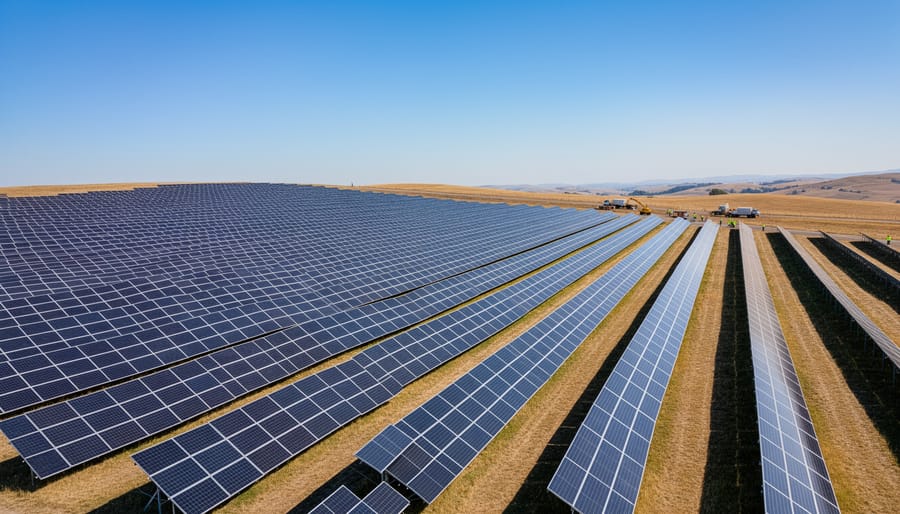
The future of renewable energy in 2026 represents the convergence of technological maturity, economic competitiveness, and policy momentum toward decarbonized power systems. Solar photovoltaics and wind turbines, once niche technologies requiring heavy subsidies, now deliver electricity at costs below new fossil fuel plants in most markets. This cost parity, combined with falling prices for lithium-ion batteries and emerging storage solutions, makes it feasible for grids to integrate 50%, 60%, or even 80% renewable generation without sacrificing reliability. The shift isn’t merely about swapping one power source for another; it involves redesigning how electricity is generated, stored, transmitted, and consumed.
Post-pandemic recovery packages have accelerated this trajectory in ways few anticipated. Governments worldwide injected trillions into green infrastructure as part of stimulus efforts, building out transmission networks, subsidizing electric vehicle charging stations, and funding clean hydrogen pilots. The European Union’s NextGenerationEU program earmarked 37% of its €750 billion for climate objectives. The U.S. Inflation Reduction Act extended and expanded tax credits for solar, wind, and storage projects. These measures didn’t just prop up renewable industries during a downturn; they fundamentally rewired capital flows toward long-term decarbonization.
Beyond utility-scale wind farms and solar arrays, the future encompasses distributed generation: rooftop solar paired with home batteries, community microgrids, and industrial facilities generating their own clean power. Digitalization, smart inverters, AI-driven grid management, real-time demand response, enables this complexity. Emerging technologies like green hydrogen (produced by splitting water with renewable electricity) promise to decarbonize heavy industry and long-haul transport, sectors where direct electrification falls short. Geothermal is expanding beyond traditional volcanic regions through enhanced geothermal systems that tap heat from deeper rock formations. Floating offshore wind unlocks vast ocean areas previously inaccessible. The renewable future isn’t a single pathway but a portfolio of technologies tailored to regional resources, demand profiles, and grid characteristics.
How the Renewable Energy Transition Works
The renewable energy transition operates through a multi-layered process that converts clean power from concept to kilowatt-hour at scale. At its foundation, the transition begins with capacity deployment: developers identify sites with strong resource potential, sunlight, wind corridors, geothermal reserves, and construct generation facilities. Solar farms and wind turbines convert natural energy into electricity, which then flows into transmission networks that carry power from generation sites to demand centers.
Grid integration presents the transition’s central technical challenge. Unlike fossil plants that dispatch power on command, solar and wind generate electricity when nature provides the resource, not necessarily when consumers need it. Grid operators compensate through a combination of approaches. They forecast renewable output using weather models and satellite data, balance supply and demand in real time by adjusting conventional generation or curtailing excess renewable production, and increasingly rely on energy storage systems to absorb surplus electricity during high-generation periods and discharge it when generation drops.
Smart infrastructure amplifies grid flexibility. Advanced metering, sensors, and control systems enable grid operators to monitor flows across thousands of nodes, reroute power dynamically, and integrate distributed resources like rooftop solar and electric vehicle batteries. This digitalization transforms grids from one-way delivery systems into interactive networks that can respond to fluctuations within milliseconds.
Financing and regulatory frameworks determine deployment speed and scale. Governments use policy levers, renewable energy mandates, tax credits, feed-in tariffs, to de-risk investments and lower capital costs. Competitive auctions, where developers bid to supply renewable power at the lowest price, have driven dramatic cost reductions; winning bids in some markets now undercut new fossil generation. Corporations and utilities secure long-term renewable supply through power purchase agreements, which guarantee developers predictable revenue streams and enable project financing.
The transition scales when these elements align: abundant low-cost renewable capacity, grids capable of managing variability, storage that smooths intermittency, and market structures that reward clean power. Each reinforces the others, creating momentum that accelerates deployment and drives further cost declines. Post-pandemic recovery investments have turbocharged this cycle, channeling capital toward grid upgrades, storage projects, and manufacturing capacity precisely when supply chain disruptions tested resilience.
Key Components Driving Renewable Energy’s Future
Technology Advancements
Solar photovoltaics have entered a new performance era, with laboratory perovskite efficiency records surpassing 33 percent, approaching theoretical limits and promising modules that convert more sunlight into electricity at lower manufacturing cost than silicon alone. Tandem architectures that layer perovskite atop silicon are moving toward commercial deployment, while bifacial panels that harvest reflected light from both sides now dominate utility procurements, boosting annual yields by 10 to 20 percent on the same footprint. These renewable energy breakthroughs are cutting solar’s levelized cost below two cents per kilowatt-hour in the sunniest regions, making it the cheapest source of new electricity in most markets.
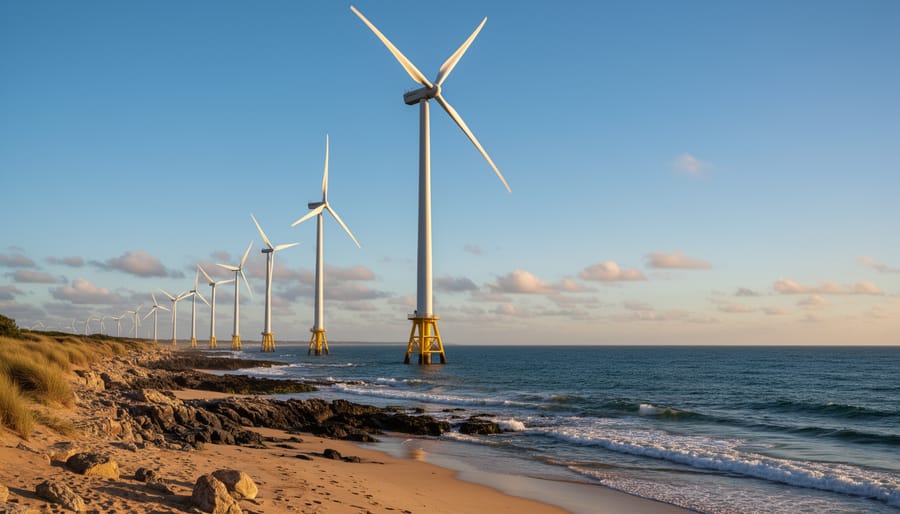
Offshore wind has matured beyond near-shore fixed foundations, with floating turbines unlocking deep-water sites that hold vast untapped potential in Japan, California, and the North Sea. Turbine ratings now reach 15 megawatts, and rotors span 250 meters, capturing stronger, steadier winds that deliver capacity factors above 60 percent. Installation vessels and supply chains are scaling to meet gigawatt-scale pipelines, driving costs down 30 percent since 2020.
Advanced geothermal techniques, including closed-loop systems and supercritical fluid extraction, tap heat from deeper, hotter rock without requiring natural hydrothermal reservoirs, expanding the resource base from volcanic zones to most continental crust. Early projects demonstrate year-round baseload generation with minimal land disturbance.
Green hydrogen production via electrolysis powered by renewables is crossing crucial cost thresholds as electrolyzer manufacturing scales and renewable electricity prices fall. Stack efficiencies improve, modular systems enable distributed production, and pilot projects integrate hydrogen into steel, ammonia, and heavy transport, positioning it as a versatile decarbonization vector for sectors batteries cannot electrify.
Energy Storage and Grid Infrastructure
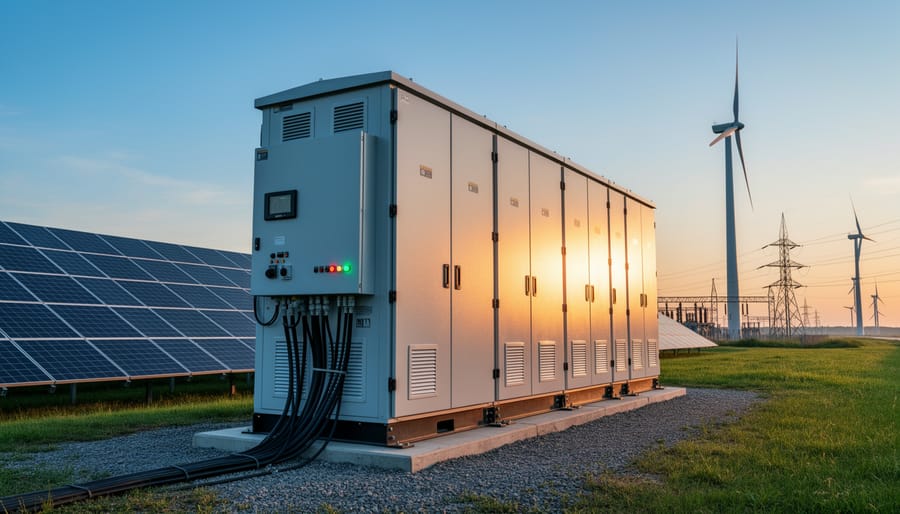
Energy storage and grid infrastructure form the backbone of a renewable-dominated future, addressing intermittency and ensuring reliable power delivery around the clock. Battery technologies have advanced rapidly: lithium-ion systems now dominate grid-scale and residential applications due to falling costs and proven performance, while solid-state batteries promise higher energy density and improved safety for next-generation deployments. Flow batteries, which store energy in liquid electrolytes, offer scalability and long cycle life ideal for storage under grid conditions requiring multi-hour discharge. Beyond batteries, pumped hydro remains the largest source of long-duration storage globally, leveraging gravitational potential energy to balance supply and demand over days or seasons.
These energy storage innovations are deployed across a range of use cases:
- Grid-scale batteries (100 MW+) for frequency regulation and peak shifting
- Residential storage systems paired with rooftop solar for self-consumption
- Vehicle-to-grid (V2G) integration turning EVs into mobile storage assets
- Pumped hydro facilities providing seasonal balancing and black-start capability
- Thermal storage capturing excess renewable heat for industrial processes
Equally critical are transmission upgrades and smart grid technologies. High-voltage DC lines reduce losses over long distances, connecting remote wind and solar farms to demand centers. Smart grids employ sensors, AI-driven forecasting, and automated controls to optimize dispatch, predict outages, and integrate distributed resources. Without these infrastructure investments, even the most advanced storage cannot unlock the full potential of variable renewables. The post-pandemic focus on resilience has accelerated funding for grid modernization, recognizing that a flexible, intelligent network is as essential as the generation and storage assets it coordinates.
Policy and Market Mechanisms
Government policy remains the single most powerful force driving renewable capacity additions worldwide. Net-zero pledges from major economies, now covering over 90% of global GDP, have translated into binding renewable targets: the EU’s 42.5% renewable electricity by 2030, China’s 1,200 GW of wind and solar by 2030, and dozens of national mandates that create predictable demand for clean energy projects. Tax incentives such as the US Production Tax Credit (PTC) and Investment Tax Credit (ITC) reduce upfront costs and shorten payback periods, making utility-scale wind and solar competitive with or cheaper than fossil generation in many markets.
Corporate procurement has evolved into a parallel market mechanism. Multinational corporations sign long-term power purchase agreements (PPAs) directly with renewable developers, providing revenue certainty that enables project financing. These contracts now exceed 50 GW annually, driven by corporate climate commitments and investor pressure. Companies also purchase renewable energy credits (RECs) to offset grid consumption, creating a tradable commodity that monetizes the environmental attributes of clean generation and channels capital to new projects.
International agreements reinforce national action. The Paris Agreement’s ratchet mechanism compels periodic ambition increases, while multilateral development banks now channel 40% of climate finance to renewable infrastructure in emerging economies. Post-pandemic green stimulus programs, totaling over $1 trillion across G20 nations, prioritized renewable deployment, grid modernization, and green hydrogen pilot projects, accelerating timelines that predated 2020. Auction systems in India, Brazil, and the Middle East have pushed solar and wind prices below $0.02 per kWh, proving that well-designed policy markets unlock exponential scale.
Where and How Renewables Are Being Deployed
Renewable energy deployment in 2026 spans a remarkably diverse array of settings, from multi-gigawatt solar farms in the Mojave Desert to community microgrids powering island nations, each tailored to local resources, grid infrastructure, and economic conditions.
Utility-scale installations remain the backbone of capacity growth. Vast solar parks across India, Spain, and the southwestern United States now feature dual-axis tracking and bifacial panels, maximizing generation per acre. Offshore wind power has matured into a cornerstone technology, with floating turbines unlocking deeper waters off Scotland, California, and South Korea where fixed-bottom structures prove uneconomical. These projects routinely exceed 1 GW, feeding directly into national transmission networks and displacing coal baseload.
Distributed generation has transformed the residential and commercial landscape. Rooftop solar penetration in Australia and Germany surpasses 30% of suitable buildings, supported by net metering, battery storage incentives, and falling installation costs. Corporations pursue on-site renewable procurement to meet ESG targets: Amazon, Google, and Unilever have contracted hundreds of megawatts for data centers and manufacturing facilities, bypassing utilities entirely through private-wire arrangements.
Microgrids address energy access and resilience in contexts where centralized grids falter. Remote mining operations in Chile and Western Australia pair solar-diesel hybrids with battery storage, cutting fuel costs and emissions. Island communities in the Pacific and Caribbean deploy wind-solar-storage systems to escape diesel dependence, achieving 80-90% renewable framing in smaller systems. Hurricane-prone regions in the U.S. increasingly adopt community microgrids that island during outages.
Industrial decarbonization leverages renewables for process heat and electrification. Steelmakers in Sweden pilot hydrogen-based direct reduction powered by wind, while cement producers in Europe integrate solar thermal for kiln preheating. Electric mobility infrastructure, charging networks for passenger vehicles, electrified bus depots, and port electrification for shipping, creates new load profiles that grid operators balance with variable renewable supply, often through managed charging protocols.
Post-Pandemic Shifts Reshaping the Renewable Landscape
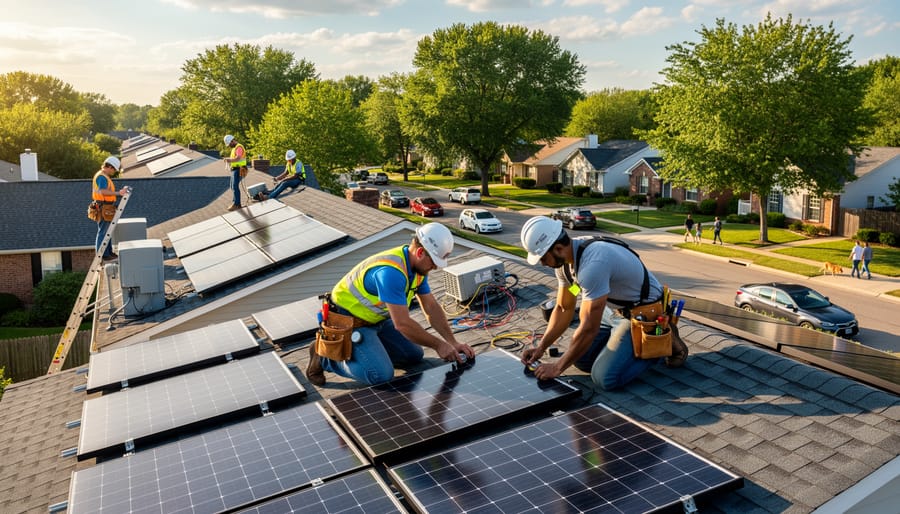
The pandemic and its aftermath have fundamentally reordered priorities in the renewable energy sector, accelerating some trends while exposing vulnerabilities that now demand urgent attention. Supply chains that once spanned continents revealed their fragility when lockdowns and logistics snarls delayed shipments of solar panels, wind turbine components, and battery materials by months. In response, governments and manufacturers have begun reshoring or nearshoring production, China’s dominance in polysilicon and rare earths sparked initiatives in the US and Europe to build domestic solar module factories and battery gigafactories, reducing reliance on single-source suppliers and shortening lead times.
Recovery spending has tilted heavily toward green infrastructure. The US Inflation Reduction Act channeled hundreds of billions into clean energy tax credits and manufacturing incentives, while the EU’s NextGenerationEU fund earmarked significant portions for renewables and grid upgrades. These stimulus packages explicitly linked climate action to job creation, positioning solar installers, wind technicians, and grid engineers as pillars of post-pandemic employment. This wasn’t purely altruism, governments recognized that investing in renewables offered faster job multipliers and lower long-term costs than propping up fossil industries.
Corporate commitments to environmental, social, and governance goals have accelerated sharply. Companies that paused capital expenditure during lockdowns emerged with bolder net-zero pledges, driven by investor pressure, employee expectations, and reputational imperatives. Major tech firms, manufacturers, and retailers signed record volumes of power purchase agreements for wind and solar, treating renewable procurement as both a hedge against volatile fossil prices and a signal of future readiness. The pandemic’s emphasis on resilience made clear that distributed, diversified energy sources reduce vulnerability to single-point failures.
Public awareness has shifted in tandem. Lockdowns highlighted air quality improvements, making the case for cleaner energy visceral rather than abstract. Citizens who experienced supply shortages now understand energy independence differently, rooftop solar and local microgrids gained appeal as buffers against grid instability. The hydrogen game-changer narrative gained traction as industries sought drop-in fuels for hard-to-electrify sectors, a direct outgrowth of pandemic-era scrutiny on emissions and resilience.
Yet challenges persist. Material shortages for batteries and semiconductors haven’t vanished, and inflation has pushed project costs higher even as technology prices fall. Permitting backlogs and workforce gaps remain, and the urgency to build fast sometimes clashes with community consultation and environmental review. The post-pandemic renewable landscape is one of heightened ambition and real momentum, but also of friction points that require sustained policy coordination and pragmatic problem-solving.
Common Questions About the Future of Renewable Energy
Will renewable energy completely replace fossil fuels, and if so, when? The consensus among energy analysts is that renewables will dominate new capacity additions through 2050, but complete displacement varies by region and sector. Transport and power generation are transitioning fastest, while heavy industry and aviation face longer timelines due to technical and infrastructure constraints. Most scenarios project fossil fuels retaining a diminishing but persistent role in hard-to-abate sectors through mid-century, though the pace of substitution has accelerated markedly since 2020.
Will renewables fully replace fossil fuels?
Renewables are on track to dominate electricity generation by 2040, but complete replacement across all sectors depends on breakthroughs in storage, hydrogen, and industrial processes. Most credible pathways see fossil fuels reduced to niche applications by 2060.
Are renewables cost-competitive in 2026?
Yes. Solar and onshore wind are now the cheapest sources of new electricity in most markets, undercutting coal and gas even without subsidies. Offshore wind and battery storage costs have also fallen sharply.
Can renewable grids maintain reliability?
Modern grids combine renewables with storage, demand response, and interconnections to ensure stability. Real-world systems in Denmark, South Australia, and parts of California demonstrate that high renewable penetration can meet reliability standards.
What role does hydrogen play in the future energy mix?
Green hydrogen is expected to decarbonize steel production, shipping, and long-haul transport where direct electrification is impractical. It also offers seasonal energy storage, though infrastructure and cost remain barriers to widespread adoption.
The biggest obstacles to accelerating the renewable transition are less about technology and more about systems and policy. Permitting delays for transmission lines and large projects can stretch years, throttling deployment even where demand exists. Financing remains uneven, with developing economies facing higher capital costs despite superior renewable resources. Supply chain bottlenecks for critical materials like lithium, cobalt, and rare earths pose scaling risks, especially as demand for batteries and electrolyzers surges. Workforce shortages in installation, grid management, and manufacturing also constrain the pace of buildout. Overcoming these barriers requires coordinated action: streamlined regulatory frameworks, blended finance mechanisms to de-risk investments in emerging markets, diversified and circular supply chains, and targeted skills training programs.
Key Terms in Renewable Energy’s Future
Understanding the vocabulary of renewable energy helps readers navigate policy debates, industry reports, and technical discussions with confidence. The following terms form the foundation of contemporary energy transition discourse:
- Capacity Factor
- The ratio of actual energy output to the maximum possible output if a renewable facility operated at full capacity continuously, typically expressed as a percentage. Solar farms average 20-30% capacity factors, while offshore wind can exceed 50%.
- Levelized Cost of Energy (LCOE)
- The total lifetime cost of building and operating a power generation facility divided by its total electricity output, providing a standardized metric for comparing different energy sources. LCOE for utility-scale solar and onshore wind has fallen below fossil fuels in most markets.
- Grid Parity
- The point at which renewable energy costs the same as or less than electricity from conventional sources without subsidies. Most solar and wind technologies achieved grid parity in major markets between 2015 and 2022.
- Power Purchase Agreement (PPA)
- A long-term contract between an electricity generator and a buyer, typically 10-25 years, guaranteeing price stability and revenue for renewable projects. Corporate PPAs have become a dominant financing mechanism for new wind and solar capacity.
- Green Hydrogen
- Hydrogen produced by splitting water using electricity from renewable sources, creating a zero-carbon fuel for hard-to-decarbonize sectors like steel, shipping, and aviation. Production costs are expected to fall 50% by 2030 as electrolyzer technology scales.
- Energy Storage Duration
- The length of time a battery or storage system can discharge at rated power before depleting, typically measured in hours. Short-duration storage (2-4 hours) handles daily peaks, while long-duration systems (8+ hours) enable multi-day grid balancing.
- Net-Zero
- Achieving a balance between greenhouse gas emissions produced and emissions removed from the atmosphere, whether through natural sinks or carbon capture technologies. Over 140 countries have pledged net-zero targets, most by 2050.
These concepts appear frequently in renewable energy roadmaps and investment analyses. Familiarity with the terminology allows stakeholders to engage more effectively with the technical and economic dimensions of the transition, cutting through marketing language to assess real progress toward decarbonization goals.
The future of renewable energy stands on firmer ground in 2026 than at any prior moment in history. Cost curves continue their downward march, making solar and wind the cheapest sources of new electricity in most markets. Policy frameworks have hardened into binding commitments, with major economies locked into net-zero targets and green stimulus programmes channelling capital toward infrastructure that will shape grids for decades. The post-pandemic period, rather than derailing this transition, has intensified it. Governments now view energy security and domestic manufacturing as strategic imperatives, while corporations face mounting pressure from investors and consumers to decarbonize operations.
Yet optimism must be tempered with realism. Scaling renewable capacity to meet 2030 and 2050 targets demands unprecedented infrastructure investment, from transmission corridors to battery production facilities. Supply chains remain vulnerable to geopolitical disruption and resource constraints, particularly for critical minerals. Equitable access remains uneven, with rural communities and developing regions still underserved.
Progress hinges on sustained collaboration. Policymakers must maintain long-term regulatory certainty. Industry needs to accelerate deployment while addressing workforce gaps. Researchers must continue driving down costs and improving efficiency. Civil society plays a vital watchdog role, ensuring the transition leaves no one behind. The path forward is clear, but reaching a fully decarbonized energy system requires collective resolve and coordinated action across every sector and border.