

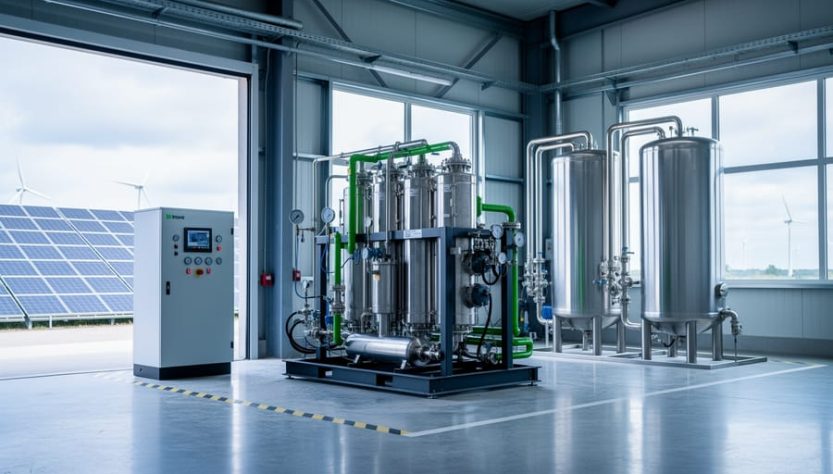
Green hydrogen energy is hydrogen gas produced through the electrolysis of water using electricity generated exclusively from renewable sources such as wind, solar, or hydroelectric power. The process splits water molecules into hydrogen and oxygen, emitting zero carbon dioxide and creating the cleanest form of hydrogen fuel available.
This matters because hydrogen holds immense potential as an energy carrier for sectors where electrification alone falls short. Heavy industry, long-haul transport, and high-temperature manufacturing processes currently rely on fossil fuels that contribute roughly 30 percent of global emissions. Green hydrogen offers a pathway to decarbonize these hard-to-abate sectors without compromising performance or scalability.
Yet understanding green hydrogen requires distinguishing it from its grey and blue counterparts, both of which still depend on natural gas. The “green” designation signals a complete break from fossil inputs, positioning this technology among the most promising renewable breakthroughs of the past decade. As of 2026, production costs have declined substantially, electrolyzers have become more efficient, and governments worldwide have committed billions to infrastructure development.
This article explains what green hydrogen is at a fundamental level, how the production process works, the technologies enabling it, and where it’s already being deployed. You’ll learn why this fuel differs from conventional hydrogen, what challenges remain in scaling it commercially, and how it fits within the broader renewable energy transition. Whether you’re evaluating policy options, exploring investment opportunities, or simply curious about clean energy solutions, the following sections provide the technical clarity and real-world context needed to assess green hydrogen’s role in a carbon-neutral future.
What Green Hydrogen Energy Means
Green hydrogen energy represents hydrogen fuel produced through the electrolysis of water powered entirely by renewable electricity sources such as solar, wind, or hydroelectric power. This production method generates zero carbon emissions at the point of creation, distinguishing it as the cleanest form of hydrogen available today.
Understanding hydrogen’s role requires recognizing that it functions primarily as an energy carrier rather than an energy source. Unlike fossil fuels found in nature, hydrogen must be manufactured, storing energy that can later be released through combustion or fuel cells. Think of it as a rechargeable battery in molecular form: renewable electricity charges it during production, and that stored energy becomes available wherever and whenever needed.
The green hydrogen definition centers on the production pathway. What makes hydrogen “green” isn’t the molecule itself, which remains chemically identical regardless of how it’s made, but the complete absence of greenhouse gas emissions during manufacturing. When renewable electricity splits water molecules, only hydrogen and oxygen emerge.
- Green Hydrogen
- Hydrogen produced through water electrolysis powered exclusively by renewable energy sources, resulting in zero carbon emissions during production.
- Electrolysis
- The chemical process that uses electricity to split water molecules into hydrogen and oxygen gases.
- Energy Carrier
- A substance that stores energy from one source and transports it for use elsewhere, rather than being an original energy source itself.
- Grey Hydrogen
- Hydrogen produced from natural gas through steam methane reformation, releasing approximately 10 tonnes of CO2 per tonne of hydrogen produced.
- Blue Hydrogen
- Hydrogen made from fossil fuels with carbon capture technology applied to reduce, though not eliminate, emissions during production.
This color-coding system matters because roughly 95% of hydrogen produced worldwide today comes from fossil fuels, making it grey hydrogen. Blue hydrogen attempts to bridge the gap by capturing some emissions, but the process remains fossil-dependent and captures typically 60-90% of carbon at best. Only green hydrogen delivers the zero-emission profile necessary for genuine decarbonization across transportation, industry, and energy storage applications.
How Green Hydrogen Energy Production Works
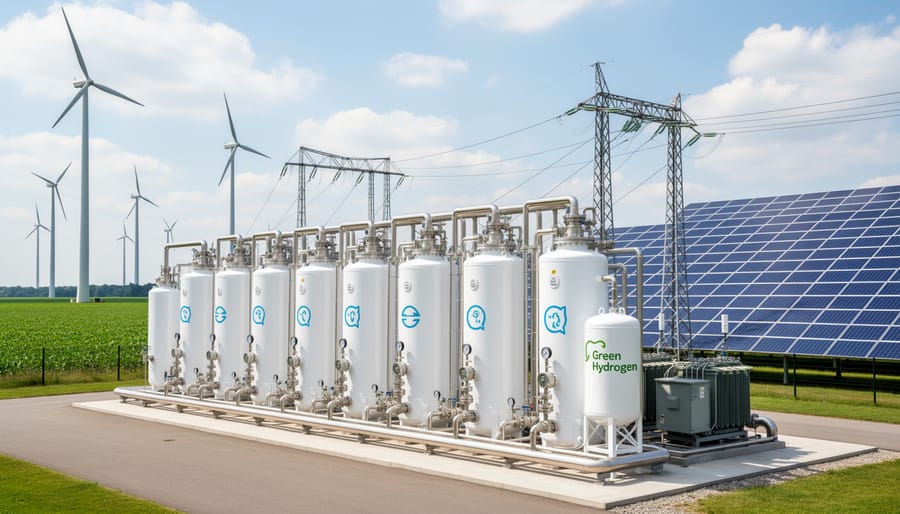
The Electrolysis Process
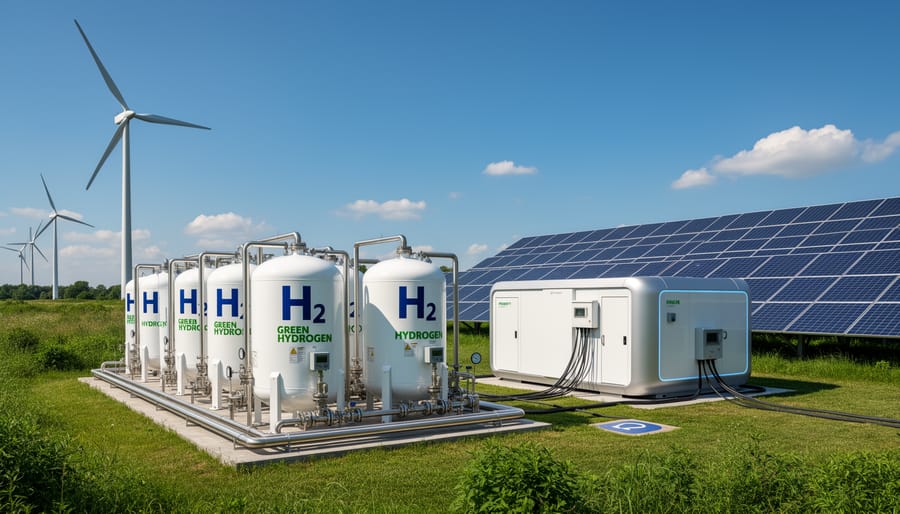
At its core, electrolysis splits water molecules (H₂O) into their constituent elements: hydrogen (H₂) and oxygen (O₂). This happens inside a device called an electrolyzer, which consists of two electrodes submerged in water with an electrolyte solution that helps conduct electricity. When renewable electricity flows through the system, it triggers a chemical reaction that breaks the molecular bonds holding hydrogen and oxygen atoms together.
The process unfolds at the two electrodes. At the negatively charged cathode, water molecules gain electrons and split apart, releasing hydrogen gas. At the positively charged anode, the oxygen atoms combine to form oxygen gas, which bubbles off as a byproduct. The electrolyte between the electrodes maintains the flow of ions needed to keep the reaction going. The entire operation produces no carbon emissions because the only inputs are water and renewable electricity, and the only outputs are pure hydrogen and oxygen.
What makes this process truly green is the energy source. When powered by wind power solar panels, or hydroelectric facilities, the electricity driving the reaction comes from carbon-free generation. This contrasts sharply with conventional hydrogen production methods that rely on natural gas or coal. The renewable energy essentially stores itself in the hydrogen molecules as chemical energy, creating a transportable fuel that releases only water vapor when used.
The quality of the water matters too. Electrolyzers typically require purified or deionized water to prevent mineral buildup and maintain efficiency. Temperature and pressure conditions vary depending on the electrolyzer type, but the fundamental chemistry remains the same across all systems.
Energy Efficiency and Conversion
The journey from renewable electricity to usable hydrogen energy involves multiple conversion steps, each shedding some energy along the way. Modern electrolyzers typically operate at 60-80% efficiency when converting electricity into hydrogen’s chemical energy. This means that for every 100 units of renewable power fed into the system, you end up with hydrogen containing 60-80 units of energy, the rest dissipates as heat.
The efficiency picture becomes more complex when you consider the full cycle. If you’re producing hydrogen for energy storage, planning to convert it back to electricity later through a fuel cell or turbine, you face compounding losses. Fuel cells reconverting hydrogen to electricity operate at roughly 40-60% efficiency. Multiply these conversion steps together, and the round-trip efficiency losses can exceed 60-70% of the original electricity input, significantly higher than lithium-ion batteries, which achieve 85-95% round-trip efficiency.
These losses stem from fundamental thermodynamic limitations and practical engineering constraints. Breaking water’s molecular bonds requires energy. So does compressing or liquefying hydrogen for storage and transport, potentially adding another 10-15% energy penalty. Transmission through pipelines, storage tank boil-off, and other system inefficiencies compound the total energy budget.
Despite these efficiency challenges, green hydrogen remains valuable for applications where batteries fall short: seasonal energy storage, long-duration grid backup, and industrial processes requiring hydrogen as a chemical feedstock rather than just an energy carrier. The economics improve when you value hydrogen for its unique properties, not merely as a battery alternative.
Types of Electrolysis Technologies
The production of green hydrogen relies on three primary electrolyzer technologies, each with distinct characteristics that make them suitable for different applications and scales of deployment.
Alkaline electrolyzers represent the most mature and commercially established technology. These systems use a liquid alkaline electrolyte, typically potassium hydroxide, to facilitate the electrochemical reaction that splits water molecules. Alkaline electrolyzers have been in industrial use for decades, which means they benefit from proven reliability and lower capital costs compared to newer technologies. They operate effectively at large scales and can handle fluctuating power inputs from renewable sources, though their response time to rapid changes in electricity supply is slower than some alternatives. Manufacturing costs for alkaline systems have decreased significantly as production volumes have increased, making them the economical choice for many large-scale green hydrogen projects. Their main drawbacks include larger physical footprints and lower current densities, which means they produce less hydrogen per unit of electrolyzer area.
PEM (proton exchange membrane) electrolyzers use a solid polymer membrane as the electrolyte, offering several advantages over alkaline systems. They can respond almost instantaneously to changes in power input, making them particularly well-suited to pairing with variable renewable energy sources like solar and wind. PEM electrolyzers operate at higher current densities, producing more hydrogen in a smaller physical space, and can function efficiently at partial loads. This flexibility makes them attractive for distributed hydrogen production and applications where space is limited. However, PEM technology currently costs more than alkaline electrolyzers, partly because the membranes and catalysts require precious metals like platinum and iridium. As manufacturing scales up and researchers develop catalysts that use less precious metal, costs are expected to decline.
Solid oxide electrolyzers (SOE) represent the newest technology, operating at high temperatures between 700°C and 900°C. This heat allows them to achieve higher electrical efficiencies than room-temperature technologies, especially when waste heat from industrial processes is available to maintain operating temperature. SOE systems can also operate in reverse as fuel cells, providing grid services and flexibility. However, the technology remains in earlier stages of commercial development, with challenges related to durability, thermal cycling stress, and the time required to reach operating temperature. Most experts view solid oxide electrolyzers as a longer-term solution that will become more viable as the technology matures and manufacturing costs decrease.
Applications and Uses of Green Hydrogen Energy
Transportation and Mobility
Green hydrogen shows particular promise in transportation sectors where battery-electric solutions face practical limitations. Fuel cell electric vehicles (FCEVs) convert hydrogen into electricity onboard, offering refueling times comparable to conventional vehicles, typically three to five minutes, and driving ranges exceeding 300 miles. This makes them viable for applications where frequent charging isn’t practical.
Heavy-duty trucking represents a compelling use case. Long-haul trucks require substantial energy for cross-country routes, and the weight of batteries needed for equivalent range would reduce cargo capacity. Hydrogen fuel cells deliver the necessary power without the weight penalty, allowing operators to maintain payload while achieving zero tailpipe emissions.
Maritime shipping is exploring hydrogen and hydrogen-derived fuels like ammonia for ocean-going vessels. The shipping industry contributes roughly 3% of global emissions, and electrification with batteries isn’t feasible for transoceanic voyages due to energy density requirements. Hydrogen offers the energy concentration needed for these demanding applications.
Aviation faces similar constraints. While short-haul electric aircraft are under development, medium and long-haul flights demand energy densities that current battery technology cannot provide. Green hydrogen, either directly in fuel cells or converted to synthetic jet fuel, presents a pathway to decarbonize air travel without sacrificing range or payload capacity.
The common thread across these applications is the need for high energy density, quick refueling, and long operational ranges, areas where hydrogen’s characteristics align better than batteries with operational requirements.
Industrial Decarbonization
Green hydrogen offers a viable pathway for decarbonizing industrial sectors where electrification alone falls short. Steel production, which accounts for roughly 7% of global carbon emissions, represents one of the most promising applications. Traditional blast furnaces rely on coal-based coke to chemically reduce iron ore, but green hydrogen can serve the same function through direct reduction processes. Several steel manufacturers have already built pilot plants using hydrogen-based direct reduced iron technology, eliminating the carbon dioxide emissions inherent to conventional methods.
The cement industry faces similar challenges. While some emissions come from energy use, the majority stem from the chemical calcination process that releases carbon dioxide from limestone. Green hydrogen can replace fossil fuels in kiln heating, cutting a significant portion of the sector’s footprint even as researchers work on capturing process emissions.
Chemical manufacturing depends heavily on hydrogen as a feedstock, particularly for ammonia synthesis. Currently, 95% of hydrogen used in ammonia production comes from natural gas through steam methane reforming, generating substantial emissions. Switching to green hydrogen transforms ammonia into a carbon-neutral product, essential since ammonia serves as the foundation for most nitrogen fertilizers that feed global agriculture.
These industrial applications consume hydrogen at scales far exceeding transportation needs, making cost reduction critical. As electrolyzer costs decline and renewable electricity becomes cheaper, green hydrogen increasingly competes with fossil-based alternatives in these hard-to-abate sectors.
Energy Storage and Grid Services
Green hydrogen addresses one of renewable energy’s most pressing challenges: storing surplus electricity for weeks or months rather than hours. When solar and wind generation exceeds demand, excess power can drive electrolyzers to produce hydrogen, effectively converting electrical energy into chemical energy that stores indefinitely without degradation. This form of energy storage proves particularly valuable for seasonal balancing, capturing summer solar abundance for winter heating demand or storing spring hydropower for autumn use. Unlike batteries that lose charge over time and suit short-duration applications, hydrogen can bridge gaps spanning weeks or months at scale. Grid operators increasingly view hydrogen systems as complementary to batteries: lithium-ion handles minute-to-minute fluctuations, while hydrogen manages multi-day weather events and seasonal patterns. Reconverting stored hydrogen to electricity through fuel cells or turbines during high-demand periods provides dispatchable clean power when wind dies down or clouds persist for days.
Benefits and Challenges of Green Hydrogen Energy
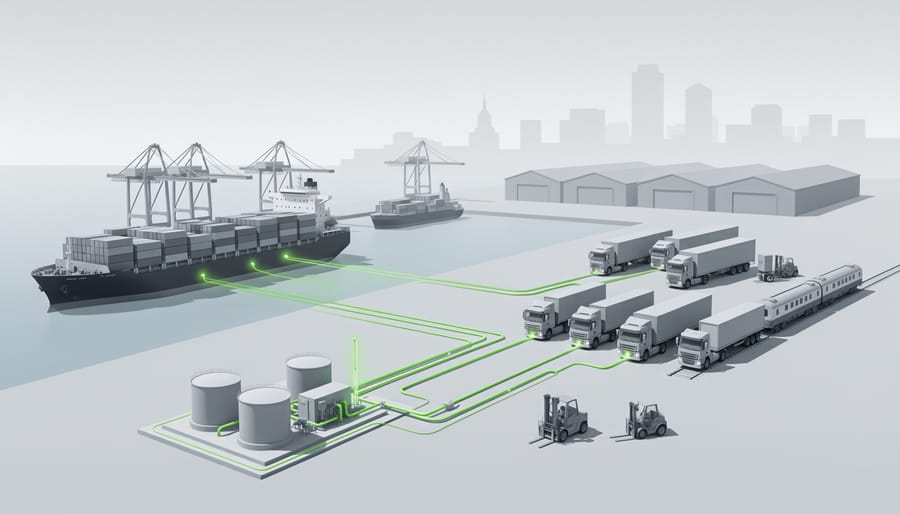
Green hydrogen energy presents a compelling solution for deep decarbonization, yet its path to widespread adoption faces substantial obstacles that must be addressed through technological advancement and supportive policy frameworks.
The most significant advantage of green hydrogen lies in its zero-emission profile when produced and used. Unlike grey hydrogen derived from natural gas or coal, green hydrogen generates no carbon dioxide during production or consumption. Fuel cells converting hydrogen back to electricity emit only water vapor, making it the cleanest option for sectors where direct electrification proves impractical. This characteristic positions green hydrogen as essential for decarbonizing heavy industry, long-haul transport, and chemical production, applications where batteries cannot compete on energy density or operational requirements.
Energy security represents another major benefit. Countries with abundant renewable resources can produce hydrogen domestically, reducing dependence on imported fossil fuels. Hydrogen also serves as a crucial link between renewable generation and end uses, storing excess solar and wind power for weeks or months, a capability lithium-ion batteries cannot match. This long-duration storage helps balance seasonal variations in renewable output.
However, cost remains the primary barrier. Green hydrogen production currently costs two to three times more than grey hydrogen, driven by expensive electrolyzer equipment and the price of renewable electricity. Scaling production and reducing electrolyzer costs through manufacturing improvements will be critical to achieving competitiveness by 2030.
Infrastructure presents another formidable challenge. Transporting, storing, and distributing hydrogen requires new pipelines, storage facilities, and refueling stations. Existing natural gas infrastructure can sometimes be adapted, but hydrogen’s small molecular size causes leakage and embrittlement in certain materials, necessitating upgrades or replacement.
The efficiency consideration cannot be ignored. Converting electricity to hydrogen, then back to electricity, loses 60 to 70 percent of the original energy. For applications where direct electrification works, using renewable electricity directly proves far more efficient. This reality means green hydrogen should be reserved for use cases where alternatives are not viable, rather than deployed universally as an energy carrier.
Current State and Future Outlook
Global green hydrogen production capacity has grown substantially since 2024, with operational electrolysis capacity reaching approximately 15 gigawatts by mid-2026 and announced projects totaling over 250 gigawatts through 2030. Europe leads deployment with major facilities in Spain, Germany, and the Netherlands, while the United States, Australia, and Middle Eastern nations have accelerated investment following supportive policy frameworks. China has also emerged as a significant producer, leveraging its renewable energy expansion.
Production costs have declined faster than many experts anticipated. Levelized costs dropped below $3 per kilogram for projects with access to inexpensive renewable electricity in optimal locations, down from $5-6 in 2023. Industry analysts project that costs will approach $2 per kilogram by 2030 in favorable regions, making green hydrogen competitive with grey hydrogen in specific applications. This trajectory depends on continued reductions in electrolyzer capital costs, which have fallen roughly 30% since 2024, and further scaling of manufacturing capacity.
Policy mechanisms have proven critical to sector growth. The United States’ Inflation Reduction Act production tax credits, the European Union’s renewable hydrogen quotas and carbon border adjustments, and Japan’s strategic hydrogen roadmap have all channeled billions in investment. Government procurement commitments and low-carbon fuel standards create demand certainty that private capital requires for large-scale deployment.
Several factors will determine whether green hydrogen achieves widespread adoption beyond niche applications. Infrastructure development remains a bottleneck, dedicated hydrogen pipelines, storage facilities, and refueling networks require coordinated investment that transcends individual projects. Scaling electrolyzer manufacturing to meet announced capacity targets tests supply chains for critical materials like iridium and platinum in PEM systems. The technology is recognized among emerging technologies that could reshape energy systems, yet its role will be defined by whether renewable electricity remains affordable and abundant as electrification demands surge across sectors.
Industry consensus suggests green hydrogen will secure market share first in applications where alternatives face technical limitations, long-haul aviation, steel production, and ammonia synthesis. Broader penetration into passenger vehicles or residential heating appears unlikely given battery-electric and heat pump efficiency advantages.
Frequently Asked Questions
Is green hydrogen safe to use and store?
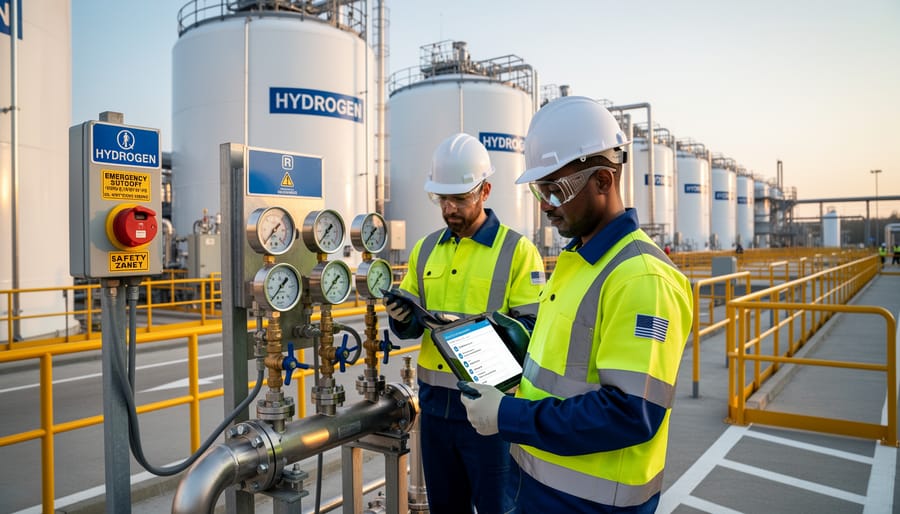
Green hydrogen is flammable and requires proper handling, but it’s been used safely in industrial settings for decades. Modern storage systems use pressure vessels or cryogenic tanks with multiple safety features, and hydrogen disperses quickly in open air, reducing accumulation risks compared to heavier fuels.
How much does green hydrogen cost compared to conventional fuels?
As of 2026, green hydrogen typically costs $3-6 per kilogram to produce, significantly higher than grey hydrogen at $1-2 per kilogram. However, costs are declining rapidly as electrolyzer technology improves and renewable electricity becomes cheaper, with projections suggesting price parity within the next decade in regions with abundant renewable resources.
Can green hydrogen be stored for long periods?
Yes, hydrogen can be stored for months or even years with minimal losses, making it ideal for seasonal energy storage. It can be compressed in high-pressure tanks, liquefied at cryogenic temperatures, or converted into ammonia or other chemical carriers for easier handling and transport.
Is green hydrogen truly emission-free?
When produced using renewable electricity and consumed in fuel cells, green hydrogen generates only water vapor as a direct emission. The lifecycle emissions depend on the renewable energy source and manufacturing of equipment, but remain dramatically lower than fossil fuel alternatives throughout the entire value chain.
These questions reflect the most common concerns from people evaluating green hydrogen as part of the broader clean energy transition. Safety concerns often stem from hydrogen’s reputation as highly flammable, yet the reality is that proper engineering controls make it manageable in transportation, industrial, and energy storage contexts.
Cost remains the most significant barrier to widespread adoption. While green hydrogen carries a premium today, the gap is narrowing as electrolyzer manufacturing scales up and renewable electricity prices continue their downward trajectory. Regional variations matter considerably, areas with exceptional solar or wind resources can produce cheaper green hydrogen than regions dependent on grid electricity.
Storage flexibility gives green hydrogen an advantage over batteries for applications requiring energy to be held for weeks or months rather than hours or days. This makes it complementary to battery storage rather than directly competitive, addressing different niches within the renewable energy ecosystem. Researchers are also exploring integration with hydrogen biofuels which could offer additional pathways for sustainable energy carriers.
The emission-free claim holds up well under scrutiny when renewable electricity powers production, though it’s worth noting that manufacturing electrolyzers and building infrastructure does carry an embedded carbon cost. Still, lifecycle analyses consistently show green hydrogen outperforming fossil alternatives across most metrics when deployment reaches meaningful scale.
Green hydrogen energy represents a genuine pathway toward deep decarbonization, particularly in sectors where electrification alone falls short. Its production through renewable-powered electrolysis creates a clean fuel and energy carrier without the carbon emissions inherent to grey or blue hydrogen. The technology exists today, proven across multiple applications from industrial feedstocks to long-duration storage.
Yet acknowledging its potential means recognizing the roadblocks still ahead. Costs must decline further, infrastructure requires substantial investment, and energy efficiency losses demand careful consideration when comparing alternatives. Green hydrogen won’t replace every fossil fuel application overnight, nor should it. Battery electric solutions, direct electrification, and other renewable technologies each have domains where they excel.
The most realistic vision positions green hydrogen as one element within a diversified clean energy portfolio, deployed strategically where its unique characteristics deliver the greatest value. As electrolyzer costs fall, renewable electricity becomes cheaper, and policy frameworks mature, green hydrogen’s economic case strengthens. Projects launching in 2026 are building the foundation for larger-scale deployment in the 2030s.
Staying informed about cost trends, infrastructure development, and emerging applications will help you understand when and where green hydrogen transitions from promising technology to practical solution.