

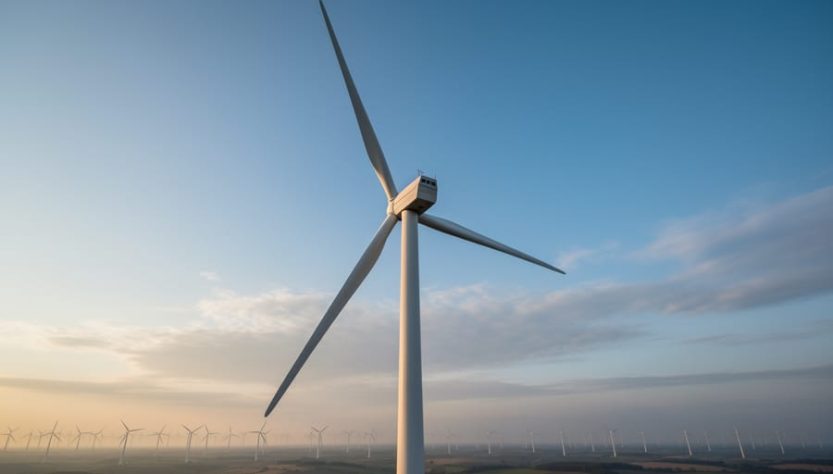
A wind turbine generates electricity by converting the kinetic energy of moving air into mechanical power through rotating blades, which then drives a generator to produce electrical current. This elegant transformation follows the same electromagnetic principles discovered nearly two centuries ago, yet modern turbines have evolved into sophisticated machines capable of powering thousands of homes from a single installation.
Understanding how wind turbines work matters now more than ever. As of 2026, wind energy accounts for a growing share of global electricity production, with installations spanning from massive offshore arrays to distributed onshore farms across every continent. The technology addresses urgent climate concerns while delivering reliable, cost-competitive power without fuel costs or direct emissions.
The conversion process involves several precisely coordinated stages. Wind strikes the aerodynamically designed blades, creating lift that causes rotation. This rotation transfers through a drivetrain to spin a generator, where magnets and copper coils interact to produce alternating current. Power electronics then condition this electricity to match grid requirements before distribution to homes and businesses.
Grasping these fundamentals helps clarify why turbine placement, blade design, and tower height matter so much to performance. It also explains the relationship between wind speed and power output, a cubic relationship that makes even small increases in wind velocity dramatically more valuable.
This article walks through each component and conversion stage in the electricity generation process, building from wind power basics to the technical details that determine real-world output. You’ll gain insight into why modern turbines can achieve capacity factors exceeding 50 percent in favorable locations and how ongoing innovations continue pushing efficiency boundaries.
What Wind Turbine Electricity Generation Means
Wind turbine electricity generation is the process of harnessing moving air to produce electrical power through a series of mechanical and electromagnetic conversions. At its most fundamental level, a wind turbine transforms the kinetic energy present in wind, the energy of motion, into electrical energy that can power homes, businesses, and entire communities.
The physics underlying this conversion follows a straightforward path, though each stage involves sophisticated engineering. When wind strikes a turbine’s blades, those blades begin to rotate, capturing the linear motion of air and converting it into rotational mechanical energy. This spinning motion drives a generator, where electromagnetic principles take over to produce electricity. The entire system operates on the principle that energy changes form but isn’t created or destroyed, merely transferred from one state to another.
To understand the process more clearly, several key terms define the stages of energy transformation:
- Kinetic Energy
- The energy possessed by moving air masses, which increases exponentially with wind speed and provides the raw power input for turbines.
- Mechanical Energy
- The rotational energy created when wind forces the turbine blades to spin, transferred through the shaft and gearbox to drive the generator.
- Electromagnetic Induction
- The physical phenomenon where rotating magnets near conductive coils generate electrical current, forming the core principle behind the generator’s operation.
- Grid Integration
- The process of conditioning and synchronizing turbine-generated electricity to match the voltage and frequency requirements of the power grid for distribution.
This conversion process represents one of humanity’s most elegant renewable energy solutions, capturing a freely available resource and converting it into the standardized electrical power our modern world requires. Understanding these fundamentals provides essential context whether you’re exploring wind energy through a STEM windmill project or evaluating large-scale renewable energy infrastructure.
How Wind Turbines Convert Wind into Electricity
Wind Capture and Rotor Motion
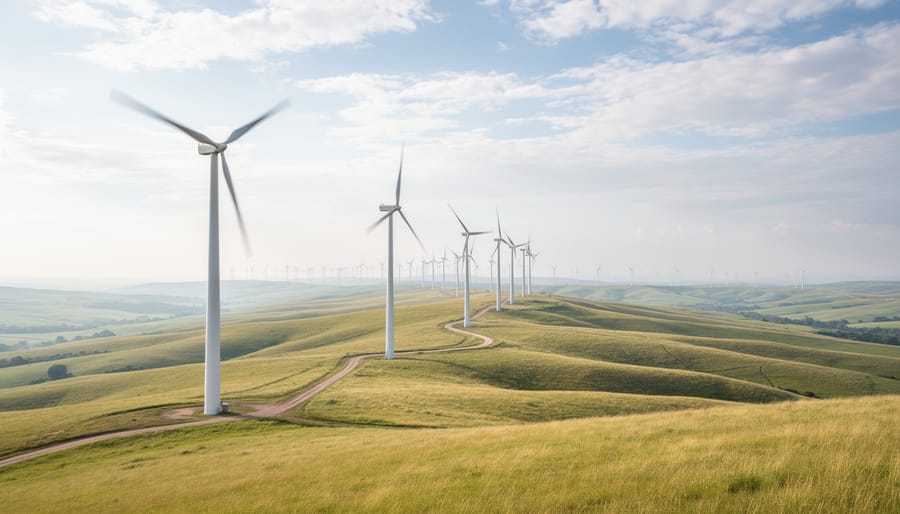
When wind strikes a turbine blade, it doesn’t simply push against a flat surface. Instead, modern blades use sophisticated airfoil cross-sections, the same principle that allows aircraft wings to generate lift. As air flows over the curved upper surface and the flatter lower surface, it creates a pressure difference that produces both lift and drag forces perpendicular to the wind direction.
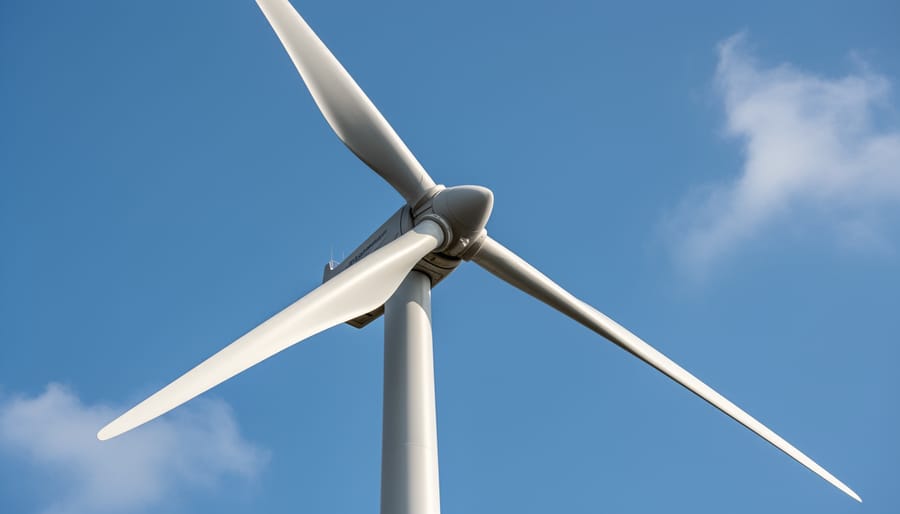
This aerodynamic force turns rotor blades around a central hub, converting the linear motion of wind into rotational mechanical energy. The blades typically span 40 to 80 meters in length for utility-scale turbines, with their distinctive taper and twist optimized to capture energy across the entire blade length. Engineers angle each section differently because wind speed increases with height, and the blade tip moves faster than the root.
The rotor hub serves as the structural anchor point, connecting all blades to a low-speed shaft and bearing the enormous forces generated during rotation. Most commercial turbines use three blades rather than two or four because this configuration balances structural efficiency, smooth operation, and material costs while minimizing vibration.
The Gearbox and Speed Conversion
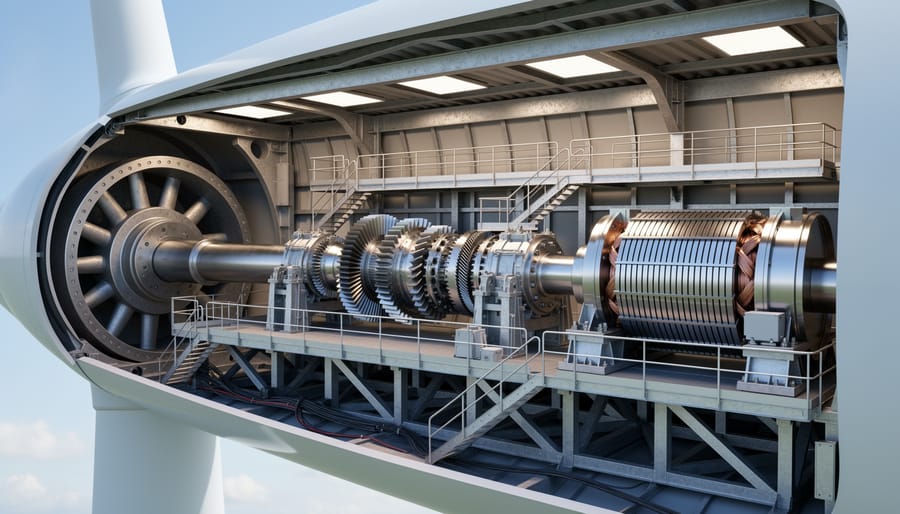
Wind turbine rotors spin relatively slowly, typically between 10 and 20 revolutions per minute, because their massive blades must move efficiently through the air without creating excessive stress. Conventional generators, however, require much higher speeds to produce electricity effectively, often 1,200 to 1,800 rpm. The gearbox bridges this gap through a series of interlocking gears that multiply rotational speed.
Inside the nacelle, the low-speed shaft from the rotor connects to the gearbox input. Through carefully designed gear ratios, commonly around 1:90 or higher, the gearbox transforms slow, high-torque rotation into the rapid spin the generator needs. A rotor turning at 15 rpm emerges from the gearbox at 1,350 rpm or more. This mechanical advantage is essential for efficient power generation in most turbines.
Not all turbines use gearboxes. Direct-drive systems eliminate the gearbox entirely by pairing the rotor directly with a specialized generator designed to operate at low speeds. These generators are larger and heavier but avoid gearbox maintenance issues and mechanical losses. Manufacturers like Siemens Gamesa and Enercon have built thousands of direct-drive turbines, particularly for offshore installations where reliability and reduced maintenance are priorities.
Electromagnetic Induction in the Generator
The generator sits at the heart of the electricity production process, transforming the mechanical rotation delivered by the gearbox into usable electrical current. This conversion relies on electromagnetic induction, a principle discovered by Michael Faraday in the 1830s.
Inside the generator, powerful magnets mounted on a rotating shaft spin past stationary copper wire coils. As the magnetic field moves across the coils, it creates a changing magnetic flux that induces voltage in the copper wires. This electromagnetic interaction forces electrons to flow through the wire, generating electrical current.
The rotation causes the magnetic field to constantly alternate polarity as it sweeps past the coils, north pole, then south pole, then north again. This alternating magnetic field produces alternating current (AC), where the direction of electron flow reverses with each cycle. The frequency of this alternation depends directly on the rotational speed, which is why the gearbox must maintain consistent generator speeds.
The amount of current produced depends on three factors: the strength of the magnetic field, the number of wire turns in the coils, and how quickly the magnetic field changes. Modern generators use neodymium magnets and precisely wound copper coils to maximize efficiency, typically converting 95-98% of the mechanical energy into electrical energy.
Power Conditioning and Grid Connection
The alternating current leaving the generator isn’t immediately suitable for grid connection. Its voltage and frequency vary with wind speed, while the grid demands precise, stable electrical characteristics.
Power converters perform the first critical task: transforming the variable-frequency AC into direct current, then inverting it back to AC at the grid’s required frequency, typically 50 or 60 Hz depending on regional standards. This two-stage conversion process stabilizes the erratic output from fluctuating wind conditions into consistent electrical waves that synchronize perfectly with grid frequency.
Transformers then step up the voltage substantially. A generator might produce electricity at 690 volts, but transmission over distance requires much higher voltages to minimize energy losses, often 33,000 volts or more for collection systems within wind farms, and up to 400,000 volts for long-distance transmission lines. Higher voltage means lower current for the same power, which reduces resistive losses in cables.
Before connection, sophisticated control systems verify that voltage, frequency, and phase alignment match grid parameters exactly. Any mismatch could damage equipment or destabilize the grid. Once synchronized, circuit breakers close and electricity flows from the turbine through underground or overhead cables to substations, then into the broader transmission network serving homes and businesses.
Key Components That Enable Power Generation
Types of Generators Used in Wind Turbines
Wind turbines employ three principal generator types, each with distinct operating characteristics and performance profiles.
Synchronous generators maintain precise rotational speeds that match the electrical grid frequency. These generators typically require a gearbox to reach the necessary speed from the rotor’s slower rotation. They excel at maintaining voltage stability during grid disturbances, making them valuable for renewable grid integration in regions with variable demand patterns. However, they demand continuous excitation power and careful synchronization when connecting to the grid.
Asynchronous (induction) generators represent the workhorse of wind power, particularly in older installations and variable-speed turbines with doubly-fed configurations. These generators can operate across a range of speeds without losing grid connection, offering flexibility as wind conditions fluctuate. They’re mechanically robust, cost-effective, and self-synchronize with the grid automatically. The trade-off is their need for reactive power compensation from external sources.
Permanent magnet generators have gained dominance in modern offshore and large onshore turbines. Using powerful rare-earth magnets instead of electromagnetic excitation, they eliminate excitation losses and achieve higher efficiency, particularly at partial loads. Many permanent magnet designs operate without gearboxes, reducing mechanical complexity and maintenance requirements. Their compact, lightweight construction suits the demanding offshore environment, though the reliance on rare-earth materials raises supply chain and cost considerations.
Where and How Wind Turbine Electricity Is Used
Wind-generated electricity serves diverse applications across multiple scales, from massive offshore arrays powering millions of homes to individual turbines supporting remote facilities. The versatility of wind power has enabled its integration into various energy systems worldwide, each tailored to specific needs and geographic contexts.
Utility-Scale Wind Farms and Grid Power
The majority of wind-generated electricity flows into national and regional power grids through utility-scale wind farms. These installations, containing dozens or even hundreds of turbines, function as conventional power plants that supply electricity to broad consumer bases. Grid operators integrate this power alongside conventional sources, dispatching it based on availability and demand. Modern grid management systems forecast wind patterns hours or days ahead, allowing operators to plan for expected generation levels and coordinate backup capacity when wind speeds drop.
Practical Applications Across Settings
Wind turbines provide electricity in remarkably varied contexts:
- Utility-scale grid power, large wind farms feeding regional transmission networks that distribute electricity to cities and towns
- Distributed generation for rural areas, small clusters or individual turbines supplying power directly to farms, villages, or industrial sites without extensive grid infrastructure
- Industrial power supply, dedicated turbines providing electricity for manufacturing facilities, data centers, or mining operations seeking to reduce operating costs and carbon footprints
- Offshore wind farms, marine installations leveraging stronger, more consistent ocean winds to generate substantial baseload power for coastal populations
- Hybrid renewable systems, wind turbines paired with solar panels, diesel generators, or batteries to create resilient, multi-source microgrids for islands or remote communities
Grid Integration and Storage Solutions
Integrating wind electricity presents challenges stemming from its variable nature. Wind doesn’t blow constantly at optimal speeds, creating supply fluctuations that grid operators must balance against steady consumer demand. Advanced forecasting tools, flexible conventional generation, and interconnected transmission networks help manage this variability. Increasingly, energy storage systems, particularly large-scale batteries, absorb excess wind generation during high-output periods and discharge electricity when turbines produce less, smoothing the supply curve and enhancing grid reliability. Pumped hydro storage and emerging technologies like compressed air storage offer additional buffering capacity, enabling wind power to function more like dispatchable generation rather than purely intermittent supply.
Factors That Affect Electricity Output
A wind turbine’s electricity output varies constantly because multiple interacting factors determine how much power it can extract from the air flowing past its blades. Understanding these variables helps explain why even well-placed turbines don’t run at full capacity all the time.
Wind speed exerts the most dramatic influence. Power output increases with the cube of wind speed, doubling the wind speed yields eight times more power. Most turbines start generating around 3-4 meters per second (the cut-in speed), reach rated capacity at roughly 12-15 meters per second, and shut down for safety above 25 meters per second (the cut-out speed). Between these thresholds, output climbs steeply but plateaus at the design limit to protect the generator and drivetrain.
Air density directly affects power production. Denser air, found at lower elevations, cooler temperatures, and higher barometric pressure, carries more kinetic energy per cubic meter than thin air. A turbine in cold coastal regions generates more electricity than an identical model in hot, high-altitude locations, even at the same wind speed. Seasonal and daily temperature fluctuations cause measurable output variations.
Turbine design determines theoretical maximum efficiency. Modern machines capture 45-50% of available wind energy under ideal conditions, approaching the Betz limit of 59.3% (the theoretical maximum for any rotor design). Larger rotor diameters sweep greater areas and capture more energy, while taller towers access stronger, steadier winds aloft. Innovations in blade aerodynamics and control systems continue improving performance, with future wind technologies focusing on adaptive pitch mechanisms and wake-steering strategies to boost farm-wide output.
Site location encompasses terrain roughness, obstacles, and prevailing wind patterns. Smooth surfaces like water or flat plains allow wind to flow freely, whereas forests and buildings create turbulence that reduces effective wind speed. This explains why capacity factor, actual output versus theoretical maximum over a year, typically ranges from 25-35% for onshore sites but reaches 40-50% offshore.
Frequently Asked Questions
How efficient are wind turbines at converting wind energy to electricity?
Modern wind turbines typically achieve 30-45% efficiency under optimal conditions, converting roughly a third to half of the wind’s kinetic energy into electrical power. This efficiency is constrained by the Betz limit, a theoretical maximum of 59.3%, which no turbine can exceed due to the physical laws governing airflow through a rotor.
What minimum wind speed is required for a turbine to generate electricity?
Most utility-scale turbines begin generating electricity at cut-in speeds of 6-9 mph, though output remains minimal until winds reach 13-15 mph. Turbines shut down automatically at very high speeds (typically around 55 mph) to prevent damage, meaning they operate productively within a specific wind speed window.
How much electricity does a single wind turbine produce?
A typical modern onshore turbine (2-3 MW capacity) generates enough electricity annually to power 400-900 homes, while larger offshore turbines (8-12 MW) can supply 3,000-6,000 households. Actual output varies significantly based on turbine size, local wind conditions, and the site’s capacity factor.
How long do wind turbines last before needing replacement?
Well-maintained wind turbines have operational lifespans of 20-25 years, with many components like gearboxes and generators requiring refurbishment or replacement midway through that period. After decommissioning, the towers and foundations can sometimes support repowering projects that install newer, more efficient turbine technology.
Beyond the basics, readers often wonder whether turbines create significant noise pollution. Operating turbines produce sound levels of 35-45 decibels at 300 meters, comparable to a quiet library or rural nighttime environment. The aerodynamic swoosh from blade tips comprises most of this noise, though mechanical sounds from gearboxes contribute in older models. Setback regulations in most jurisdictions ensure turbines are placed far enough from residences that noise remains well below disruptive levels.
Environmental impact concerns also arise frequently. While turbines do pose collision risks to birds and bats, studies indicate well-sited installations cause far fewer wildlife deaths than fossil fuel extraction, building glass strikes, or domestic cats. Developers now use radar monitoring, seasonal shutdowns during migration periods, and careful site selection to minimize these impacts. The climate benefits from displacing coal and gas generation substantially outweigh localized environmental effects when projects follow best practices.
How How Does a Wind Turbine Generate Electricity Works
The entire process unfolds as a chain of energy transformations, each step converting one form of energy into another with remarkable efficiency.
When wind flows across the landscape, it carries kinetic energy, the energy of motion. As this moving air encounters a turbine’s blades, their carefully sculpted airfoil shape creates differential pressure: lower pressure on the downwind side pulls the blade forward while higher pressure on the upwind side pushes it. This aerodynamic force sets the massive rotor spinning, typically at 10 to 20 revolutions per minute for large utility-scale machines.
The rotating shaft connects to a gearbox that multiplies this slow rotation into the much faster speeds generators require, usually 1,000 to 1,800 rpm. Inside the generator, this rapid rotation drives powerful magnets past coils of copper wire. The moving magnetic field induces an electrical current in those coils through the principle of electromagnetic induction, the same phenomenon Michael Faraday discovered in 1831.
The resulting alternating current flows to power electronics that adjust its voltage and synchronize its frequency with the electrical grid. Transformers then step up the voltage for efficient long-distance transmission, and the electricity enters the grid network, ready to power homes and businesses miles away.
Wind turbines transform a simple natural force into electrical power through an elegant chain of energy conversions. From the aerodynamic blades capturing kinetic energy to the generator producing current through electromagnetic induction, each component plays a precise role in delivering clean electricity to homes and businesses.
This technology has matured into a cornerstone of the global energy transition. As turbine designs become more efficient and installations expand both onshore and offshore, wind-generated electricity continues to displace fossil fuel consumption at an accelerating pace. The physics hasn’t changed, but our ability to harness wind energy at scale has improved dramatically.
Understanding how wind turbines work reveals why they’ve become indispensable in modern power systems. The process requires no fuel, produces no emissions during operation, and taps into an inexhaustible resource. While challenges remain in grid integration and storage, ongoing innovation addresses these obstacles with smarter controllers, better forecasting, and complementary technologies.
Wind energy’s trajectory points toward an even larger role in meeting electricity demand while reducing carbon emissions, a practical, proven solution already delivering results across six continents.