

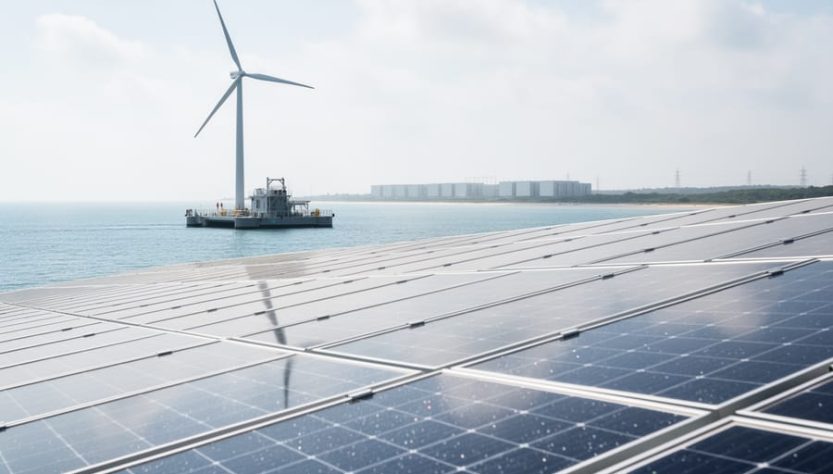
Trends in renewable energy describe the evolving patterns, technologies, and market shifts that define how clean power is generated, stored, and distributed across the global energy system. As of 2026, these trends encompass breakthrough innovations in solar efficiency, offshore wind expansion, green hydrogen production, and grid-scale battery storage that collectively promise to accelerate the transition away from fossil fuels.
Understanding what’s emerging in this sector matters because the renewable energy landscape is no longer a static catalogue of established technologies. The field is experiencing rapid transformation driven by materials science breakthroughs, artificial intelligence optimization, and novel deployment strategies that are fundamentally changing cost curves and performance benchmarks. For professionals making investment decisions, researchers tracking technical progress, and policymakers crafting energy strategy, recognizing which trends carry genuine momentum versus which remain speculative is essential.
This article examines the most significant emerging technologies reshaping renewable energy today. You’ll learn how these innovations function at a technical level, what distinguishes one category of advancement from another, and where real-world implementation is already proving their viability. We’ll explore the mechanisms behind perovskite solar cells that promise to surpass silicon efficiency limits, floating offshore wind platforms unlocking deep-water energy potential, and electrolyzer designs making green hydrogen economically competitive.
The coverage ahead categorizes major technology areas, profiles concrete case studies demonstrating commercial deployment, and identifies the market forces and policy frameworks driving adoption. Rather than speculative forecasting, the focus remains on technologies currently transitioning from laboratory to field, supported by expert analysis and performance data.
What Emerging Trends in Renewable Energy Mean for the Sector
In renewable energy, an emerging trend represents more than just an interesting laboratory development or marginal efficiency gain. It’s a technology, approach, or business model that demonstrates three essential characteristics: technical viability beyond the prototype stage, a clear pathway to cost competitiveness within a decade, and the potential to materially change how we generate, store, or distribute clean energy at scale.
This definition matters because the renewable sector regularly faces what analysts call “innovation noise”, a constant stream of announcements about breakthrough technologies that rarely move from press release to deployment. Genuine emerging trends show measurable progress in real-world conditions, attract sustained investment from multiple sources, and solve specific, well-defined problems that existing technologies struggle to address. A laboratory solar cell achieving 50% efficiency under controlled conditions is scientifically impressive, but it becomes an emerging trend only when researchers chart a credible manufacturing route and identify applications where that performance justifies the cost.
The distinction between incremental and transformative innovations helps professionals separate signal from noise. Incremental improvements, such as a 2% efficiency gain in standard silicon solar panels, advance the sector but work within existing frameworks and deployment models. Transformative innovations, by contrast, enable entirely new applications or economic structures. Floating offshore wind platforms, for instance, don’t just improve upon fixed-bottom turbines; they unlock vast deepwater areas previously unsuitable for wind development, potentially doubling the viable offshore resource base.
Hype cycles complicate this landscape. Technologies often receive outsized attention during their early stages, creating expectations that outpace actual progress. Distinguishing meaningful trends requires examining deployment timelines, capital flows from strategic investors rather than venture speculators, and whether pilot projects are successfully scaling to commercial operations. An emerging trend withstands this scrutiny, showing consistent advancement across multiple metrics rather than stalling after initial enthusiasm fades.
How These Technologies Are Advancing Renewable Energy
Next-Generation Solar Technologies
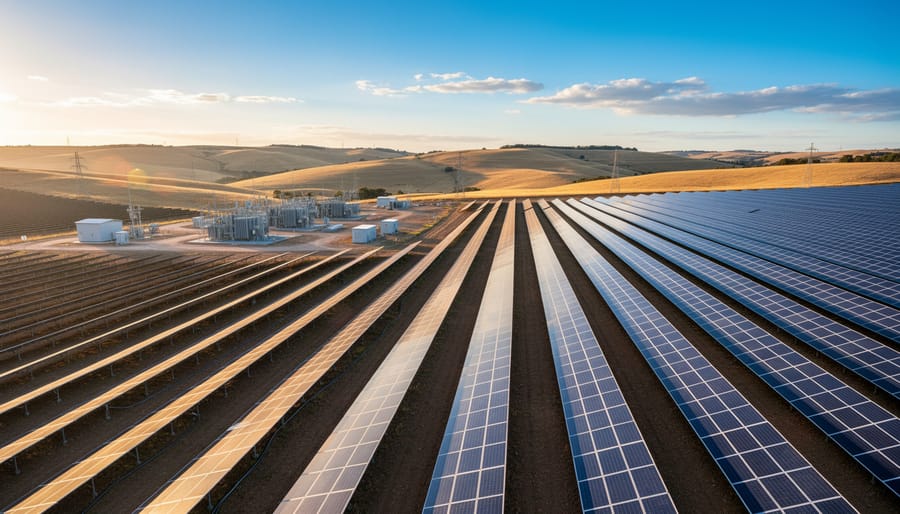
Perovskite solar cells represent the most significant efficiency leap in photovoltaics since monocrystalline silicon. These cells use a crystalline structure that combines organic and inorganic materials, achieving rapid efficiency gains that took silicon decades to reach. Laboratory prototypes now exceed 26% efficiency for single-junction perovskite cells, while tandem configurations, stacking perovskite layers atop silicon, have surpassed 33% on the best research-cell efficiency chart. The challenge lies in stability: perovskites degrade faster than silicon when exposed to moisture and heat, though recent advances in encapsulation and material formulations are extending operational lifespans.
Tandem cells matter because they capture a broader spectrum of sunlight. Silicon absorbs red and infrared wavelengths efficiently but wastes higher-energy blue photons as heat. Perovskite top layers harvest that blue light, passing the rest through to the silicon below. This complementary absorption pushes theoretical efficiency limits beyond what any single material can achieve alone.
Building-integrated photovoltaics (BIPV) turn structural elements into power generators. Solar facades, transparent window coatings, and photovoltaic roof tiles eliminate the need for separate mounting systems, reducing installation costs and overcoming space constraints in urban environments. Semi-transparent perovskite films enable energy-generating windows that maintain visibility while offsetting building electricity demand, making solar viable where conventional panels cannot fit.
Offshore and Floating Wind Innovations
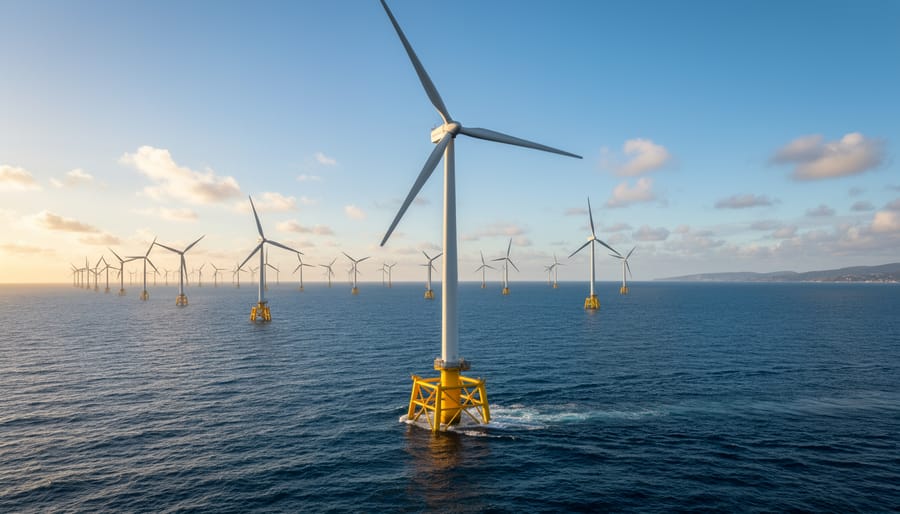
Offshore wind is scaling up through three converging advances: floating platforms that unlock deeper waters, turbines growing to 15+ megawatt capacities, and installation techniques purpose-built for remote marine environments. Traditional fixed-bottom foundations work only in shallow continental shelves, typically under 60 metres. Floating wind accesses deeper water using spar-buoy, semi-submersible, or tension-leg designs anchored to the seabed by mooring lines rather than rigid towers. This opens vast areas with stronger, more consistent wind speeds, particularly off coastlines where the shelf drops quickly.
Turbine size has doubled in a decade. Blades now exceed 100 metres in length, sweeping areas larger than three football fields and capturing significantly more energy per rotation. Larger rotors maintain high capacity factors even in moderate wind, improving economics and reducing the number of turbines needed for a given output. Manufacturing and logistics have adapted: blade segments are shipped separately and assembled at port or offshore.
Installation vessels equipped with dynamic positioning and specialized cranes deploy these giants in harsher conditions, while floating platforms can be assembled nearshore and towed to site, cutting offshore construction time. Together, these innovations are making offshore wind 2026 a viable option for countries lacking shallow waters, from the Mediterranean to the U.S. West Coast.
Energy Storage Breakthroughs
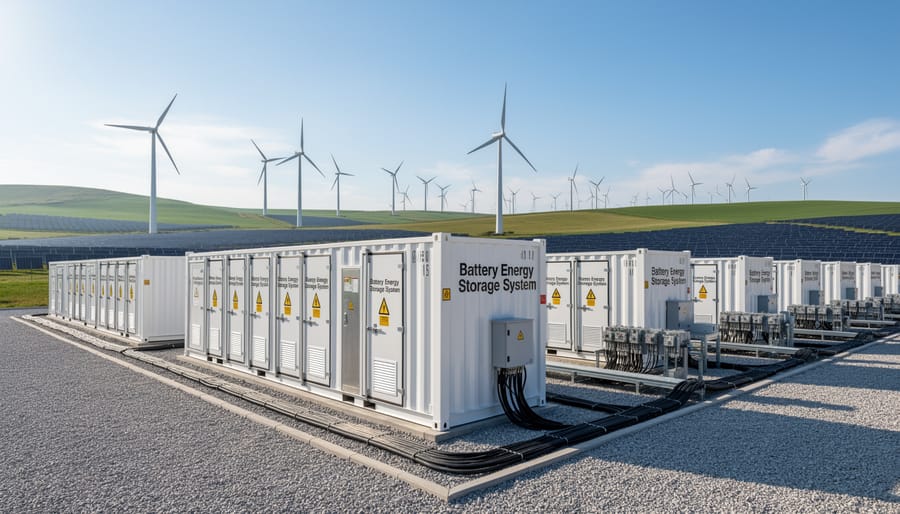
Energy storage represents the critical bridge between intermittent renewable generation and reliable power supply. While lithium-ion batteries dominate current deployments, a wave of energy storage innovations is expanding the technology menu for different use cases and timescales.
Solid-state batteries replace liquid electrolytes with solid materials, offering higher energy density, faster charging, and improved safety. Several manufacturers are targeting commercial production by 2027, with potential applications ranging from electric vehicles to grid storage where space constraints matter.
Flow batteries store energy in liquid electrolytes held in external tanks, allowing independent scaling of power and duration. Their ability to maintain capacity through thousands of cycles makes them suited for daily grid cycling and long-duration storage needs that exceed lithium-ion’s economic sweet spot.
Gravity-based systems use excess renewable electricity to lift heavy masses, concrete blocks or water, then recover energy by lowering them to drive generators. These mechanical approaches offer decades-long lifespans with minimal degradation and no rare materials.
Thermal storage captures renewable energy as heat in molten salts, rocks, or phase-change materials. Concentrated solar facilities already use this approach, but emerging applications include storing excess wind or solar as industrial-grade heat for manufacturing processes.
Each technology addresses different storage durations, from hours to seasonal scales, creating a complementary ecosystem that matches renewable variability across timescales.
Categories of Emerging Renewable Energy Trends
Green Hydrogen and Power-to-X
Green hydrogen, produced by splitting water molecules using renewable electricity, represents one of the most promising pathways for decarbonizing sectors that cannot easily run on batteries. Unlike fossil fuel-derived hydrogen, green hydrogen energy produces no carbon emissions during production, making it viable for steel manufacturing, long-haul shipping, aviation, and chemical processing where direct electrification faces technical or economic barriers.
Power-to-X technologies extend this concept further by converting renewable electricity and hydrogen into synthetic fuels, ammonia, methanol, and other chemical feedstocks. These energy carriers offer higher energy density than hydrogen alone and integrate into existing infrastructure more readily. For example, renewable-derived ammonia can fuel maritime vessels using modified engines, while synthetic aviation fuel can drop into current jet engines without requiring fleet retrofits.
The economics remain challenging: green hydrogen costs two to three times more than grey hydrogen in most markets, and conversion losses reduce overall efficiency. However, falling electrolyzer costs, improving catalyst materials, and policy support through production tax credits and mandates are narrowing the gap. Several industrial clusters in Northern Europe, Australia, and the Middle East are already commissioning gigawatt-scale green hydrogen facilities, signaling the transition from pilot projects to commercial deployment.
Distributed and Community-Scale Systems
The shift toward distributed energy resources is fundamentally changing who can generate and control renewable power. Microgrids, localized networks that can operate independently from the main grid, now integrate solar arrays, battery storage, and smart controls to serve everything from university campuses to remote communities. These systems proved their resilience during recent extreme weather events, maintaining power when centralized grids failed.
Virtual power plants aggregate hundreds or thousands of distributed assets, rooftop solar panels, home batteries, electric vehicle chargers, into coordinated networks that behave like a single power plant. Advanced software coordinates these dispersed resources to balance supply and demand in real time, creating grid flexibility without new infrastructure.
Community solar programs allow households and businesses without suitable rooftops to purchase shares in shared solar installations, typically built on underutilized land within the service area. This model has opened renewable energy access to renters, apartment dwellers, and properties with shaded roofs, expanding participation beyond individual homeowners. Some programs now pair community solar with local storage, creating neighborhood-scale energy systems that reduce transmission losses and strengthen local grid resilience.
AI and Digitalization in Renewables
Machine learning algorithms are transforming renewable energy operations by processing vast datasets from sensors, weather stations, and grid monitors in real time. These systems predict solar and wind output hours ahead with increasing accuracy, allowing grid operators to balance supply and demand more effectively than traditional statistical forecasting methods.
Predictive maintenance applications analyze vibration patterns, temperature fluctuations, and performance degradation in wind turbines and solar arrays to identify component failures before they occur. This reduces unplanned downtime by 20-30% and extends equipment lifespan, cutting operational costs while maximizing energy generation.
In energy markets, AI-driven trading platforms optimize when to store, sell, or discharge renewable electricity based on price signals and grid conditions. These platforms execute thousands of micro-transactions daily, capturing value from price volatility that human traders would miss.
Digital twins, virtual replicas of physical renewable assets, enable operators to test configuration changes and run scenario analyses without risking actual equipment. Combined with Internet of Things sensors throughout renewable installations, this digital layer creates a feedback loop that continuously improves system performance and reveals optimization opportunities across entire renewable portfolios.
Real-World Applications and Deployment
Utility and Grid-Scale Integration
Utilities are responding to rising renewable penetration with three core strategies that address the fundamental challenge of integrating variable solar and wind into stable grid operations. Hybrid renewable plants, pairing solar arrays with battery storage or co-locating wind and solar on shared infrastructure, now account for a substantial portion of new capacity additions, allowing operators to smooth output and dispatch power when demand peaks rather than when the sun shines or wind blows. These projects reduce land use, share interconnection costs, and provide dispatchable clean energy that behaves more like conventional generation.
Grid-forming inverters represent a technical shift from traditional grid-following systems. Unlike older inverters that simply ride the frequency set by synchronous generators, grid-forming inverters actively create and stabilize frequency and voltage, enabling grids to operate reliably even when renewables supply the majority of instantaneous load. Australia’s South Australian grid and Texas wind farms are already deploying these advanced inverters to maintain stability during low-conventional-generation periods.
Advanced forecasting systems powered by machine learning now predict solar and wind output with remarkable precision across multiple time horizons, from minutes ahead for real-time balancing to days ahead for unit commitment. These tools ingest satellite imagery, weather model ensembles, and historical performance data to reduce forecast errors by 30-40% compared to older methods. Accurate forecasting allows grid operators to schedule reserves efficiently, reducing curtailment of renewable breakthroughs and minimizing the spinning reserve needed from fossil plants. Combined, these strategies are enabling grids to reliably integrate renewable shares exceeding 50% on an annual basis.
Industrial and Commercial Adoption
Corporations are increasingly moving beyond traditional renewable power purchase agreements to deploy emerging technologies that address their specific operational needs. Manufacturing facilities are adopting on-site hybrid systems combining solar, battery storage, and green hydrogen for both electricity and process heat, particularly in energy-intensive sectors like steel, cement, and chemicals where decarbonization has historically proven difficult.
Data centers, which face exponential growth in power demand driven by AI and cloud computing, are pioneering 24/7 carbon-free energy matching. Companies like Google and Microsoft are contracting for next-generation geothermal projects and advanced nuclear alongside renewables, using AI-optimized energy management systems to balance variable generation with computing loads in real time.
Supply chain decarbonization is driving demand for renewable-powered industrial processes throughout value chains. Automotive manufacturers are requiring suppliers to use clean energy for component production, while shipping companies are investing in green ammonia and methanol produced from renewable electricity. Corporate climate commitments have created procurement volumes that justify the scale-up of technologies not yet economically viable for general deployment.
The commercial real estate sector is integrating building-scale innovations like transparent solar windows, heat pump systems, and vehicle-to-building technology that turns electric fleet vehicles into distributed storage assets during business hours.
Policy, Investment, and Market Drivers
The deployment of emerging renewable energy technologies in 2026 depends as much on policy architecture and capital flows as on technical performance. Governments worldwide have moved beyond simple feed-in tariffs to design sophisticated frameworks that reward innovation, reduce risk, and coordinate investment across the value chain.
Production tax credits and investment tax incentives remain foundational, but recent reforms increasingly favor technologies demonstrating storage integration, grid services capability, or domestic manufacturing content. The United States’ extended and enhanced clean energy tax credits now offer higher rates for projects meeting prevailing wage standards and domestic content thresholds, directly shaping which technologies reach commercial scale. The European Union’s REPowerEU framework has accelerated permitting timelines for strategic projects, addressing one of the most persistent deployment barriers, while China’s provincial-level targets for green hydrogen and offshore wind have triggered massive infrastructure commitments that reshape global supply chains.
Key policy instruments currently supporting the commercialization of emerging renewable technologies include:
- Technology-specific production tax credits that scale with output rather than upfront capital
- Competitive auction mechanisms that allocate grid capacity while driving down costs through rivalry
- Technology-neutral clean energy standards that allow innovation to compete on lifecycle emissions
- Grid access and interconnection reforms that prioritize dispatchable and hybrid renewable projects
Financing mechanisms have evolved to match the risk profiles of less-proven technologies. Blended finance structures combine concessional public capital with commercial investment to bridge the “valley of death” between demonstration and scale deployment. Green bonds specifically earmarked for emerging technologies reached record issuance in 2025, and this momentum continues as institutional investors seek exposure to higher-growth segments within renewables. Renewable energy credits markets have expanded beyond traditional generation attributes to include storage, hydrogen, and even avoided-emissions certifications, creating revenue streams that improve project economics for innovative technologies.
Market conditions increasingly favor technologies that solve intermittency and grid stability challenges rather than simply adding generation capacity. Wholesale electricity markets in California, Texas, and several European jurisdictions now offer enhanced compensation for dispatchable clean energy and fast-responding storage, directly rewarding the capabilities that emerging technologies provide. International cooperation through initiatives like Mission Innovation and the International Solar Alliance accelerates knowledge transfer and reduces duplication, though geopolitical tensions over supply chains and intellectual property create friction that can slow technology diffusion across borders.
Challenges and Considerations
Emerging renewable energy technologies face substantial hurdles despite their promise. Supply chain vulnerabilities represent a critical constraint: solar panels and batteries rely on lithium, cobalt, rare earth elements, and polysilicon, often sourced from geographically concentrated regions. Disruptions to these supply lines, whether from geopolitical tensions, mining capacity limits, or environmental concerns about extraction, can delay projects and inflate costs. The 2021-2023 surge in lithium prices demonstrated how quickly market tightness can throttle deployment ambitions.
Grid infrastructure presents another formidable challenge. Many electricity networks were designed for centralized, dispatchable fossil fuel generation, not distributed, variable renewable sources. Integrating high shares of wind and solar demands expensive upgrades: reinforced transmission corridors to move power from remote generation sites, advanced inverters to maintain grid stability, and sophisticated control systems to balance supply and demand in real time. In regions lacking these foundations, even mature technologies struggle to scale. Offshore wind, for instance, requires subsea cables and coastal interconnection points that can take years to permit and construct.
Workforce development lags technology advancement. Floating offshore wind platforms need marine engineers and specialized installation crews. Green hydrogen production requires chemical engineers familiar with electrolysis. Many countries face acute shortages of trained technicians to install, maintain, and optimize these systems, a bottleneck that slows deployment regardless of available capital.
Economic uncertainties persist around unproven technologies. Solid-state batteries and perovskite solar cells show laboratory promise but lack the manufacturing track record to guarantee commercial viability at scale. Early adopters bear technology risk, making project finance harder to secure and raising capital costs. Policy instability compounds this: shifting subsidies, inconsistent carbon pricing, and regulatory delays create investment uncertainty that favors incremental improvements over transformative innovation.
Social acceptance matters too. Communities sometimes resist large renewable installations due to visual impact, land use concerns, or perceived inequitable benefit distribution, slowing approvals and forcing costly redesigns.
Common Questions About Emerging Renewable Energy Trends
When will emerging renewable technologies reach commercial viability?
Timelines vary significantly by technology. Next-generation solar like perovskites and solid-state batteries are expected to reach commercial scale within 3-5 years, while technologies like green hydrogen require another 5-10 years to achieve cost parity with fossil alternatives in most applications. Floating offshore wind is already commercial in some markets but needs another decade to mature globally.
Are these emerging technologies cost-competitive with established renewables?
Most emerging technologies currently carry higher upfront costs than mature solar and wind but offer advantages that justify premiums in specific applications. Green hydrogen costs remain 2-3 times higher than grey hydrogen, though production costs are falling 20-30% annually in leading markets. Advanced storage solutions trade higher capital costs for longer duration, better performance in extreme conditions, or reduced material constraints.
How do grid operators manage the integration challenges of multiple new renewable technologies?
Grid integration relies on combining advanced forecasting software, grid-forming inverters that provide stability services, and hybrid renewable plants that pair generation with storage. Many utilities are deploying virtual power plant platforms that coordinate thousands of distributed assets in real time, essentially turning technical complexity into an operational advantage.
What about material supply constraints for scaling these technologies?
Supply chain bottlenecks vary by technology. Lithium and cobalt remain concerns for battery scaling, driving investment in alternative chemistries like sodium-ion and iron-air batteries that use abundant materials. Rare earth elements for wind turbines and critical minerals for solar have sparked diversification efforts and recycling infrastructure development to reduce dependency on concentrated supply sources.
Beyond these specific questions, professionals often ask about performance reliability across different geographies and climates. Emerging technologies generally show strong adaptability, though each has optimal conditions. Floating offshore wind excels in deep coastal waters with consistent wind patterns, making it particularly suitable for regions like Japan and the U.S. West Coast where traditional fixed-bottom turbines cannot reach. Perovskite solar cells are being engineered for humidity resistance and temperature stability to match silicon’s proven durability across climates.
The scalability question ultimately hinges on coordinated action across research, manufacturing, policy, and finance. No single emerging technology will reshape the sector alone, but the convergence of advances in generation, storage, digitalization, and systems integration creates multiple pathways to accelerate decarbonization. The technologies attracting the most investment today share common traits: they solve specific technical limitations of first-generation renewables, they tap into declining cost curves for enabling technologies like batteries and power electronics, and they align with policy frameworks that value flexibility and grid services alongside pure generation capacity.
The convergence of emerging renewable energy technologies represents a fundamental shift in how the world generates, stores, and distributes power. These innovations aren’t developing in isolation, they’re forming an integrated ecosystem where advances in one area amplify progress across others. Perovskite solar cells paired with solid-state batteries, offshore wind coupled with green hydrogen production, and AI-optimized microgrids managing community-scale resources demonstrate how technological synergies accelerate decarbonization beyond what any single breakthrough could achieve alone.
This transformation is happening faster than many anticipated just five years ago. Technologies once confined to laboratory prototypes are reaching commercial scale, driven by urgent climate imperatives and increasingly favorable economics. The renewable sector has moved beyond proving viability to optimizing performance, reducing costs, and solving integration challenges that once seemed insurmountable.
Realizing the full potential of these trends demands coordinated action across multiple fronts. Research institutions must continue pushing technical boundaries while addressing materials sustainability and manufacturability. Policymakers need to create regulatory frameworks that support innovation without locking in specific technologies. Investment communities should recognize that emerging renewables offer both climate solutions and significant economic opportunities. Grid operators must embrace the flexibility and digital sophistication required for high-penetration renewable systems.
The path forward isn’t without obstacles, but the trajectory is clear. Emerging renewable energy technologies are no longer peripheral additions to the energy system, they’re becoming its foundation, reshaping how societies power themselves while meeting climate commitments that seemed unattainable a decade ago.