

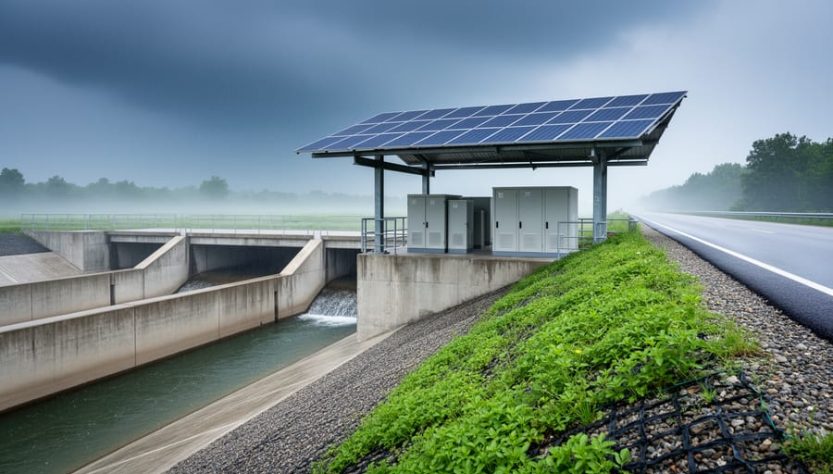
Climate resilience infrastructure comprises hardened energy systems, fortified water networks, reinforced transportation corridors, and adaptive building designs engineered to withstand extreme weather events while maintaining essential services during and after climate-driven disasters. These systems integrate redundancy, decentralization, and rapid recovery capabilities to protect communities from intensifying hurricanes, floods, wildfires, and heatwaves that now threaten conventional infrastructure across every continent.
The urgency for resilience infrastructure has accelerated dramatically. Global economic losses from climate disasters exceeded $280 billion annually by 2025, with projections climbing as weather extremes intensify. Traditional infrastructure designed for historical climate patterns now fails at alarming rates. Power grids collapse under heat stress, stormwater systems overflow during unprecedented rainfall, and coastal facilities face inundation from rising seas. Communities investing in resilience infrastructure today are securing operational continuity, reducing recovery costs by 60 to 70 percent, and protecting lives when disasters strike.
Renewable energy technologies anchor modern resilience strategies. Solar microgrids with battery storage maintain power during grid failures. Distributed generation eliminates the vulnerability of centralized plants. Green infrastructure like bioswales and permeable surfaces manage flooding while reducing urban heat islands. These solutions deliver both climate adaptation and mitigation benefits simultaneously.
This guide clarifies what qualifies as climate resilience infrastructure, who can develop these systems, how to access the growing pool of public and private funding, and the practical steps required for implementation. Whether you’re a municipal planner evaluating grid upgrades, a private developer integrating resilience into new construction, or a policymaker crafting incentive programs, understanding the requirements and pathways proves essential for successful project delivery in 2026 and beyond.
What Climate Resilience Infrastructure Is
Core Components and Technologies
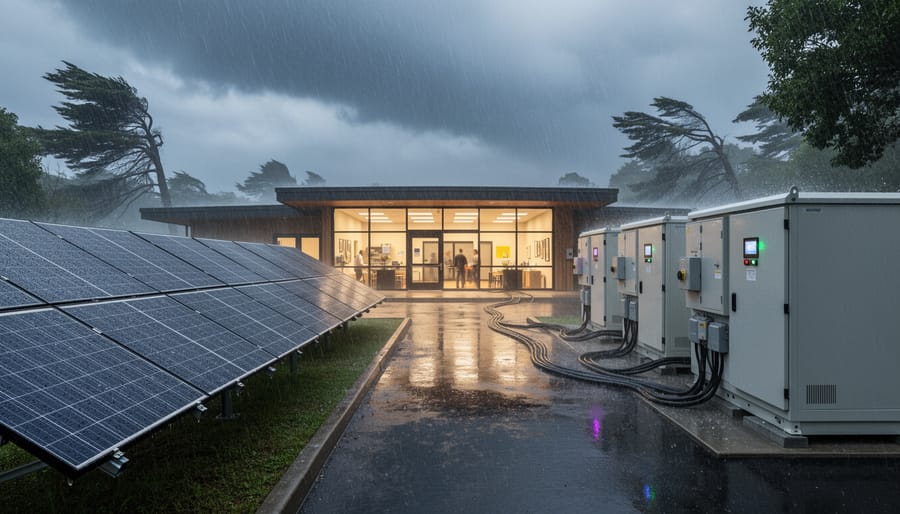
Climate resilience infrastructure relies on interconnected physical and digital systems engineered to maintain power during extreme weather. Solar arrays form the foundation, deploying photovoltaic panels on reinforced mounting systems tested for wind speeds exceeding 180 mph and designed to shed debris. Storm-rated solar engineering incorporates ballasted racking, corrosion-resistant hardware, and panel orientation that minimizes uplift forces, ensuring arrays survive hurricanes and tornadoes that would destroy conventional installations.
Wind turbines built for resilience feature low-speed cut-in thresholds and reinforced towers that withstand Category 4 conditions, while automatically feathering blades to prevent structural failure during extreme gusts. Energy storage systems integrate lithium-ion batteries for rapid response and high power density alongside flow batteries that provide longer duration backup, typically scaled to deliver 4 to 72 hours of critical load support depending on facility requirements. This renewable storage technology enables true islanding capability when grid connections fail.
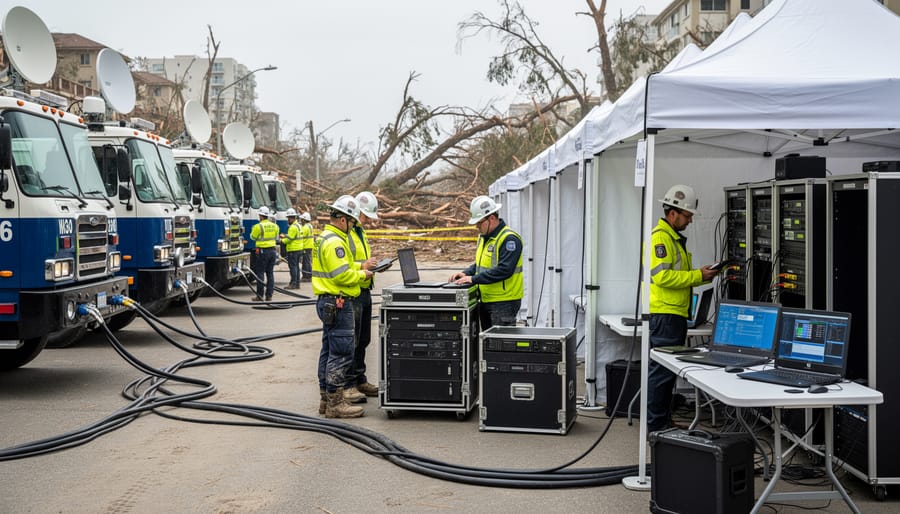
Smart inverters manage bidirectional power flow, frequency regulation, and seamless transitions between grid-connected and off-grid solar power operation without manual intervention. Automated transfer switches detect outages within milliseconds and reconfigure circuits to prioritize emergency loads. Resilience hubs consolidate these technologies at community facilities, hospitals, and fire stations, creating fortified energy nodes that serve as lifelines during disasters and charging stations for first responders.
How It Differs From Standard Energy Infrastructure
Traditional energy infrastructure and climate resilience infrastructure serve fundamentally different purposes, reflected in how engineers design and operate each system. Conventional grids optimize for everyday efficiency, minimizing capital costs, maximizing generation output, and delivering electricity reliably under normal conditions. These systems rely on large centralized power plants feeding long transmission lines to distribution networks, a model that has worked well for decades but struggles when disasters strike. Components are typically sized just above peak demand with minimal redundancy, making the entire system vulnerable to single points of failure during hurricanes, wildfires, or ice storms.
Climate resilience infrastructure inverts these priorities. Instead of lowest cost, the design goal is continuity during and after extreme events. Rather than depending on distant generation, resilient systems incorporate distributed renewable energy in cities and critical facilities, pairing solar arrays and wind turbines with substantial battery storage to maintain power when the broader grid fails. Autonomy becomes paramount: microgrids must island from the main grid instantly, switching to stored energy or local generation without service interruption. Redundant equipment, hardened components rated for extreme wind and flooding, and automated controls all add upfront expense but drastically reduce outage duration and economic losses.
| Feature | Traditional Infrastructure | Climate Resilience Infrastructure |
|---|---|---|
| Design Priority | Cost efficiency, peak demand capacity | Redundancy, autonomy, rapid recovery |
| Failure Tolerance | Minimal redundancy, single-point vulnerabilities | Multiple backup pathways, fault isolation |
| Recovery Time | Days to weeks after major events | Minutes to hours, often immediate islanding |
| Fuel Dependency | Fossil fuels via centralized plants, vulnerable supply chains | On-site renewables with storage, eliminates fuel delivery risk |
Performance metrics shift accordingly. Traditional utilities track system average interruption duration (SAIDI) and frequency (SAIFI) under normal operations. Resilience infrastructure measures sustained uptime during disasters, kilowatt-hours delivered to critical loads after grid failure, and time to restore full capacity post-event. These metrics matter most when conventional infrastructure has collapsed entirely.
Eligibility Requirements for Climate Resilience Projects
Entity-Specific Qualifications
Eligibility criteria vary significantly depending on the entity type applying for climate resilience infrastructure funding or development opportunities. Public sector entities, including municipalities, counties, and state agencies, typically qualify based on demonstrated jurisdiction over critical facilities or utility services. Most federal programs prioritize applicants serving disadvantaged communities or areas with documented climate vulnerability. These entities often face less stringent financial thresholds but must demonstrate administrative capacity to manage multi-year projects and comply with procurement regulations.
Investor-owned utilities and cooperative utilities qualify under different frameworks. IOUs generally access programs through regulatory mechanisms, securing cost recovery through rate cases or specific resilience riders. They must demonstrate that proposed investments meet prudency standards and provide measurable reliability improvements. Electric cooperatives, particularly in rural areas, often qualify for USDA Rural Development programs in addition to mainstream resilience funding, with eligibility tied to service territory characteristics and member-ownership structures.
Private developers face higher technical and financial bars. Most programs require proven project management experience, demonstrated access to capital, and detailed plans showing how projects will serve public resilience goals beyond private benefit. Performance bonds and technical certifications are standard requirements.
Community-based organizations and non-profits can access specialized funding streams designed for underserved populations, though they typically need partnerships with technical or financial sponsors. Many programs explicitly encourage consortium applications combining municipal sponsors, non-profit community engagement leads, and private technical partners, structures that pool strengths while satisfying multiple eligibility criteria simultaneously.
Project and Site Requirements
Climate resilience infrastructure projects must satisfy specific technical and geographic criteria to qualify for most funding programs and regulatory approvals. Site selection begins with documented climate vulnerability, applicants need historical data showing flood risk, wildfire exposure, hurricane frequency, extreme heat events, or other climate threats that have caused or are projected to cause grid disruptions. FEMA flood maps, NOAA climate projections, and state hazard mitigation plans typically provide acceptable evidence.
Critical facility designation carries significant weight in eligibility and implementation decisions. Hospitals, fire stations, emergency operations centers, police departments, water treatment plants, and designated emergency shelters receive priority consideration. Many programs require facilities to serve a defined community function during disasters, not merely house essential operations. Some jurisdictions extend critical status to grocery stores, pharmacies, and cooling centers in vulnerable neighborhoods.
Renewable energy integration mandates vary by program but generally require that backup power systems derive at least 50 to 80 percent of annual energy from solar, wind, or other renewable sources. Diesel generators may supplement renewables but cannot serve as the primary resilience solution. Energy storage minimums typically range from four to twelve hours of critical load coverage, with lithium-ion or flow batteries sized to maintain operations through overnight periods or multi-day outages when renewable generation drops.
Environmental permitting compliance applies to all projects. Sites must pass National Environmental Policy Act reviews for federally funded initiatives, addressing impacts on wetlands, endangered species habitat, and cultural resources. Local building codes increasingly mandate elevated electrical equipment in flood zones and fire-resistant materials in wildfire-prone areas, adding layers to the approval process that projects must navigate before construction begins.
How to Plan and Implement Climate Resilience Infrastructure
Assessment and Planning Phase
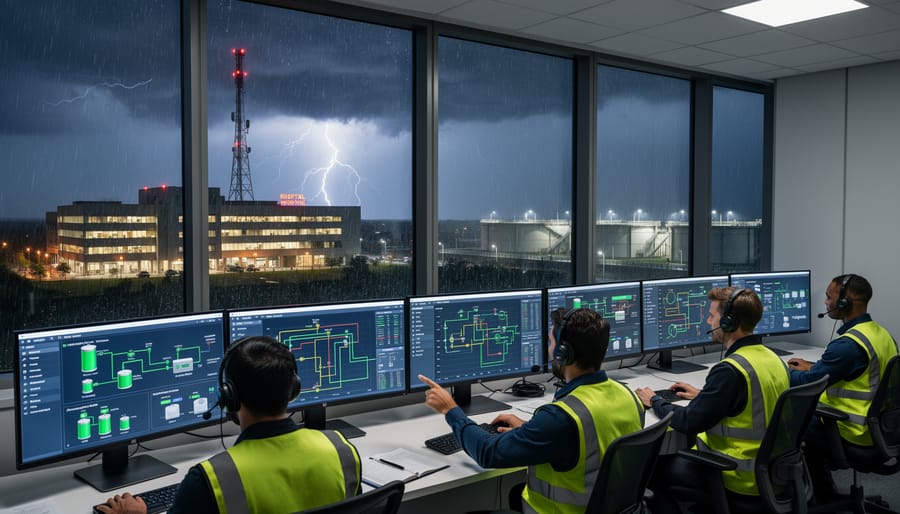
The assessment phase begins with a climate vulnerability analysis that examines historical weather patterns, projected climate scenarios, and infrastructure failure points. Teams review utility outage records from the past decade, identifying frequency, duration, and geographic clustering of power interruptions during hurricanes, wildfires, floods, and extreme temperature events. This data reveals which critical facilities, hospitals, water treatment plants, emergency shelters, experience the most severe energy disruptions.
Renewable resource mapping follows, using tools like NREL’s System Advisor Model (SAM) and PVWatts to quantify local solar irradiance, wind speeds, and seasonal generation potential. Engineers overlay this with load profiles from critical facilities to size battery storage and determine whether the site can sustain islanded operation for 72 hours or longer.
Community input sessions gather priorities from residents, facility operators, and emergency management officials. These conversations identify non-obvious critical needs, senior centers, food distribution hubs, community cooling centers, that institutional data may overlook. Technical feasibility studies then synthesize climate risk, energy demand, renewable capacity, and community priorities into preliminary system architectures, cost estimates, and performance projections that inform funding applications and design decisions.
Design and Engineering Considerations
Designing climate-resilient energy systems requires balancing autonomy with integration, redundancy with efficiency, and immediate storm survival with decades of operational performance. System sizing starts with understanding critical loads: hospitals, emergency services, water treatment facilities, and resilience hubs need continuous power, while less critical infrastructure can shed load during extended outages. Engineers model demand profiles under disaster scenarios, accounting for surge capacity when shelters open or when backup cooling systems activate. Oversizing battery storage by 20-30% above calculated need provides operational headroom for degraded conditions, clouds reducing solar output, or damaged wind turbines reducing generation.
Technology selection hinges on the local threat profile. Coastal installations facing hurricanes demand storm-rated solar racking certified to withstand 150+ mph winds, plus sealed electronics resistant to salt spray and flooding. Wildfire-prone regions require fire-resistant enclosures for batteries and defensible space around equipment. Islanding capability, the ability to disconnect from the main grid and operate independently, is non-negotiable for resilience infrastructure. Modern energy storage innovations paired with smart inverters enable seamless transitions between grid-connected and islanded modes, maintaining voltage and frequency stability without disrupting sensitive equipment.
Control systems integrate forecasting algorithms, real-time monitoring, and automated load prioritization. Advanced microgrid controllers predict renewable output, manage charging schedules, and execute pre-storm protocols like topping off batteries and shedding non-essential loads. Interoperability standards such as IEEE 2030.5 and SunSpec Modbus ensure equipment from different manufacturers communicates reliably. Cybersecurity measures, network segmentation, encrypted communications, multi-factor authentication, protect against attacks that could disable critical infrastructure during emergencies.
Weatherization extends beyond structural reinforcement. Elevated mounting protects equipment from flooding, thermal insulation prevents cold-weather battery degradation, and backup cooling systems maintain safe operating temperatures during heat waves. Lifecycle cost analysis must account for higher upfront hardening expenses against reduced outage losses, avoided fuel costs for diesel generators, and extended equipment lifespan from protected operating environments. Resilience infrastructure typically sees 15-25% higher capital costs than standard systems, but avoided outage costs in critical facilities often justify the premium within the first major event.
Navigating Permitting and Regulatory Approval
Permitting climate resilience infrastructure requires navigating multiple regulatory layers simultaneously. Federal environmental reviews often begin with National Environmental Policy Act (NEPA) assessments for projects on federal land or using federal funds, these can take six to eighteen months depending on scope. State-level permits vary widely: California requires California Environmental Quality Act (CEQA) compliance, while Florida emphasizes coastal construction permits for storm-resistant installations.
Local building permits address structural integrity, electrical code compliance, and fire safety standards specific to renewable systems. Electrical inspections verify installations meet National Electrical Code requirements and local amendments, with special scrutiny for battery storage systems and emergency disconnect mechanisms.
Utility interconnection agreements govern how resilience systems connect to the grid. These follow state-specific timelines, some jurisdictions mandate 90-day review periods for distributed generation, though complex microgrid applications frequently exceed that window. Expedited pathways exist in certain states for critical facilities like hospitals and emergency shelters.
Disaster-prone areas introduce additional requirements: enhanced wind-load certifications in hurricane zones, seismic anchoring standards in earthquake regions, and flood elevation mandates in coastal areas. Coordination with emergency management agencies early in the process helps identify applicable disaster-specific codes and streamlines approvals during time-sensitive deployments.
Funding and Financing Mechanisms
Federal Programs and Grants
The federal government channels billions of dollars into climate resilience infrastructure through competitive grant programs designed to harden energy systems against extreme weather. The FEMA Building Resilient Infrastructure and Communities (BRIC) program allocates up to $1 billion annually for projects that reduce disaster risks to critical facilities, including those incorporating renewable energy and backup power. BRIC prioritizes applications from communities with approved hazard mitigation plans and awards funding for both capability-building activities and construction projects, with typical grants ranging from $500,000 to $50 million.
The Department of Energy’s Grid Resilience and Innovation Partnerships (GRIP) program, funded through the Infrastructure Investment and Jobs Act, provides $10.5 billion for grid modernization and resilience enhancements. GRIP emphasizes projects that integrate renewable generation, energy storage, and advanced control systems to maintain power during disruptions. Eligible applicants include utilities, grid operators, states, tribes, and public power entities.
Both programs require applications through, with submission windows typically opening in late spring. Standard documentation includes engineering feasibility studies, benefit-cost analyses demonstrating a minimum 1:1 ratio, environmental compliance records, community engagement evidence, and detailed project budgets with matching fund commitments, usually 25 percent for BRIC and varying for GRIP based on applicant type.
State, Local, and Private Financing
Beyond federal grants, climate resilience infrastructure projects increasingly tap state, local, and private capital sources that can offer faster deployment timelines and more flexible terms. State resilience funds, dedicated pools managed by energy offices or emergency management agencies, often prioritize projects serving underserved communities or critical facilities. These funds typically require cost-sharing but accept smaller-scale applications and provide technical assistance throughout the process.
Municipal bonds remain a cornerstone for public entities. Revenue bonds backed by future energy savings or utility revenues avoid burdening general taxpayer obligations, while green bonds attract socially conscious investors willing to accept slightly lower yields for measurable climate impact. Some municipalities bundle resilience projects with broader infrastructure improvements to spread costs and simplify voter approval.
Utility rate-basing allows investor-owned and cooperative utilities to recover capital costs through ratepayer charges over time, spreading the financial burden while ensuring professional operation and maintenance. This approach works best when regulators recognize resilience infrastructure as prudent investment rather than discretionary spending.
Power purchase agreements shift upfront costs to private developers who design, build, and operate systems in exchange for long-term electricity sales contracts. Communities gain resilience infrastructure without capital outlays, though they commit to purchasing power at predetermined rates, which can lock in savings or expose them to market fluctuations.
Impact investors and resilience-focused funds provide equity or subordinated debt to projects demonstrating measurable social benefits. Blended finance structures layer these patient capital sources beneath senior debt, lowering overall costs while attracting conventional lenders who otherwise view disaster-prone locations as too risky. Credit enhancements, loan guarantees, reserve accounts, or insurance products, further de-risk transactions, making resilience infrastructure financially viable even in communities with constrained budgets or weak credit profiles.
Rights, Obligations, and Ongoing Compliance
Operator and Owner Responsibilities
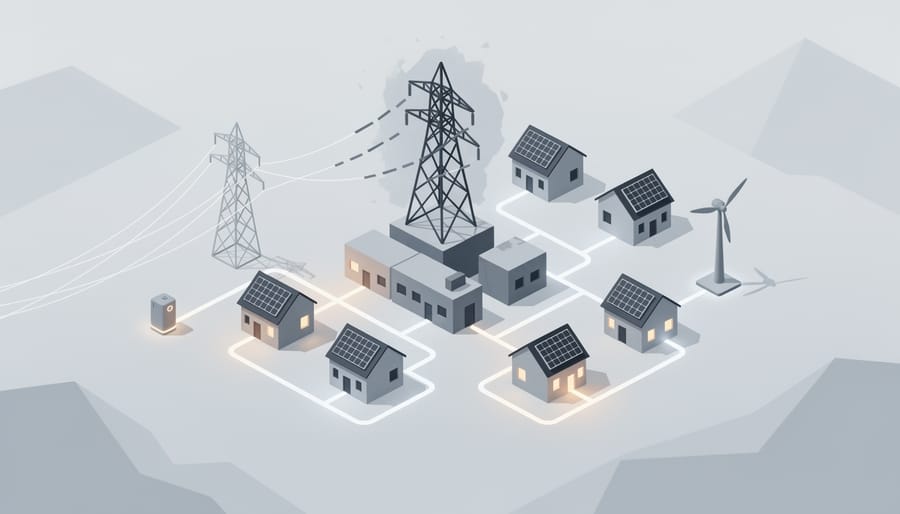
Operators and owners of climate resilience infrastructure assume continuous obligations that extend well beyond initial installation. Preventive maintenance forms the foundation of these responsibilities, systems must undergo regular inspections, component testing, and scheduled servicing to ensure readiness during actual climate events. Battery storage systems typically require quarterly capacity checks, thermal management system verification, and firmware updates. Solar arrays need periodic panel cleaning, inverter diagnostics, and structural assessments, especially after severe weather.
Performance testing requirements vary by jurisdiction and funding source. Many federal grants mandate annual capacity drills where systems operate in island mode for specified durations, demonstrating their ability to sustain critical loads without grid connection. Operators must document these tests and report results to relevant agencies, utilities, and community stakeholders.
Grid coordination obligations include maintaining communication protocols with the local utility, following dispatch instructions during emergencies, and providing advance notice before planned outages or maintenance. Systems interconnected under FERC or state utility commission rules must comply with voltage regulation standards, frequency response parameters, and cybersecurity frameworks like NERC CIP for larger installations.
Financial responsibilities encompass maintaining adequate insurance coverage, establishing reserve funds for major repairs, and meeting debt service obligations if projects are bond-financed. Operators must also keep current with evolving codes, update emergency operation plans annually, and provide transparency reports to communities relying on the infrastructure during disasters.
Community Rights and Benefit Sharing
When climate resilience infrastructure receives public funding or serves critical community functions, it typically carries obligations to ensure equitable access and local benefit. Communities often negotiate formal agreements that guarantee power access during emergencies, particularly for vulnerable populations unable to afford backup systems. These provisions may include free or reduced-cost electricity at resilience hubs, community centers, schools, or libraries equipped with solar-plus-storage systems that remain operational during grid outages.
Transparent governance structures allow community representatives to participate in decision-making about system deployment, operation priorities, and benefit distribution. Community solar models embedded in resilience projects enable residents to subscribe to portions of shared renewable capacity, receiving credits on utility bills while contributing to local energy security. Resilience hub agreements often formalize these arrangements, specifying who can access backup power, under what conditions, and how energy will be allocated if demand exceeds capacity.
Equitable pricing mechanisms prevent disaster-related price gouging and ensure that resilience benefits don’t accrue only to affluent property owners. Some jurisdictions require workforce development provisions, mandating that a percentage of construction and maintenance jobs go to local residents. Revenue-sharing models, where excess electricity sales fund community programs or reduce energy costs for low-income households, create lasting economic value beyond emergency preparedness.
Where to Get Help and Technical Assistance
Technical and Engineering Support
Federal laboratories such as the National Renewable Energy Laboratory (NREL) and Sandia National Laboratories provide no-cost or low-cost feasibility assessments, system design reviews, and resilience modeling tools tailored to energy infrastructure projects. These institutions offer simulation platforms that evaluate how renewable-plus-storage configurations perform under storm scenarios, grid outages, and prolonged disruptions.
University-based research centers, including the MIT Energy Initiative and the Pacific Northwest National Laboratory, deliver advanced analytics on microgrid controls, battery sizing, and load prioritization during emergencies. Many provide collaborative research agreements that pair academic expertise with real-world project deployment.
Private consultancies specializing in resilience engineering offer design-build support, from preliminary siting studies through commissioning oversight. Firms with track records in hardened solar installations, storm-rated wind systems, and autonomous energy management can accelerate permitting and reduce technical risk. Regional clean energy technical assistance programs often maintain vetted consultant rosters and can recommend qualified engineers familiar with local climate threats and regulatory requirements.
Funding and Policy Guidance
Grant writing consultants like Enterprise Community Partners and the Center for Climate and Energy Solutions offer specialized support for resilience funding applications, helping organizations navigate complex federal and state requirements. Financial advisory firms including Resilient Cities Catalyst and the Clean Energy Group provide project structuring guidance, match requirement strategies, and blended finance models tailored to climate infrastructure. Policy tracking organizations such as the Database of State Incentives for Renewables & Efficiency (DSIRE) and the American Council for an Energy-Efficient Economy maintain updated directories of evolving programs, eligibility changes, and application deadlines. Many state energy offices also employ resilience coordinators who assist with identifying applicable funding streams and coordinating multi-program applications. These resources prove particularly valuable when layering federal grants with state incentives and utility programs to maximize total project funding.
Peer Networks and Case Study Resources
Professional associations such as the American Public Power Association and the National Association of State Energy Officials maintain networks connecting practitioners working on resilience projects. The Urban Sustainability Directors Network hosts peer exchanges where municipalities share implementation experiences and overcome common challenges together.
The National Renewable Energy Laboratory’s Resilient Energy Platform database documents over 150 completed projects with technical specifications, performance metrics during actual emergencies, and cost data. Georgetown Climate Center’s Adaptation Clearinghouse provides searchable case studies filtered by technology type, community size, and climate hazard.
C40 Cities Climate Leadership Group connects nearly 100 major cities implementing resilience infrastructure, offering benchmarking tools and direct access to technical staff who have navigated similar projects. These resources reveal real-world performance during hurricanes, wildfires, and grid failures, invaluable intelligence that accelerates your planning and prevents costly missteps.
Frequently Asked Questions
What makes renewable energy resilient during disasters?
Renewable systems with energy storage can operate independently when the main grid fails, maintaining power for critical facilities. Unlike centralized fossil fuel plants that rely on fuel delivery and intact transmission lines, distributed solar arrays and wind turbines paired with batteries provide on-site generation and backup capacity.
How long does it take to deploy a microgrid?
Project timelines vary from 18 months to three years depending on system size, site complexity, and permitting requirements. Simple installations at existing facilities with straightforward interconnection can proceed faster, while projects requiring new infrastructure, environmental reviews, or multi-stakeholder coordination take longer.
Can existing solar installations be upgraded for resilience?
Yes, most grid-tied solar systems can be retrofitted with battery storage, smart inverters, and automatic transfer switches to enable islanding capability. The upgrade requires engineering assessment to ensure safe disconnection from the grid and adequate storage capacity for critical loads.
Are batteries safe during floods or fires?
Modern battery systems include thermal management, fire suppression, and waterproof enclosures rated for extreme conditions. Proper installation on elevated platforms in flood zones and compliance with fire safety codes minimize risks, making them safer than diesel generators that store flammable fuel on-site.
Beyond these technical considerations, cost remains a central concern for communities evaluating resilience infrastructure. Installed costs for solar-plus-storage microgrids typically range from $3,000 to $6,000 per kilowatt of capacity, depending on battery size, system complexity, and local labor rates. While this represents a higher upfront investment than grid-only connections, lifecycle analysis shows resilience systems deliver value through avoided outage costs, reduced fuel expenses, and participation in grid services markets. Federal grants and state incentives can cover 30 to 50 percent of project costs, narrowing the gap with conventional backup power.
Equitable deployment poses another frequent question: how do communities ensure resilience infrastructure serves all residents, not just affluent neighborhoods? Effective models prioritize critical community facilities like cooling centers, medical clinics, and emergency shelters in underserved areas. Community benefit agreements formalize provisions for public access during disasters, transparent governance structures, and local workforce development. Some jurisdictions require resilience projects receiving public funding to demonstrate equity criteria in siting decisions and energy access policies.
Regulatory pathways also generate questions, particularly around interconnection standards and utility coordination. Most states now have streamlined processes for resilience projects, though requirements vary. Working with utilities early in the planning phase helps navigate technical reviews, ensures compliance with safety standards, and clarifies responsibilities during grid outages. Projects that can provide grid services during normal operations often receive more favorable interconnection terms and faster approvals.
Climate resilience infrastructure represents a fundamental shift in how communities prepare for and respond to intensifying climate threats. As extreme weather events grow more frequent and severe, the integration of renewable energy systems into critical infrastructure is no longer optional, it’s essential for maintaining power during disasters, protecting vulnerable populations, and ensuring rapid recovery.
The dual mandate of decarbonization and disaster preparedness creates a powerful convergence. Solar arrays, wind turbines, and battery storage systems designed for resilience not only reduce greenhouse gas emissions but also provide autonomous power when the grid fails. Microgrids at hospitals, emergency shelters, and water treatment facilities save lives. Distributed generation reduces single points of failure. Hardened renewable systems restore service faster than centralized fossil fuel infrastructure damaged by floods or storms.
The framework exists now for municipalities, utilities, developers, and community organizations to act. Federal and state funding mechanisms are expanding, technical assistance providers stand ready to support feasibility studies and design work, and proven technologies have demonstrated performance across diverse climate zones. The challenge is implementation.
Stakeholders who begin planning today, conducting vulnerability assessments, engaging communities, and pursuing available grants, position themselves to deploy resilience infrastructure before the next major event. The cost of inaction compounds with every disaster. Climate resilience infrastructure is not just about weathering storms; it’s about building energy systems that sustain communities through the long-term transition to a stable climate and secure energy future.