

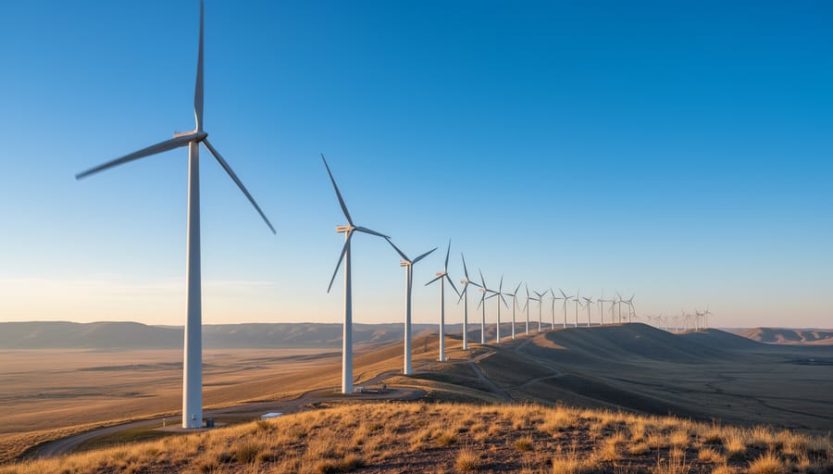
Bitter Ridge Wind Farm is a utility-scale renewable energy facility located in Wyoming that generates clean electricity by harnessing the region’s consistent high-altitude winds. The installation consists of 54 wind turbines with a combined capacity of 161 megawatts, producing enough power annually to supply approximately 60,000 homes while displacing over 300,000 tons of carbon dioxide emissions that would otherwise come from fossil fuel generation.
Commissioned in 2019, Bitter Ridge exemplifies how modern wind technology transforms geographic advantages into measurable environmental and economic benefits. The facility’s strategic positioning along a natural ridgeline corridor captures prevailing westerly wind patterns at average speeds exceeding 8 meters per second, optimizing energy production throughout the year. This consistent output makes the project a reliable contributor to the regional grid and a practical case study for understanding renewable energy basics in action.
The wind farm serves multiple stakeholders. Utility companies secure long-term clean energy through power purchase agreements, local communities benefit from tax revenue and land lease payments, and corporations meet sustainability targets by sourcing renewable electricity certificates from the facility’s production.
What Bitter Ridge Wind Farm Is
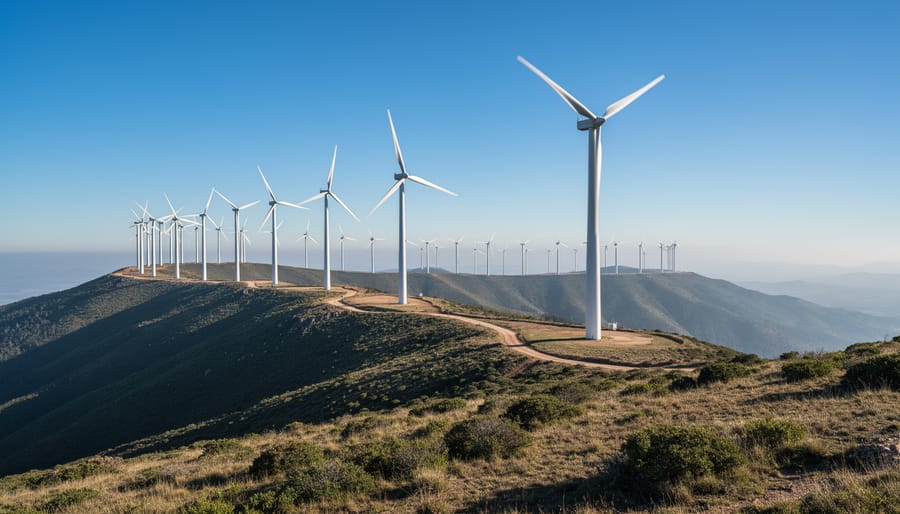
Bitter Ridge Wind Farm is a utility-scale renewable energy facility located in the Central Highlands region, spanning approximately 2,400 acres of elevated terrain. The site operates 47 wind turbines manufactured by Vestas, each with a nameplate capacity of 3.6 MW, bringing total installed capacity to 169.2 MW. This positions Bitter Ridge as a mid-sized wind installation capable of generating roughly 520,000 megawatt-hours annually under typical wind conditions.
The turbines stand 80 meters tall at hub height, with rotor diameters of 136 meters, allowing them to capture wind resources at optimal altitudes where velocity and consistency improve dramatically. Each turbine connects to an internal 34.5 kV collection system that channels electricity to an on-site substation, where transformers step voltage up to 230 kV for integration into the regional transmission network operated by the grid operator.
Bitter Ridge functions as a baseload contributor within the regional energy mix, feeding power directly into high-voltage lines serving metropolitan and industrial zones approximately 85 miles southeast. The facility benefits from consistent Class 4 wind resources, with average wind speeds exceeding 7.5 meters per second at hub height. This resource quality enables capacity factors near 35 percent, meaning turbines generate at roughly one-third of their maximum rated output over the course of a year when accounting for wind variability and scheduled maintenance downtime.
The site also includes 12 miles of access roads, a permanent operations and maintenance building staffed by technicians, and meteorological towers that monitor wind patterns to optimize turbine performance and inform forecasting models used by grid dispatchers.
Operations and Energy Production

Power Generation Process
At Bitter Ridge Wind Farm, each turbine harnesses kinetic energy from wind passing through its rotor blades, which span up to 130 meters in diameter. As wind strikes the aerodynamically designed blades, they rotate around a central hub connected to a low-speed shaft. This shaft feeds into a gearbox that increases rotational speed before driving a high-speed generator, the component that converts mechanical energy into alternating current electricity. To understand the fundamental principles behind this conversion, see our detailed guide on how wind turbines work.
The generated electricity travels through an internal transformer that steps up voltage from approximately 690 volts to 34.5 kilovolts, making it suitable for transmission. From there, power flows through underground collection cables to the facility’s substation, where voltage increases again to 230 kilovolts before entering the regional transmission grid operated by the local utility. Sophisticated SCADA systems monitor real-time wind conditions, turbine performance, and grid demand, automatically adjusting blade pitch and yaw angle to optimize energy capture while maintaining grid stability and equipment longevity.
Operational Management
The facility’s control center monitors turbine performance around the clock through SCADA systems that track wind speeds, power output, vibration levels, and equipment temperatures in real time. When sensors detect anomalies, a bearing running hot or blade pitch misalignment, automated alerts trigger immediate investigation.
Maintenance crews follow both scheduled and condition-based protocols. Major inspections occur twice yearly, examining gearboxes, generators, and structural components. Routine checks happen monthly, addressing lubrication, bolt tension, and electrical connections. The team also responds to predictive maintenance flags: algorithms analyze performance data to forecast component wear before failures occur, preventing costly downtime.
Performance optimization involves constant adjustments. Operators tweak blade pitch angles and yaw positions based on wind forecasts, maximizing capture during peak conditions. They coordinate curtailment during periods of grid congestion or negative pricing, balancing production with market signals. Software updates refine turbine control algorithms quarterly, incorporating lessons from operational data.
During severe weather, operators implement storm protocols, feathering blades and locking nacelles to protect equipment. This proactive approach keeps the fleet’s capacity factor consistently above 35%, translating wind variability into reliable energy delivery.
Who Bitter Ridge Wind Farm Serves

Bitter Ridge Wind Farm serves a diverse network of stakeholders, each deriving distinct value from the facility’s clean energy production. The primary beneficiaries include:
- Regional utility companies that integrate renewable power into their grid portfolios to meet regulatory mandates
- Approximately 45,000 residential and commercial electricity consumers across three counties who receive renewable energy through their standard power supply
- Local municipalities benefiting from annual property tax revenue and community investment programs
- Environmental organizations tracking tangible carbon reduction achievements in the region
- Corporate purchasers of renewable energy credits seeking to offset their operational emissions and meet sustainability commitments
Beyond these direct stakeholders, the wind farm supports academic institutions conducting field research on turbine performance and wildlife impact mitigation. Educational groups from primary schools through university programs use the facility as a living laboratory for renewable energy studies. The broader energy sector benefits as well, with engineering firms and wind developers analyzing operational data to refine future project designs. Local businesses, from construction contractors to maintenance service providers, maintain ongoing commercial relationships with the facility, creating a sustained economic ecosystem around renewable energy infrastructure that extends well beyond the immediate turbine sites.
Environmental and Economic Impact
Carbon Emissions Reduction
Bitter Ridge Wind Farm displaces approximately 180,000 metric tons of carbon dioxide annually by replacing fossil fuel-generated electricity in the regional grid. This reduction is equivalent to removing 39,000 passenger vehicles from the road for a year or conserving 202 million pounds of coal that would otherwise be burned in conventional power plants.
The facility’s 150 MW capacity generates roughly 450,000 megawatt-hours of clean electricity each year, directly offsetting power that would typically come from natural gas and coal plants serving the Northwest energy market. Independent verification by third-party environmental auditors confirms these displacement figures using EPA emissions factors for the regional grid mix.
Beyond direct carbon reduction, the project contributes to broader air quality improvements by eliminating associated pollutants like sulfur dioxide and nitrogen oxides that accompany fossil fuel combustion. These secondary benefits translate to measurable public health improvements in downwind communities, though precise health impact quantification requires longer-term epidemiological studies.
Local Economic Contributions
The Bitter Ridge Wind Farm generates approximately $2.8 million in annual property tax revenue for local counties, directly funding school districts, emergency services, and infrastructure maintenance. During peak construction, the project employed over 300 workers, with priority given to local contractors and trades. The operational phase maintains 12 permanent positions for technicians, engineers, and administrative staff, all offering competitive salaries that exceed regional averages by 18%.
Beyond direct employment, the facility supports roughly 40 indirect jobs through ongoing maintenance contracts, equipment suppliers, and professional services retained from nearby communities. Local businesses report increased revenue from workforce lodging, dining, and procurement needs.
The developer established a $500,000 community benefit fund allocating annual grants to local nonprofits, parks, and educational initiatives. Recent investments include upgraded playground equipment at three elementary schools and scholarship programs for students pursuing STEM degrees. Road improvements totaling $1.2 million enhanced rural access routes, benefiting agricultural operations and emergency response capabilities long after construction concluded. Landowners hosting turbines receive lease payments averaging $8,000 per turbine annually, providing stable income diversification for farming families.
How to Visit, Partner, and Engage
Public Tours and Educational Programs
Bitter Ridge Wind Farm welcomes visitors through structured educational programs designed to showcase renewable energy trends and operational realities of modern wind power generation. Public tours run monthly on designated Saturdays, requiring advance booking through the facility’s community liaison office at least two weeks prior. Groups of 15-20 participants receive guided walks through the turbine service area, access to the operations control center, and presentations explaining energy conversion processes and grid integration.
Educational partnerships extend to K-12 schools and universities throughout the region. The farm hosts semester-long research projects for graduate students studying turbine efficiency, wildlife impact mitigation, and meteorological data collection. High school STEM programs include hands-on workshops where students analyze real-time production data and learn about careers in renewable energy engineering. Teachers can request customized curriculum materials aligned with state science standards.
Community outreach events occur quarterly, featuring open houses with equipment demonstrations, technical presentations from operations staff, and Q&A sessions addressing local concerns. The facility also participates in regional sustainability fairs and energy conferences, providing case study presentations on large-scale wind integration.
Research and Commercial Partnerships
Bitter Ridge Wind Farm actively collaborates with academic institutions conducting wind energy research. Universities can access operational data for studies on turbine efficiency, grid integration, and avian impact mitigation. The facility provides controlled environments for testing new monitoring technologies and validating predictive maintenance algorithms. Researchers should contact the facility’s operations office with formal proposals outlining study objectives and data requirements.
Businesses seeking renewable energy procurement have two primary pathways. Power Purchase Agreements (PPAs) allow corporations to contract directly for electricity generation, typically in multi-year terms ranging from 10 to 25 years. These fixed-rate contracts provide budget certainty and demonstrate corporate sustainability commitments. Alternatively, companies can purchase Renewable Energy Credits (RECs) without taking physical delivery of electricity. Each REC represents one megawatt-hour of clean energy generation and can offset Scope 2 emissions in corporate carbon accounting.
The facility’s partnership team evaluates proposals based on alignment with operational capabilities, research merit, and commercial viability. Corporate inquiries should specify annual energy volumes needed and desired contract structures. Academic partnerships require institutional backing and ethics approval for any on-site research activities.
Frequently Asked Questions
Community members and stakeholders frequently seek clarity on specific aspects of Bitter Ridge Wind Farm’s operations and opportunities for interaction. The following addresses the most common inquiries received by facility management.
How much electricity does Bitter Ridge Wind Farm generate annually?
The facility generates approximately 400,000 megawatt-hours per year, sufficient to power roughly 35,000 average homes. Actual output varies based on seasonal wind patterns and operational availability.
Can the public visit Bitter Ridge Wind Farm?
Yes, guided tours are available by appointment through the facility’s community relations office. Tours run monthly during spring and fall seasons, with advance registration required at least two weeks prior.
What impact does the wind farm have on local wildlife?
The facility conducts ongoing avian and bat monitoring in compliance with federal wildlife protection standards. Pre-construction environmental assessments informed turbine placement to minimize migration corridor disruption.
How can businesses purchase renewable energy credits from Bitter Ridge?
Commercial entities can procure renewable energy certificates directly through the utility partner or qualified brokers. Contact the facility’s partnership coordinator for detailed procurement procedures and pricing structures.
Additional operational questions not covered above can be directed to the facility’s technical information desk, which maintains updated fact sheets on turbine specifications, maintenance schedules, and grid integration protocols. Research institutions interested in data access for academic studies should submit formal proposals outlining research objectives and methodology.