

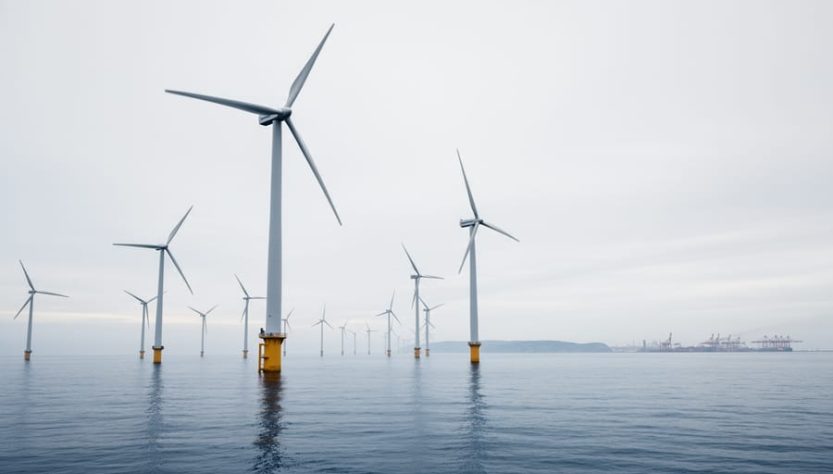
Offshore wind is rapidly transforming from a promising concept into an operational reality across the United States, with projects now advancing through federal permitting, securing multi-gigawatt lease areas, and preparing for construction along the Atlantic seaboard. The industry stands at a pivotal moment in 2026, as developers navigate complex regulatory frameworks administered by the Bureau of Ocean Energy Management while balancing technical challenges, environmental considerations, and ambitious state clean energy mandates.
The momentum is undeniable. US Wind’s Maryland Offshore Wind Project exemplifies this progress, having received BOEM’s favorable Record of Decision in September 2024 for up to 114 turbines capable of generating 2 GW of power from a lease area approximately 8.7 nautical miles offshore. This milestone cleared the path for all remaining federal permits by the end of 2024, setting a template for the dozens of projects queued behind it. From Massachusetts to North Carolina, coastal states have committed to procuring more than 50 GW of offshore wind capacity by 2040, creating a pipeline that rivals established European markets.
Yet the path forward demands careful coordination. Offshore wind development requires years of environmental review, grid interconnection planning, port infrastructure upgrades, and stakeholder engagement with fishing communities, maritime industries, and coastal residents. Supply chain constraints, vessel availability, and the sheer scale of turbine installations present logistical hurdles that differentiate this sector from land-based renewables.
For professionals tracking this evolution, understanding the interplay between federal leasing, state procurement, and project execution timelines is essential to grasp where the U.S. offshore wind industry stands today and where it’s headed in the coming decade.
The US Offshore Wind Landscape: From Early Stages to Expanding Pipeline
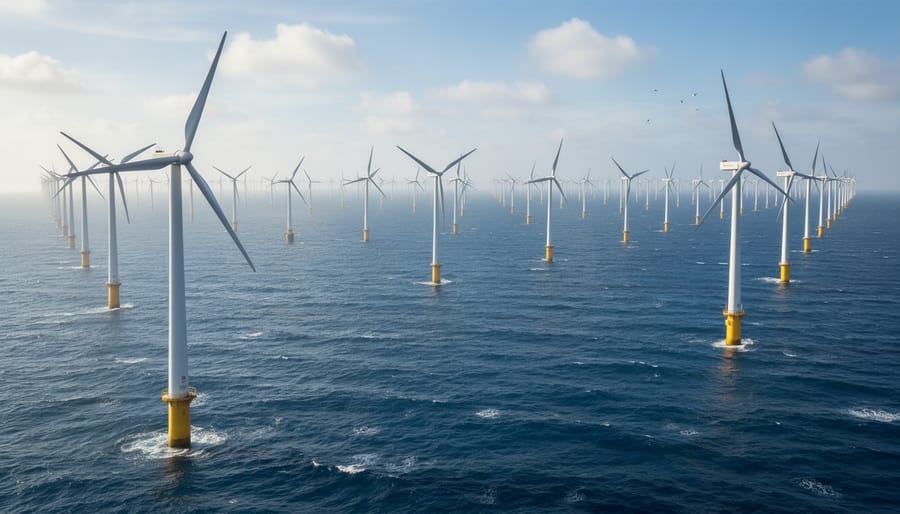
The United States offshore wind industry has traveled a long road from its first tentative steps to the robust commercial pipeline taking shape in 2026. The journey began with small demonstration projects that proved the technology could work in American waters, but real momentum arrived only in the past decade as federal agencies streamlined leasing processes and coastal states set ambitious renewable energy targets. What was once a niche market confined to a single operating project off Rhode Island has expanded into a multi-gigawatt pipeline spanning the Atlantic seaboard and reaching into new frontiers along the Gulf Coast and Pacific.
The Atlantic Coast remains the epicenter of US offshore wind development, with lease areas stretching from Massachusetts to the Carolinas. Federal lease auctions conducted by the Bureau of Ocean Energy Management have allocated vast tracts of seabed to developers, creating a geographic mosaic of projects at varying stages of maturity. States such as New York, Massachusetts, New Jersey, and Maryland have emerged as leaders, driven by statutory mandates that require utilities to procure offshore wind power by specific deadlines. These commitments have transformed lease areas into tangible construction pipelines, with developers advancing projects through permitting and engineering phases.
Beyond the Atlantic, emerging activity in the Gulf of Mexico and along the Pacific Coast signals the industry’s geographic expansion. Gulf states are exploring offshore wind potential to complement oil and gas infrastructure, while California and Oregon have pursued floating turbine technology to harness deepwater wind resources where traditional fixed-bottom foundations are impractical. These regions remain in earlier stages compared to the Atlantic, but federal lease auctions in recent years have planted the seeds for future development.
The pipeline’s growth reflects not just the number of lease areas, but the scale of individual projects. Developments such as US Wind’s Maryland Offshore Wind Project, approved in September 2024 with a potential capacity of up to 2 GW, illustrate the shift from megawatt-scale pilots to gigawatt-scale commercial ventures. The federal leasing framework has proven essential in organizing this expansion, providing developers with secure seabed access and establishing a structured path from auction to construction.
How Offshore Wind Projects Move Through Permitting and Approval
Case in Focus: US Wind’s Maryland Offshore Wind Project
US Wind’s Maryland Offshore Wind Project stands out as a bellwether for the federal approval process and the scale of ambition driving the industry forward. Positioned approximately 8.7 nautical miles off the coast of Maryland, the project holds lease rights to a federal area capable of supporting up to 2 GW of generating capacity, enough to power hundreds of thousands of homes and mark one of the largest offshore wind developments yet proposed in U.S. waters.
On September 5, 2024, the Bureau of Ocean Energy Management issued a Record of Decision approving US Wind’s Construction and Operations Plan, a milestone that formally concluded the environmental review required under the National Environmental Policy Act. BOEM’s September 5, 2024 ROD formalized findings set forth in an earlier final Environmental Impact Statement, clearing the way for the developer to install up to 114 wind turbines across the lease site. This positive determination reflects BOEM’s conclusion that the project can proceed under conditions that balance energy production with ocean management and stakeholder interests.
| Project Name | Location | Capacity | Turbines | ROD Issued |
|---|---|---|---|---|
| Maryland Offshore Wind | 8.7 nm offshore MD | Up to 2 GW | Up to 114 | September 5, 2024 |
The approval set US Wind on a path to secure all remaining federal permits by the end of 2024, illustrating how projects that complete BOEM review can move quickly toward final authorizations and construction mobilization. By demonstrating the full arc from Construction and Operations Plan submission through Record of Decision, this project offers a template for other developers navigating the multi-year federal process and highlights the project capacity and location specifics that define commercial-scale offshore wind in 2026.
Key Players and Stakeholders Driving US Offshore Wind
The expansion of offshore wind in the United States is driven by a diverse coalition of public and private actors working across federal, state, and local levels. Major European developers with deep offshore experience, including Ørsted, Equinor, and Avangrid, have established a strong presence in US waters, bringing proven technology and project management expertise. Domestic energy companies and utilities are also entering the space, often through joint ventures that combine international know-how with local market access and regulatory familiarity.
State governments play a critical role in shaping demand and project viability. Ambitious renewable energy mandates in New York, Massachusetts, New Jersey, Connecticut, and Maryland have created long-term offtake commitments, providing developers with the revenue certainty needed to finance multibillion-dollar projects. These states conduct competitive procurement processes, awarding power purchase agreements that underpin project financing and set clear timelines for development. Virginia, Rhode Island, and emerging markets along the Gulf Coast are likewise establishing targets and solicitations that signal sustained policy support.
At the federal level, the Bureau of Ocean Energy Management oversees the leasing and permitting process, coordinating environmental reviews and stakeholder engagement. The Department of Energy supports research, demonstration projects, and supply chain development, while agencies such as NOAA and the US Coast Guard contribute expertise on marine navigation, fisheries, and maritime safety. This interagency coordination is essential for navigating the complex regulatory environment and ensuring that projects advance on schedule.
Industry consortia and research institutions are building the physical and intellectual infrastructure required for commercial-scale deployment. Organizations such as the Business Network for Offshore Wind and the National Offshore Wind Research and Development Consortium facilitate collaboration, share best practices, and advocate for policy improvements. Ports in New Jersey, Massachusetts, and Maryland are undergoing upgrades to handle specialized turbine components and installation vessels, while academic partnerships are training the next generation of offshore wind technicians and engineers. Together, these stakeholders are aligning around shared goals, mirroring broader renewable energy trends that prioritize decarbonization, energy security, and economic opportunity.
Technical and Logistical Considerations for Offshore Wind Development
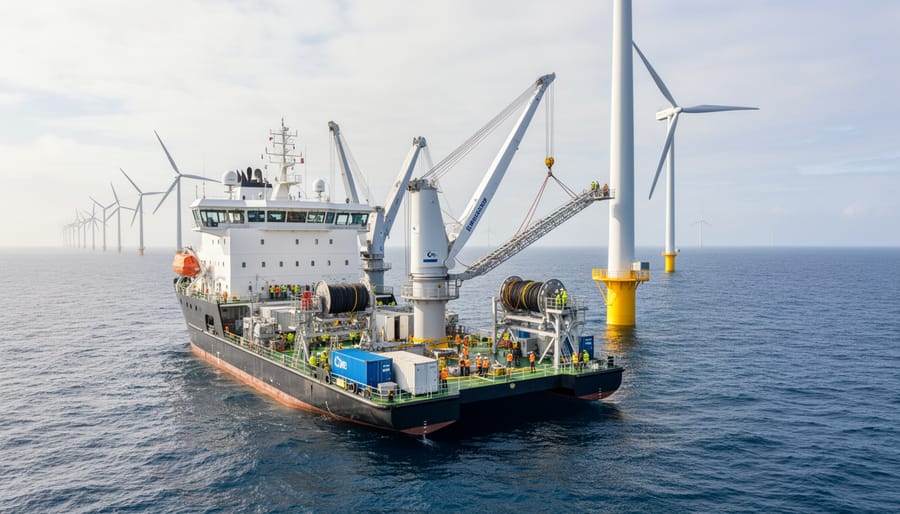
Offshore wind development demands engineering solutions and logistical infrastructure that go far beyond onshore installations. The marine environment imposes unique constraints on turbine design, installation methods, and long-term operations, requiring developers to address challenges related to saltwater corrosion, wave loading, extreme weather, and the sheer distance from shore. Understanding how wind turbines work in offshore settings reveals how these machines must be engineered for harsher conditions than their land-based counterparts.
Modern offshore turbines are significantly larger than onshore units, with rotor diameters exceeding 200 meters and nameplate capacities often reaching 12 to 15 MW per turbine. These larger machines capture more energy from consistent ocean winds, but they also require robust foundations and installation vessels capable of handling massive components. Developers select foundation types based on water depth and seabed conditions: fixed-bottom structures such as monopiles or jackets dominate in shallow to mid-depth waters, while floating platforms are under development for deeper offshore areas along the Pacific Coast and parts of the Gulf of Maine.
Grid interconnection presents another layer of complexity. Offshore wind farms require subsea export cables to carry electricity to onshore substations, often traversing tens of miles of ocean floor and crossing shipping lanes or environmentally sensitive zones. Integrating large volumes of offshore wind into the grid also involves upgrades to transmission infrastructure and coordination with storage innovations to balance variable wind generation with demand.
The scale of offshore construction has pushed the industry to build specialized infrastructure on land:
- Offshore turbines rated between 12 and 15 MW, with rotor diameters often exceeding 200 meters.
- Foundation options including monopiles, jackets, and emerging floating platforms for deeper waters.
- High-voltage subsea cables running up to 50 miles or more to connect offshore arrays to onshore substations.
- Marshaling ports equipped with reinforced quaysides, laydown areas for large components, and direct waterfront access for installation vessels.
Developers are investing in purpose-built staging facilities and contracting with Jones Act-compliant vessels to perform turbine installation and cable laying. These ports serve as assembly hubs where blades, nacelles, and tower sections are prepared before transport to offshore sites. Without this logistical backbone, projects cannot move from approval to construction, making port development and vessel availability critical path items for the industry’s growth through 2026 and beyond.
Environmental and Community Considerations
Environmental review is central to every offshore wind project’s path to approval. The National Environmental Policy Act requires developers to prepare comprehensive Environmental Impact Statements that assess potential effects on marine ecosystems, migratory birds, and protected species. BOEM coordinates these assessments, working with the National Marine Fisheries Service, the US Fish and Wildlife Service, and state agencies to evaluate impacts on endangered whales, sea turtles, and critical habitats. Developers must demonstrate how their projects address collision risks for seabirds, underwater noise during pile driving, and electromagnetic field emissions from transmission cables.
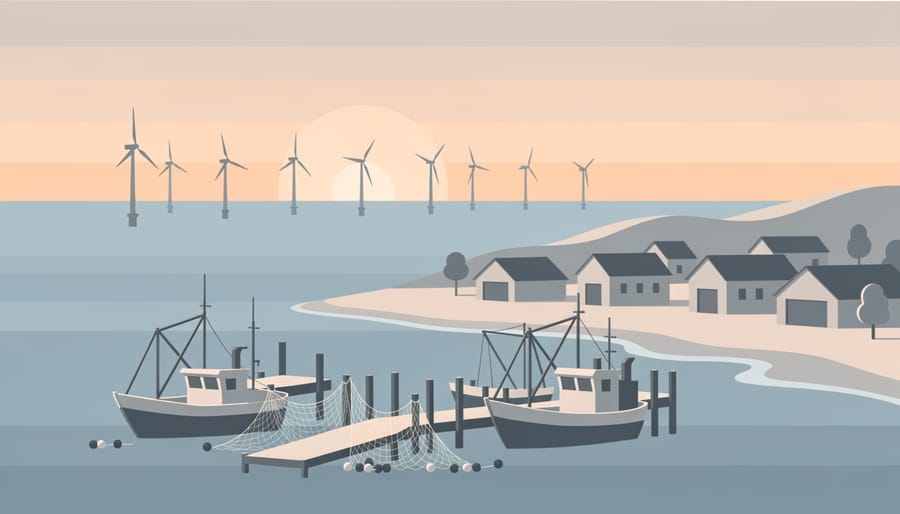
Stakeholder engagement with fishing communities starts early and continues throughout a project’s life. Commercial and recreational fishers raise concerns about vessel transit restrictions, gear entanglement risks, and potential displacement from traditional grounds. Developers respond by adjusting turbine layouts to preserve transit corridors, establishing compensation frameworks for documented losses, and funding fisheries monitoring programs. Many projects now include fishing industry liaisons and formal advisory committees to maintain dialogue.
Coastal communities weigh offshore wind’s economic benefits against potential visual impacts and changes to ocean use. Public comment periods during permitting allow residents, environmental groups, and municipalities to voice concerns. Developers commit to mitigation measures such as seasonal construction windows to avoid peak migration periods, real-time monitoring systems to detect marine mammals, and post-construction wildlife surveys. These commitments, formalized in Records of Decision like the one BOEM issued for US Wind’s Maryland project in September 2024, establish binding conditions.
Balancing renewable energy deployment with ecosystem stewardship requires transparency and adaptive management. The integration of ESG in renewables drives continuous improvement in environmental performance, ensuring offshore wind projects advance climate goals without compromising marine biodiversity or community livelihoods.
Common Questions About US Offshore Wind Projects
How long does a typical offshore wind project take from lease to operation? The development timeline spans several years, beginning with competitive federal lease auctions and site assessment, followed by detailed design and the submission of a Construction and Operations Plan to BOEM for environmental review. After BOEM issues a Record of Decision, as it did for US Wind’s Maryland Offshore Wind Project on September 5, 2024, developers work to secure remaining federal permits before construction can begin. From groundbreaking to commercial operation, the process typically requires five to eight years, though timelines vary based on project complexity, permitting duration, and supply chain availability.
What is BOEM’s role in offshore wind development?
The Bureau of Ocean Energy Management oversees the leasing of federal waters, reviews Construction and Operations Plans, conducts Environmental Impact Statements, and issues Records of Decision that authorize projects to proceed. BOEM also coordinates with other federal agencies, states, and stakeholders throughout the permitting process.
How do offshore wind projects connect to the electrical grid?
Projects use subsea export cables to transmit power from offshore substations to onshore interconnection points, where electricity enters the regional transmission network. Grid integration requires coordination with grid operators and may involve upgrades to onshore infrastructure and energy storage to manage variability.
What is the typical operational lifespan of an offshore wind farm?
Offshore wind projects are designed for operational lifespans of 25 to 30 years, with regular maintenance and component upgrades extending productivity. At the end of their service life, projects undergo decommissioning as stipulated in their original permits.
How are offshore wind projects financed?
Developers secure funding through a combination of equity investment, project finance loans, and offtake agreements such as power purchase agreements with utilities. State procurement mandates and federal tax incentives also play a crucial role in making projects financially viable.
Federal and state governments share responsibility for offshore wind, with BOEM managing federal waters and permitting while states drive demand through renewable energy mandates and procurement programs. States like Maryland, New York, and Massachusetts have set ambitious offshore wind targets, creating long-term offtake commitments that underpin project financing and accelerate development.
Offshore wind contributes directly to national climate goals by displacing fossil fuel generation with zero-emission electricity. Projects also enhance energy independence by diversifying the domestic power supply and reducing reliance on imported fuels, positioning the United States to meet its commitments under international climate frameworks while building resilient coastal economies.
The United States offshore wind industry has reached a pivotal moment. Recent approvals, including US Wind’s Maryland project in September 2024, demonstrate that the federal permitting process can deliver results and that commercial-scale projects are advancing from planning to construction-ready status. With a growing pipeline along the Atlantic Coast and emerging activity in the Gulf and Pacific regions, the foundation for a robust domestic offshore wind sector is taking shape.
Realizing this potential requires more than favorable regulatory decisions. Developers must continue to invest in specialized infrastructure, from turbine manufacturing to port facilities and installation vessels. Federal agencies, state governments, and coastal communities need to maintain open channels of communication, balancing renewable energy ambitions with environmental stewardship and the concerns of existing ocean users. The lessons learned from early projects will inform how efficiently the next wave of developments moves through permitting and construction.
Offshore wind is positioned to become a cornerstone of America’s clean energy transition, but its success depends on sustained collaboration and a commitment to building the technical, logistical, and regulatory capacity the industry demands. The momentum is clear; the path forward is one of execution.