

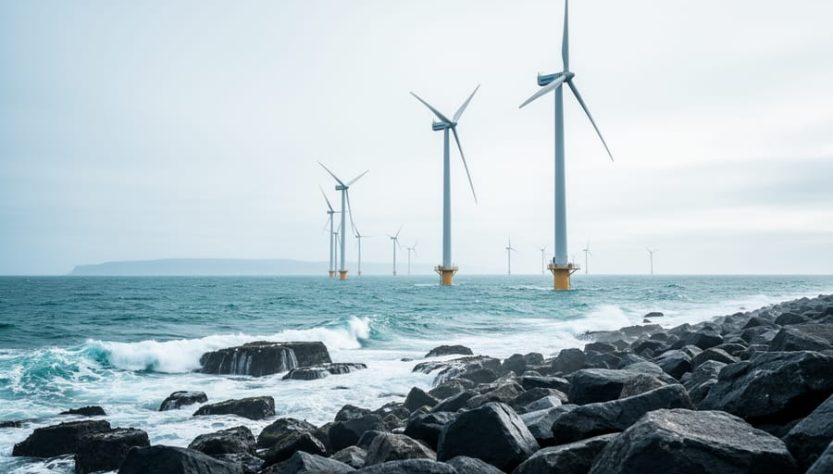
Ocean renewable energy plants have transitioned from experimental prototypes to operational commercial facilities that currently generate power for coastal communities. Offshore wind farms in particular now supply hundreds of megawatts to grid networks across Europe, Asia, and North America, demonstrating that marine-based renewable generation is not merely viable but actively contributing to energy portfolios today. Wave and tidal technologies, while operating at smaller commercial scales, have similarly moved beyond the testing phase into revenue-generating deployment.
This shift reflects decades of engineering refinement, policy support, and strategic investment that have overcome the formidable challenges of building and maintaining power infrastructure in harsh marine environments. Projects like Nova East Wind off Goldboro, Nova Scotia, which is proposed to deliver 300-400 MW of generation capacity from waters approximately 20-30km offshore, exemplify the scale and ambition now defining the sector. These facilities convert persistent ocean forces into predictable, clean electricity using technologies that have proven their durability through years of real-world operation.
The commercial readiness of ocean energy systems addresses a critical need for coastal regions seeking to reduce carbon emissions while meeting growing electricity demand. Unlike earlier prototypes that struggled with reliability and economics, current installations benefit from mature supply chains, proven maintenance protocols, and increasingly competitive costs. Remaining challenges center on streamlining permitting processes and expanding transmission infrastructure rather than fundamental technology barriers, positioning ocean renewables as a practical complement to land-based generation.
Commercial Ocean Energy Projects Operating Today
Ocean renewable energy has moved decisively from experimental installations to operational power plants feeding electricity into national grids across multiple countries. The United Kingdom leads global deployment with offshore wind farms like Hornsea One (1,218 MW) and Walney Extension (659 MW) generating power for hundreds of thousands of homes. China operates the world’s largest offshore wind installation at Jiangsu Rudong (802 MW), while the United States commissioned its first commercial-scale facility, Vineyard Wind, off the Massachusetts coast in recent years.
The offshore wind pipeline has expanded dramatically as these projects demonstrate commercial viability through consistent power delivery and grid integration. European nations including Denmark, Germany, and the Netherlands operate multiple facilities that collectively supply significant portions of their electricity demand. Belgium’s Northwind and Denmark’s Horns Rev installations have operated for over a decade, proving that ocean-based plants can maintain reliable generation over extended periods.
Current operational facilities demonstrate the sector’s maturity:
- Hornsea One (UK), 1,218 MW offshore wind farm delivering power since 2020
- Jiangsu Rudong (China), 802 MW capacity serving coastal grid networks
- MeyGen (Scotland), 6 MW tidal stream installation providing baseload power
- Rance Tidal Power Station (France), 240 MW barrage operating since 1966
- Block Island Wind Farm (USA), 30 MW offshore wind facility completed in 2016
These installations represent full-scale commercial operations rather than demonstration projects. They operate under long-term power purchase agreements, undergo routine maintenance like conventional power plants, and contribute measurable capacity to regional electricity systems. In Canada, proposed developments like Nova East Wind, targeting 300-400 MW approximately 20-30km off Goldboro, Nova Scotia, signal continued expansion of operational ocean energy infrastructure.
The transition from pilot-scale to commercial generation marks a fundamental shift in how ocean renewable energy functions within national energy portfolios.
How Modern Ocean Plants Generate Reliable Power
Offshore Wind: The Leading Technology
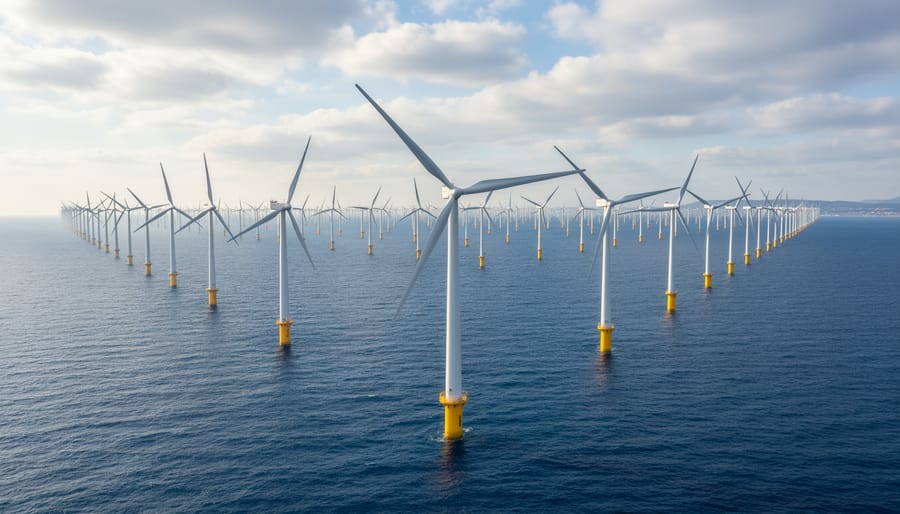
Offshore wind plants anchor massive turbines to the seabed or mount them on floating platforms, converting ocean winds into grid-ready electricity at scales that rival conventional power stations. Commercial installations routinely house turbines with 8-15 MW individual capacities, and entire wind farms frequently deliver 400-1,000 MW to coastal grids. Europe’s Hornsea One, operating off England’s Yorkshire coast, generates 1,218 MW from 174 turbines spread across 407 square kilometers, while the operational Block Island Wind Farm in the United States supplies Rhode Island with 30 MW from five turbines positioned three miles offshore.
Understanding how wind turbines generate electricity clarifies why ocean locations outperform land-based sites: offshore winds blow stronger and more consistently, allowing turbines to operate at 40-50 percent capacity factors compared to 25-35 percent onshore. Blades measuring 80-100 meters in length sweep areas larger than two soccer fields, capturing wind energy that drives generators housed in nacelles atop steel towers rising 90-120 meters above sea level. These installations connect to onshore substations through subsea cables, with modern plants achieving 95-98 percent availability rates despite saltwater exposure and storm conditions.
Tidal and Wave Systems in Operation
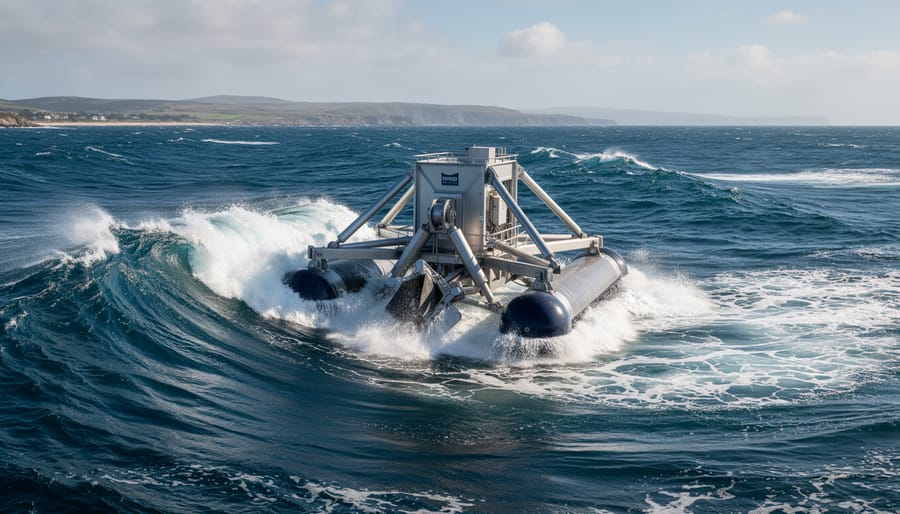
Tidal stream installations now operate at commercial scale in several countries, converting predictable tidal currents into grid electricity. The MeyGen facility in Scotland’s Pentland Firth runs turbines rated at 6 MW total capacity, feeding power to the Scottish grid since 2018. These underwater turbines function similarly to wind turbines but harness water flow during tidal cycles, which repeat with clockwork precision every 12.4 hours. MeyGen’s units have achieved a demonstrated capacity factor exceeding 50% during operational periods, confirming that tidal energy can deliver consistent output.
Wave energy converters remain less commercialized but several pilot-scale installations have logged thousands of operational hours. The Mutriku Wave Energy Plant in Spain has operated 16 oscillating water column devices since 2011, generating approximately 600 MWh annually for the Basque grid. Corpower Ocean deployed a full-scale wave converter off Portugal in 2023 that survived Atlantic storm conditions and produced power across varied sea states, validating resilience in harsh marine environments. These installations prove the generating mechanisms work reliably, though wave technology has yet to match the scale and deployment pace of tidal stream systems.
Nova East Wind: Advancing Canada’s Ocean Energy Capacity
Nova East Wind represents Canada’s entry into utility-scale offshore wind development, with a proposed floating wind farm positioned in Atlantic waters where consistent wind resources meet accessible infrastructure. The project targets a generation capacity between 300 and 400 megawatts, placing it among the larger offshore wind developments planned for North American waters.
| Specification | Detail |
|---|---|
| Generation Capacity | 300-400 MW |
| Distance from Shore | Approximately 20-30 km off Goldboro |
| Province | Nova Scotia, Canada |
| Water Conditions | Atlantic coastal waters with suitable wind exposure |
The facility’s offshore location, roughly 20 to 30 kilometers from Goldboro, Nova Scotia, positions turbines in deeper Atlantic waters where floating foundation technology becomes necessary. This distance balances two competing factors: stronger, more consistent winds available further offshore against the increased complexity and cost of grid connection infrastructure extending from coastal transmission points.
At the upper end of its capacity range, Nova East Wind would generate enough electricity to power approximately 150,000 to 200,000 Canadian homes based on typical household consumption patterns. This scale marks a significant expansion beyond the demonstration projects and smaller pilot installations that have characterized Canada’s ocean energy sector to date. The project demonstrates how ocean renewable energy deployment is scaling up to match the generating capacity of conventional power plants rather than remaining confined to experimental facilities.
The Goldboro area provides existing port infrastructure and industrial experience with marine operations, reducing some of the logistical challenges that complicate ocean energy development in regions without established offshore industries. Access to experienced maritime workers and fabrication facilities capable of handling large offshore structures addresses practical deployment requirements that have constrained ocean energy expansion in locations lacking this existing capacity.
What Makes Ocean Plants Commercially Viable Now
Ocean renewable energy plants have crossed the threshold into commercial viability through a combination of technological maturation and proven operational performance. The offshore wind sector has demonstrated the clearest path, with turbine manufacturing costs dropping approximately 40% since 2015 through standardized production processes and economies of scale. Modern 12-15 MW offshore turbines generate electricity at costs competitive with conventional power sources in many markets, while streamlined installation techniques using specialized vessels have cut deployment timelines from months to weeks for individual units.
Marine environment durability has shifted from theoretical to demonstrated. Operational offshore wind installations in the North Sea have now exceeded 15 years of continuous service, validating corrosion protection systems and structural designs against salt spray, storm loading, and wave impacts. This track record gives investors confidence that facilities will achieve their 25-30 year design lifespans, fundamentally changing project economics. Maintenance protocols have evolved from reactive repairs to predictive schedules using vibration sensors and thermal imaging, reducing downtime and extending component life.
Grid integration capabilities have proven more robust than early projections. Operating ocean energy plants in Denmark, the UK, and China consistently deliver capacity factors between 40-55%, matching or exceeding onshore wind while complementing solar generation patterns. Advanced forecasting systems predict ocean wind resources 48-72 hours ahead with 90% accuracy, allowing grid operators to balance supply confidently. Submarine cable technology has matured to handle transmission distances exceeding 100km with minimal losses, as evidenced by connections serving offshore arrays in the Baltic and Irish Seas.
The commercial momentum is self-reinforcing. As more facilities like Nova East Wind’s proposed 300-400 MW installation move forward, supply chains mature, insurance markets gain actuarial data, and financing costs decline. Ocean renewable energy plants have transitioned from high-risk ventures to calculable infrastructure investments.
Grid Integration and Power Delivery Performance
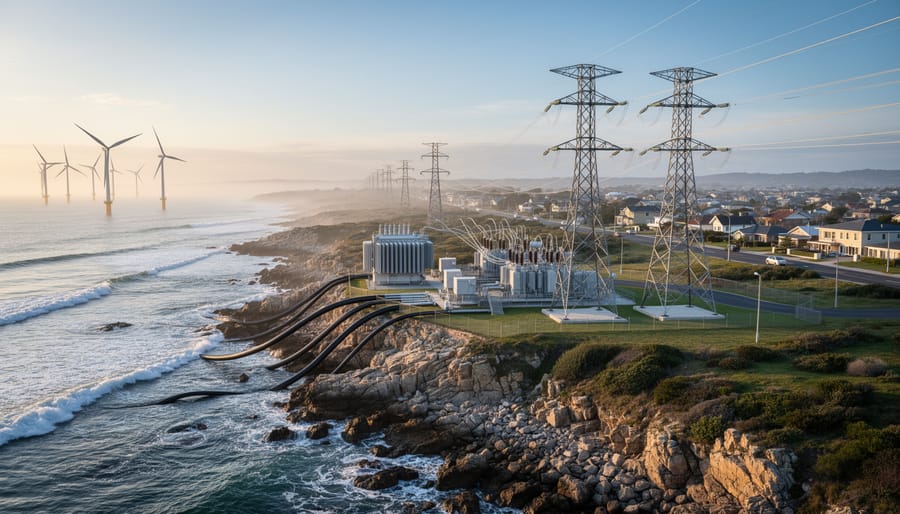
Operational ocean energy plants connect to onshore grids through subsea cables engineered to withstand constant marine exposure and tidal currents. These transmission systems carry power from offshore turbine arrays to coastal substations, where electricity enters the same distribution networks serving conventional generators. The reliability of this grid integration depends on both the subsea infrastructure and the coordinating systems that manage variable ocean power alongside other sources.
Performance data from deployed offshore wind farms shows capacity factors between 35% and 50%, significantly higher than land-based wind installations due to stronger, more consistent ocean winds. The Horns Rev 3 facility off Denmark’s coast operates at approximately 48% capacity, delivering electricity to the national grid with high availability throughout the year. Tidal stream installations demonstrate even greater predictability, with capacity factors reaching 40% during peak tidal periods and performance that operators can forecast weeks in advance based on astronomical tidal cycles.
Ocean renewable plants now serve defined roles in regional energy portfolios rather than functioning as experimental additions. Scotland’s Beatrice Offshore Wind Farm supplies enough electricity for approximately 450,000 homes, representing a measurable portion of the region’s generation mix. The integration of these facilities requires upgraded renewables transmission infrastructure to handle the concentrated power output from offshore locations.
Grid operators manage ocean energy variability through forecasting systems that predict wind and tidal patterns, allowing dispatchers to coordinate ocean plants with other generators. When Nova East Wind becomes operational with its 300-400 MW capacity, it will require similar integration planning to balance its contribution within Nova Scotia’s grid. The demonstrated track record from existing facilities confirms that ocean plants function as reliable grid assets delivering measurable power rather than intermittent supplements requiring constant backup.
Challenges That Remain for Ocean Energy Expansion
Despite operational successes, ocean renewable energy plants face distinct challenges that differ from onshore installations. Harsh marine conditions demand specialized maintenance protocols, environmental assessments require extended timelines, and grid connection infrastructure needs strategic development. However, operating facilities are proving these obstacles are manageable rather than prohibitive.
Maintenance operations present the most immediate complexity. Saltwater corrosion, biofouling, and extreme weather windows limit technician access to turbines and substations. Current operators address these issues through:
- Protective coatings and marine-grade materials that extend component lifespans between service intervals
- Remote monitoring systems that detect performance anomalies before failures occur
- Specialized vessel fleets scheduled during optimal weather conditions
- Modular component designs enabling faster offshore replacements
Environmental permitting remains time-intensive. Regulatory agencies require comprehensive studies on marine mammal behavior, fish migration patterns, and seabed ecosystems before approving installations. Projects like Nova East Wind’s proposed 300-400 MW facility off Goldboro, Nova Scotia demonstrate this reality, where environmental reviews extend development timelines by years. Yet accumulating operational data from existing plants helps streamline future assessments by providing evidence-based impact benchmarks.
Grid infrastructure requires targeted investment. Many coastal regions lack transmission capacity to handle large-scale ocean generation. Operators work with utilities to upgrade substations and cables, often sharing costs with other industrial users. Renewable energy storage systems increasingly pair with ocean plants to smooth power delivery during grid integration, reducing strain on existing infrastructure while transmission upgrades proceed.
Ocean renewable energy plants have crossed a defining threshold: they’re no longer experimental installations under observation, but operational commercial facilities delivering electricity to coastal grids right now. Multiple offshore wind farms are generating hundreds of megawatts daily, tidal stream installations are providing predictable baseload power, and wave energy converters have proven their durability through years of continuous operation in harsh marine conditions.
Projects like Nova East Wind, planned for 300-400 MW of generation capacity off Goldboro, Nova Scotia, represent the industry’s expansion phase, not its inception. These developments build on demonstrated performance metrics, proven installation methods, and established grid integration protocols refined by existing facilities. The technology works at commercial scale. The economics support continued investment. The infrastructure connects ocean-generated power to mainland demand centers.
The question isn’t whether renewable energy plants in the ocean can work, operating facilities have already answered that. What remains is expanding this proven generating capacity to more coastal regions, replicating successful deployment models, and continuing the cost reductions that operational experience brings. Ocean energy has moved from concept to commercial reality, and current projects are scaling what existing plants have already validated.