

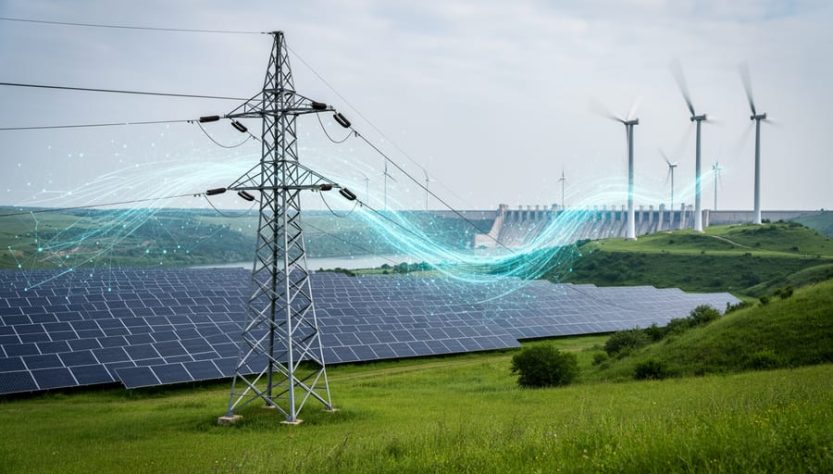
Turkey’s renewable energy proposal for COP31 centers on accelerating the transition to clean energy through ambitious electrification targets and transparent verification systems. The initiative aims to expand renewable capacity across solar, wind, and hydroelectric infrastructure while integrating digital tracking mechanisms to ensure accountability in emissions reductions and climate finance commitments.
This proposal matters because Turkey occupies a strategic position as both a developing economy and a renewable energy growth market. The country has already demonstrated significant momentum in wind and solar deployment, and its COP31 platform seeks to establish replicable frameworks for other nations navigating similar energy transitions. By hosting the climate conference, Turkey positions itself to showcase practical pathways for balancing economic development with decarbonization goals.
The electrification component targets 20 to 35 percent of energy consumption to shift from fossil fuels to renewable sources across transport, heating, and industrial sectors. This represents a substantial infrastructure challenge requiring coordination among utilities, manufacturers, and regulatory bodies. Success depends on mobilizing both public investment and private capital at scale.
What sets this proposal apart is its emphasis on verification technology. Traditional climate commitments often struggle with measurement gaps and accountability concerns. Turkey’s framework proposes blockchain-based systems to track renewable energy generation, carbon credits, and climate finance flows in real time. This transparency mechanism addresses longstanding credibility issues in international climate agreements.
The following sections examine how the proposal operates in practice, its key components, and potential applications for countries seeking to replicate similar approaches. Understanding these implementation details helps clarify whether Turkey’s model offers genuine solutions or merely ambitious rhetoric.
What Is Turkey’s COP31 Electrification Proposal?
Turkey’s electrification proposal represents a major climate initiative that will anchor COP31 in Antalya, Nov. 2026. The proposal calls for a voluntary international coalition to increase electricity’s share of total global energy demand from its current 20 percent to 35 percent by 2035. This shift would require massive expansion of renewable generation capacity and fundamental changes to how energy is produced, distributed and consumed worldwide.
- Electrification Target
- The goal of raising electrification to 35% of global energy demand, up from 20 percent, meaning that electricity would replace fossil fuels across transport, heating, and industrial processes. This represents a 15 percentage-point increase in electricity’s role as an energy carrier.
- Voluntary Coalition
- A group of countries committing to the electrification target without binding obligations, allowing nations to set their own implementation pathways and timelines. Each member would contribute according to national circumstances and renewable energy potential.
- COP31
- The 31st Conference of the Parties to the UN Framework Convention on Climate Change, scheduled for November 9-20, 2026, in Antalya, Turkey. This annual summit serves as the primary international forum for negotiating climate action commitments.
- Renewable Energy Share
- The proportion of total energy consumption supplied by renewable sources such as solar, wind, hydro, and geothermal. Higher electrification enables greater renewable penetration since electricity grids can integrate variable renewable generation.
The proposal positions renewable energy as the primary pathway to electrification. Fossil fuel-powered electricity would not achieve the emissions reductions necessary to meet Paris Agreement targets, so the implicit assumption is that the 15 percentage-point increase comes predominantly from clean sources. Countries joining the coalition would need to accelerate deployment of solar panels, wind turbines, battery storage, grid infrastructure and electric vehicles.
Turkey’s role as COP31 host gives it the platform to champion this initiative and seek multilateral backing. The voluntary structure acknowledges that nations face different starting points and constraints. Some countries already generate significant electricity from renewables, while others rely heavily on coal or natural gas. The coalition approach allows flexibility while creating momentum toward a common electrification benchmark.
The climate finance implications are substantial. Shifting 15 percentage points of global energy to electricity requires trillions in infrastructure investment: generation capacity, transmission networks, energy storage systems, and end-use electrification across sectors. Transparent tracking of these investments through technologies like blockchain could help ensure funds flow to genuine renewable projects rather than greenwashing initiatives. The proposal therefore connects physical infrastructure targets with the need for digital verification systems that can monitor progress and maintain accountability across borders.
How the Electrification Proposal Works
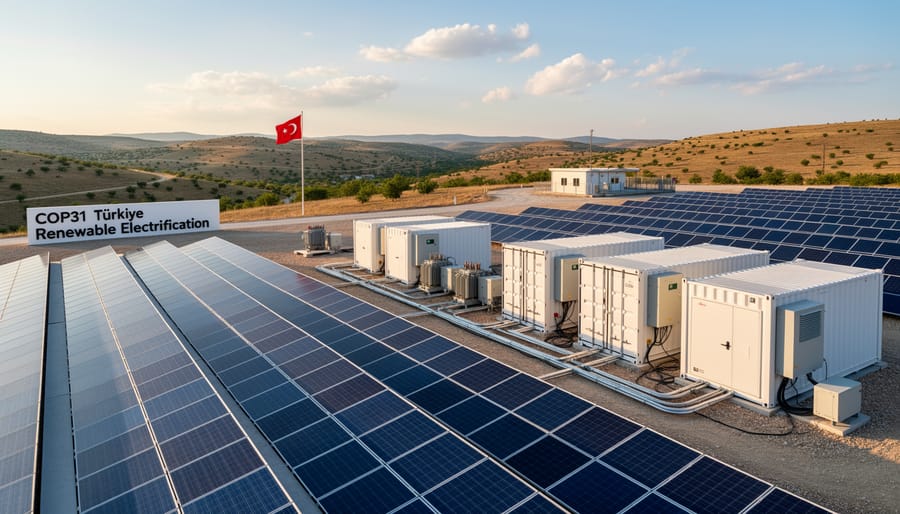
Multilateral Support and Coalition Building
Turkey’s electrification proposal centers on building a voluntary coalition of nations committed to raising electricity’s share of global energy demand from 20% to 35% by 2035. Rather than imposing binding targets, the framework invites countries to adopt the electrification goal aligned with their national circumstances and development priorities. This flexible structure acknowledges varying stages of infrastructure maturity and economic capacity across potential coalition members.
The multilateral approach seeks to leverage existing climate finance mechanisms and international partnerships to support countries transitioning toward higher electrification rates. Nations joining the coalition would integrate the target into their Nationally Determined Contributions or domestic energy strategies, creating a coordinated push for grid expansion and energy storage deployment. The proposal recognizes that reaching 35% electricity share requires substantial investment in generation capacity, transmission infrastructure, and end-use electrification across transport, industry, and buildings.
Coalition building emphasizes South-South cooperation and technology transfer, particularly for renewable energy deployment in emerging economies where electricity access remains limited. The framework encourages developed nations to provide financial and technical support for grid modernization projects in developing countries, linking electrification progress to broader climate adaptation and mitigation goals. This collaborative structure aims to mobilize public and private capital while maintaining national sovereignty over implementation pathways.
Timeline and Measurement Framework
The electrification proposal sets 2035 as its target endpoint, giving coalition members approximately a decade from the COP31 summit to transition electricity’s share of total energy demand from 20% to 35%. This timeline reflects the infrastructure scale required for such a transformation, building renewable generation capacity, modernizing transmission networks, and electrifying transport and industrial processes cannot happen overnight. The 2035 horizon allows countries to integrate the target into their next round of Nationally Determined Contributions under the Paris Agreement, aligning national planning cycles with the voluntary electrification commitment.
Measuring progress toward the 35% target requires tracking both the numerator and denominator: electricity consumption growth and total final energy demand across all sectors. Countries would need to report electricity generation data alongside comprehensive energy consumption patterns in transport, heating, industry, and agriculture. The measurement challenge lies in standardization, different nations use varying methodologies for energy accounting, making direct comparisons difficult without agreed-upon protocols.
Blockchain technology offers potential solutions for this measurement framework by creating immutable records of electricity production and consumption data across participating nations. Distributed ledger systems could standardize reporting formats while maintaining data sovereignty, allowing each country to verify its progress transparently without centralizing sensitive energy information. This approach addresses a core challenge in voluntary climate targets: establishing trust in self-reported data while respecting national autonomy over energy systems.
The framework would likely incorporate periodic review mechanisms, enabling coalition members to assess collective progress and adjust strategies as renewable technology costs decline and electrification pathways become clearer through practical implementation experience.
Types of Blockchain Applications Supporting Renewable Energy Electrification
Blockchain technology offers several distinct application categories that can support Turkey’s proposed electrification target and provide the transparent verification infrastructure needed for a 20% to 35% electricity share transition. Each category addresses specific monitoring, verification and trust challenges that arise when coordinating voluntary commitments across multiple countries and stakeholders.
Renewable energy certificate tracking systems form the first major category. These blockchain platforms create immutable digital records of renewable energy credits generated from clean electricity production, preventing double-counting and ensuring that each megawatt-hour of renewable generation receives proper attribution. For Turkey’s COP31 proposal, such systems would allow coalition members to demonstrate their contributions to the electrification target with verifiable data rather than self-reported estimates. The distributed ledger structure means no single entity controls the record, reducing disputes over who generated what renewable capacity.
Carbon credit verification systems represent a second application type. These platforms track emissions reductions associated with electrification projects, particularly when renewable electricity displaces fossil fuel use in transportation, heating or industrial processes. By recording the baseline emissions, the renewable capacity deployed, and the resulting carbon savings on a transparent ledger, these systems strengthen accountability for climate finance flowing toward electrification initiatives. Investors and governments can audit progress in real time rather than waiting for annual reports that may lack granular detail.
The key blockchain application categories include:
- Renewable energy certificate registries that prevent double-counting and establish clear ownership chains
- Carbon credit verification platforms that link electrification projects to measurable emissions reductions
- Peer-to-peer energy trading systems enabling direct transactions between renewable generators and consumers
- Climate finance transparency tools tracking fund flows from commitments through to project deployment
- Grid integration monitoring systems recording renewable energy dispatch and curtailment patterns
Peer-to-peer energy trading platforms constitute a third category particularly relevant to distributed renewable generation. These systems allow households, businesses and utilities with solar panels, wind turbines or battery storage to trade excess electricity directly, bypassing traditional intermediaries. For countries working toward the 35% target, such platforms accelerate renewable adoption by improving economics for small-scale generators. The blockchain record provides proof of energy delivery and automated settlement, reducing transaction costs that previously made small trades impractical.
Climate finance transparency tools form the fourth category. These applications track funding commitments made by governments, development banks and private investors, then monitor how those funds move from pledge through disbursement to actual project implementation. For a voluntary coalition built around Turkey’s proposal, this transparency addresses the persistent challenge of announced climate finance that never materializes or gets diverted. Stakeholders can verify which coalition members are backing their electrification commitments with actual investment rather than relying on press releases and memoranda of understanding that may lack follow-through.
Uses of Blockchain in Tracking Global Electrification Progress
Blockchain technology offers four practical mechanisms for monitoring the proposed shift from 20% to 35% electricity share of global energy demand by 2035.
Transparent Renewable Capacity Reporting
Coalition members can deploy blockchain-based registries to record renewable energy capacity additions in real time. Each new solar farm, wind installation, or hydroelectric project gets logged as an immutable entry, creating an auditable trail of electrification progress. This approach addresses a persistent challenge: countries self-report energy data through varied national systems, making cross-comparison difficult. A shared blockchain ledger standardizes how capacity is measured and reported, reducing disputes over whether targets are being met. Power generation facilities register their output data directly onto the chain, eliminating intermediary steps where figures might be adjusted or delayed.
Cross-Border Energy Trade Verification
As electricity’s share grows, international power transmission increases. Blockchain tracks cross-border energy flows by recording every megawatt-hour traded between coalition members. When a hydroelectric dam in one country exports power to a neighbor, the transaction appears on the distributed ledger, visible to both parties and independent auditors. This transparency matters for the electrification target because it prevents double-counting: the same renewable kilowatt-hour cannot be claimed by multiple countries toward their individual commitments. Smart contracts execute automatically when transmission conditions are met, settling payments and updating national progress dashboards without manual reconciliation.
Standardized Data Collection Across Coalition Members
Countries joining Turkey’s voluntary initiative need a common framework for measuring electricity’s share of total energy demand. Blockchain provides a standardized data structure where each member inputs metrics using identical categories: transportation electrification rates, industrial electricity consumption, residential power usage, and heating electrification. The decentralized architecture means no single nation controls the dataset, building trust among coalition partners with different political systems. Algorithms verify that submitted data meets minimum quality thresholds before adding it to the permanent record.
Immutable Progress Records for Climate Finance Accountability
Climate finance flows toward countries demonstrating measurable electrification gains. Blockchain creates tamper-proof evidence of progress by time-stamping each milestone: when a country reaches 25% electricity share, 30%, and finally 35%. Financial institutions and multilateral development banks can review these records when allocating adaptation or mitigation funding, confident the underlying data has not been retrospectively altered. This immutability encourages investment by reducing due diligence costs and minimizing disputes over whether funding conditions have been satisfied.

Turkey’s Renewable Energy Context and COP31 Hosting
Turkey’s selection as host for COP31 reflects both its geographic significance as a bridge between Europe and Asia and its growing commitment to renewable energy development. Antalya will serve as the venue for the summit from November 9-20, 2026, bringing international climate negotiations to a country that has dramatically expanded its renewable capacity over the past two decades.
Turkey’s renewable energy landscape has evolved substantially since the early 2000s, driven by a combination of policy initiatives, regulatory reforms and private sector investment. The country possesses considerable natural advantages for renewable development, including strong solar irradiation across much of its territory, robust wind resources along coastal regions, and significant hydroelectric potential from its river systems.
Wind and solar power have experienced rapid growth in recent years, complementing Turkey’s established hydroelectric base. The expansion has been supported by feed-in tariff mechanisms, renewable energy zones that streamline permitting processes, and competitive auctions that have attracted international developers. Geothermal resources, particularly in western regions, have also contributed to the renewable energy mix with consistent baseload generation capacity.
Grid infrastructure development has struggled at times to keep pace with renewable capacity additions, creating curtailment challenges in areas with concentrated wind and solar installations. Investments in transmission for renewables have become increasingly important to integrate dispersed generation sources and connect renewable-rich regions with demand centers in industrial and urban areas.
As COP31 host, Turkey is leveraging its domestic renewable energy experience to champion the global electrification proposal. The country’s own transition from a predominantly fossil-fuel-based system toward greater renewable penetration provides practical insights into the challenges and opportunities of increasing electricity’s share in national energy demand. This firsthand experience informs Turkey’s approach to building a voluntary coalition around the 20 to 35 percent electrification target, recognizing that different countries will face distinct obstacles and require varied pathways to achieve such ambitious transformation.
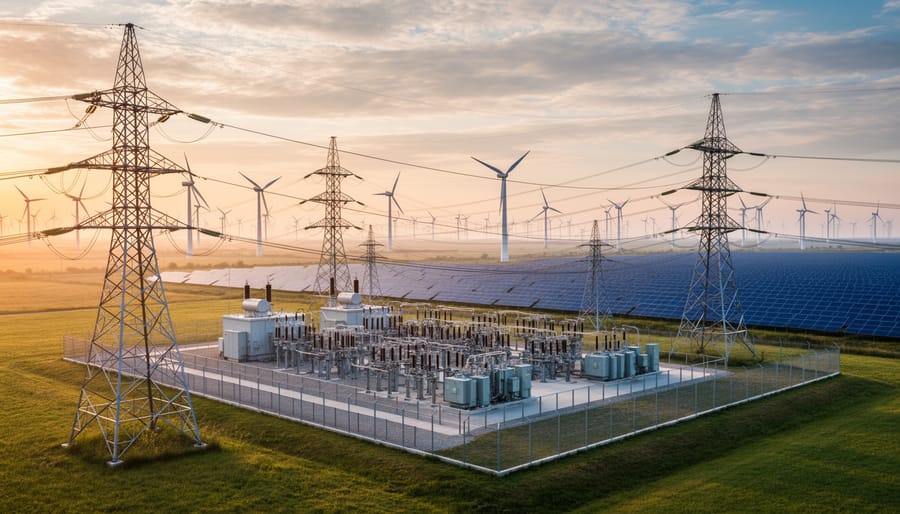
Global Implications for Climate Finance and Renewable Energy Investment
Turkey’s electrification proposal arrives at a critical juncture for climate finance architecture. The global transition toward renewable energy infrastructure demands unprecedented capital flows, yet persistent trust deficits hamper cross-border investment. By establishing a voluntary coalition around measurable electrification targets, the proposal creates a framework where blockchain-enabled transparency can directly address investor concerns about verification and accountability.
The shift from 20% to 35% electricity share represents more than numerical targets, it signals a fundamental reorientation of energy investment priorities. International climate finance historically struggled with opacity around fund deployment and impact measurement. Blockchain applications offer immutable records of renewable capacity additions, energy generation data, and emissions reductions tied to specific projects. This transparency layer could attract institutional investors who previously avoided climate projects due to verification challenges.
Multilateral development banks and bilateral climate funds face mounting pressure to demonstrate tangible outcomes. The proposal’s coalition structure, combined with blockchain-verified progress tracking, provides a mechanism for funders to monitor investments across multiple countries simultaneously. Rather than relying on varied national reporting standards, coalition members could contribute data to shared ledgers that standardize measurement while respecting sovereignty.
The renewable infrastructure investment cycle particularly benefits from enhanced transparency. Solar installations, wind farms, and grid modernization projects require sustained capital over years or decades. Smart contracts on blockchain platforms can automate milestone-based disbursements, reducing administrative overhead while ensuring funds reach intended projects. For developing nations within the coalition, this streamlined verification may lower barriers to accessing climate finance that previously required extensive intermediary validation.
Renewable breakthroughs in battery storage, grid integration, and distributed generation create new financing opportunities that blockchain tools can support. When energy assets become digitally tokenized and performance data flows to transparent ledgers, smaller investors gain access to markets once dominated by large institutions. This democratization of climate finance aligns with the proposal’s voluntary approach, countries and investors participate based on mutual benefit rather than mandate.
The proposal’s potential extends beyond Turkey’s COP31 presidency. Establishing blockchain-verified electrification tracking sets precedent for future climate agreements where digital transparency becomes standard practice, fundamentally reshaping how the international community mobilizes and monitors climate investment.
Frequently Asked Questions
Where and when is COP31 being held?
COP31 will take place in Antalya, Türkiye, from November 9 to 20, 2026. Turkey holds the COP31 presidency and is hosting the conference in this Mediterranean coastal city.
What is Turkey’s electrification target for the proposal?
Turkey is seeking multilateral support to raise electricity’s share of global energy demand from the current 20 percent to 35 percent. The proposal envisions a voluntary coalition of countries working toward this target by 2035.
How can blockchain verify renewable energy claims?
Blockchain creates immutable records of renewable energy generation, certificate issuance, and carbon credits, making it difficult to manipulate or double-count data. This transparency helps verify that countries are genuinely progressing toward electrification targets rather than simply reporting favorable numbers.
Why focus on increasing electricity’s share of energy demand?
Electrification allows energy systems to shift away from direct fossil fuel combustion in transport, heating, and industry toward renewable electricity sources like wind and solar. Raising electricity’s share from 20 to 35 percent creates more opportunities to decarbonize sectors that currently rely on oil, gas, and coal.
These questions reflect common inquiries from policymakers, renewable energy investors, and climate finance professionals trying to understand how Turkey’s proposal fits into the broader climate action landscape. The electrification target addresses a fundamental challenge: many sectors still burn fossil fuels directly rather than using electricity that could be generated from renewable sources.
The blockchain verification question speaks to concerns about greenwashing and data integrity in international climate commitments. Without transparent systems, countries might overstate their renewable energy progress or count the same carbon reductions multiple times in different reporting frameworks. Distributed ledger technology offers a technical solution to these accountability gaps.
The logistics questions about COP31’s timing and location matter for organizations planning participation, side events, and coalition-building activities around the conference. Knowing that the summit runs for nearly two weeks in Antalya helps stakeholders coordinate their engagement with Turkey’s electrification proposal and related renewable energy initiatives.

Turkey’s electrification proposal represents a fundamental shift in how nations might coordinate renewable energy expansion. By targeting a transition from 20% to 35% electricity share in global energy demand, the initiative frames electrification as measurable climate action rather than abstract commitment. The voluntary coalition structure acknowledges that no single mandate can drive this transformation, progress depends on transparent tracking mechanisms that build trust among participating countries.
Blockchain technology addresses the verification challenge inherent in voluntary global targets. Immutable records of renewable capacity additions, standardized reporting across borders, and transparent climate finance flows create accountability without centralized enforcement. These digital tools don’t replace policy commitments, but they make performance visible in ways traditional reporting cannot match.
Beyond the COP31 gathering in Antalya from November 9-20, 2026, the proposal’s real test will be adoption rates and implementation consistency. Countries joining the coalition must balance national energy priorities with the collective electrification goal. Blockchain-enabled transparency can accelerate investment by reducing verification costs and information asymmetries that slow cross-border renewable projects.
The broader implication extends past electricity shares and blockchain applications. If voluntary coalitions with digital verification prove effective, they offer a template for other climate targets, methane reduction, nature restoration, or industrial decarbonization. Transparent measurement infrastructure built for this proposal could serve multiple climate objectives, turning one initiative into a foundation for coordinated action across sectors.