

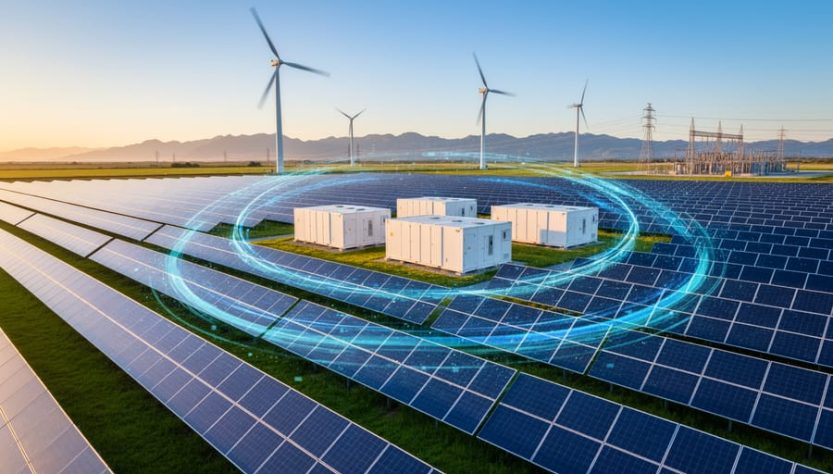
The convergence of artificial intelligence and renewable energy represents one of the most critical technological partnerships of our time, addressing the fundamental challenge that has long constrained clean energy adoption: intermittency and unpredictability. While renewable energy breakthroughs have dramatically reduced costs and expanded capacity, the inability to control when the sun shines or wind blows has created significant grid management obstacles. AI algorithms now analyze weather patterns, consumption data, and grid conditions in real-time to forecast energy generation with 85-95% accuracy, enabling utilities to balance supply and demand with unprecedented precision.
Machine learning systems optimize solar panel angles throughout the day, predict equipment failures before they occur through sensor data analysis, and coordinate battery storage systems to release power during peak demand periods. These applications translate directly into reduced operational costs, minimized energy waste, and accelerated return on investment for renewable installations. Google’s DeepMind reduced cooling energy in data centers by 40% using AI-driven optimization, while companies like Siemens Gamesa employ neural networks to increase wind turbine efficiency by up to 10%.
The stakes extend beyond technical improvements. As nations commit to ambitious decarbonization targets, AI’s capacity to make renewable energy reliable, predictable, and economically competitive determines whether these goals remain aspirational or become achievable realities. Understanding this technological synergy is essential for anyone involved in shaping our energy future.
The Energy Challenge AI Was Built to Solve
Why Solar and Wind Need Intelligent Management
Renewable energy sources like solar and wind represent the cornerstone of our clean energy future, yet they present fundamental operational challenges that distinguish them from conventional power generation. Unlike coal or natural gas plants that produce electricity on demand, solar panels generate power only when the sun shines, and wind turbines depend entirely on atmospheric conditions. This inherent intermittency creates significant grid management complications.
Wind power variability can shift dramatically within minutes as weather patterns change, while solar output follows predictable daily cycles but varies with cloud cover and seasonal shifts. Grid operators must continuously balance electricity supply with consumption in real-time to maintain system stability and prevent blackouts. Traditional forecasting methods struggle with the granular, second-by-second adjustments required as renewable penetration increases.
The complexity multiplies when managing thousands of distributed renewable installations across diverse geographical regions, each experiencing different weather conditions simultaneously. This creates a multidimensional optimization problem: predicting generation from multiple sources, anticipating demand fluctuations, coordinating energy storage systems, and making split-second decisions about power distribution. Without sophisticated management tools, integrating high percentages of renewables into existing grids becomes practically impossible, limiting our ability to transition away from fossil fuels effectively.
The Data Overload Problem
Modern renewable energy infrastructure creates an unprecedented volume of operational data. A single wind farm equipped with hundreds of sensors can generate terabytes of information daily, monitoring variables like wind speed, turbulence patterns, blade stress, temperature fluctuations, and power output across every turbine. Solar installations track irradiance levels, panel temperatures, voltage variations, and grid interactions minute by minute. When scaled across entire energy networks integrating thousands of renewable sources, the data stream becomes overwhelming for traditional analysis methods.
Human operators simply cannot process this information fast enough to make real-time optimization decisions. A grid manager overseeing renewable integration faces simultaneous data feeds from weather stations, generation facilities, transmission systems, and consumption patterns—all fluctuating continuously. Without automated analytical tools, valuable insights remain buried in raw data, leading to suboptimal energy dispatch, missed efficiency opportunities, and reactive rather than proactive system management. This data overload problem represents a fundamental barrier to maximizing renewable energy performance, creating an essential role for artificial intelligence systems capable of processing, analyzing, and acting on information at scales and speeds beyond human capability.
AI Applications Transforming Renewable Energy Today
Predictive Analytics for Energy Generation
Machine learning has fundamentally transformed how energy operators predict renewable generation capacity, addressing one of the sector’s most persistent challenges: variability. Solar and wind resources fluctuate based on complex atmospheric conditions, making accurate forecasting essential for grid stability and economic efficiency.
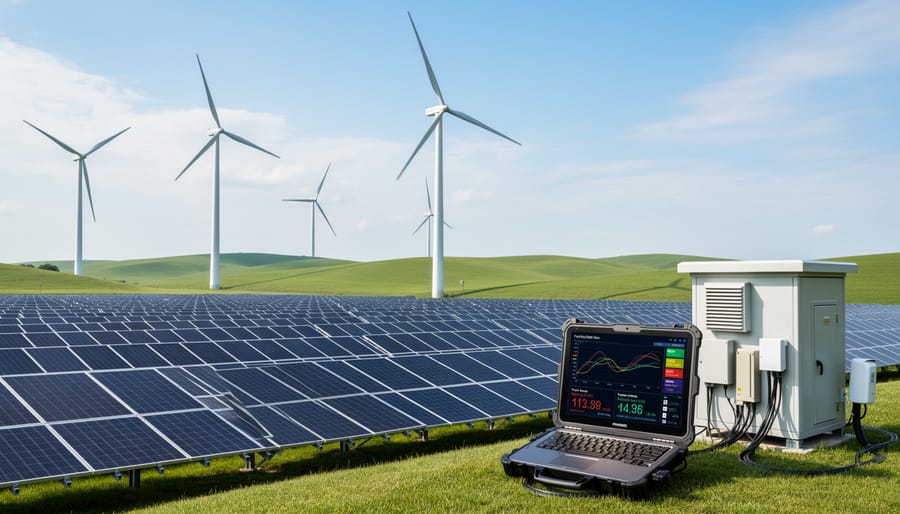
Advanced neural networks now analyze vast datasets combining historical weather patterns, satellite imagery, atmospheric pressure readings, and real-time sensor data to predict solar irradiance with remarkable precision. These models have reduced forecasting errors for day-ahead solar predictions to below 5% in optimal conditions, compared to 15-20% with traditional numerical weather prediction methods. This improvement translates directly into reduced reserve capacity requirements and lower operational costs for grid operators.
Wind forecasting has similarly benefited from deep learning architectures that capture non-linear relationships between meteorological variables. Recurrent neural networks and long short-term memory models excel at identifying temporal patterns in wind behavior, extending accurate prediction horizons from hours to multiple days. A notable example comes from Xcel Energy in Colorado, where machine learning-enhanced wind forecasting reduced prediction errors by 30%, saving approximately $60 million annually in grid management costs.
The integration of ensemble modeling techniques further enhances reliability by combining multiple prediction algorithms, each weighted according to recent performance. This approach accounts for model uncertainty and provides probability distributions rather than single-point forecasts, enabling grid operators to make more informed decisions about energy dispatch, storage deployment, and backup generation scheduling. As these predictive systems continue learning from expanding datasets, their accuracy improvements accelerate the economic case for renewable integration.
Smart Grid Optimization and Load Balancing
Modern electricity grids face unprecedented complexity as renewable sources like solar and wind introduce inherent variability. Artificial intelligence has emerged as an essential technology for managing these intricate networks, transforming how utilities balance supply and demand in real time.
AI algorithms excel at processing vast streams of data from distributed energy resources, weather stations, and consumption patterns to predict demand fluctuations hours or even days ahead. Machine learning models analyze historical usage data alongside variables such as temperature, seasonal patterns, and local events to forecast consumption spikes with remarkable accuracy. This predictive capability allows grid operators to preemptively adjust energy distribution, reducing the need for costly backup generators and minimizing reliance on fossil fuel peaker plants.
Load balancing across complex networks becomes manageable through AI-driven systems that continuously monitor grid conditions and automatically route power where needed. In Germany, transmission system operators employ AI platforms that coordinate thousands of renewable energy installations, energy storage facilities, and traditional power plants simultaneously. These systems make split-second decisions about energy routing, maintaining grid stability even when solar output drops suddenly due to cloud cover or wind generation fluctuates.
AI also optimizes energy storage deployment, determining optimal charging and discharging schedules for battery systems based on predicted supply and demand curves. This intelligent orchestration ensures that excess renewable energy generated during peak production hours gets stored efficiently and released during high-demand periods, maximizing clean energy utilization while maintaining grid reliability. The result is a more resilient, efficient electrical infrastructure capable of supporting higher renewable energy penetration rates.
Energy Storage Management
Artificial intelligence is revolutionizing how we manage energy storage innovations, addressing one of renewable energy’s most persistent challenges. AI algorithms continuously analyze historical usage patterns, weather forecasts, and grid demand to optimize battery charging and discharging cycles. These systems determine precisely when to store excess solar or wind energy and when to release it, maximizing efficiency while minimizing degradation.
Machine learning models predict battery health with remarkable accuracy, identifying optimal operating parameters that extend battery lifespan by 20-30 percent compared to conventional management systems. By monitoring temperature, voltage, and charge rates in real-time, AI prevents harmful stress conditions that accelerate aging.
Furthermore, AI determines optimal storage deployment strategies across grid networks. Companies like Tesla and Fluence employ predictive algorithms to identify locations where battery installations deliver maximum value, considering factors such as grid congestion, renewable generation capacity, and local demand patterns. A notable implementation at the Hornsdale Power Reserve in Australia demonstrated how AI-managed batteries can respond to grid fluctuations within milliseconds, stabilizing frequency and preventing blackouts while generating revenue through energy arbitrage. This intelligent orchestration transforms batteries from simple storage devices into dynamic grid assets that enhance renewable integration.
Maintenance and Performance Monitoring
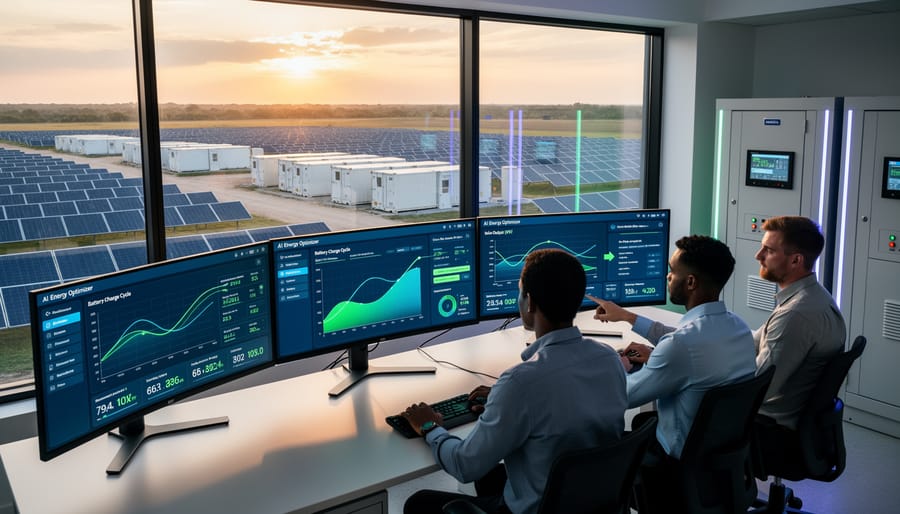
AI-powered predictive maintenance represents a significant advancement in renewable energy operations, enabling facility managers to detect equipment failures before they occur. Machine learning algorithms analyze vast streams of sensor data from wind turbines, solar panels, and battery systems to identify subtle performance anomalies that human operators might miss. This proactive approach reduces unplanned downtime by up to 50% in wind farms, according to industry studies. Predictive models assess vibration patterns, temperature fluctuations, and electrical output to forecast component degradation weeks or months in advance. The financial impact proves substantial—early intervention prevents costly emergency repairs and extends equipment lifespan. For example, Danish energy company Ørsted implemented AI-driven monitoring across their offshore wind portfolio, resulting in a 20% reduction in maintenance costs while improving energy output reliability. These systems continuously learn from operational data, refining their predictive accuracy over time and enabling maintenance teams to schedule interventions during optimal weather windows, maximizing both safety and efficiency.
Real-World Impact: Case Studies
Case Study 1: Wind Farm Optimization
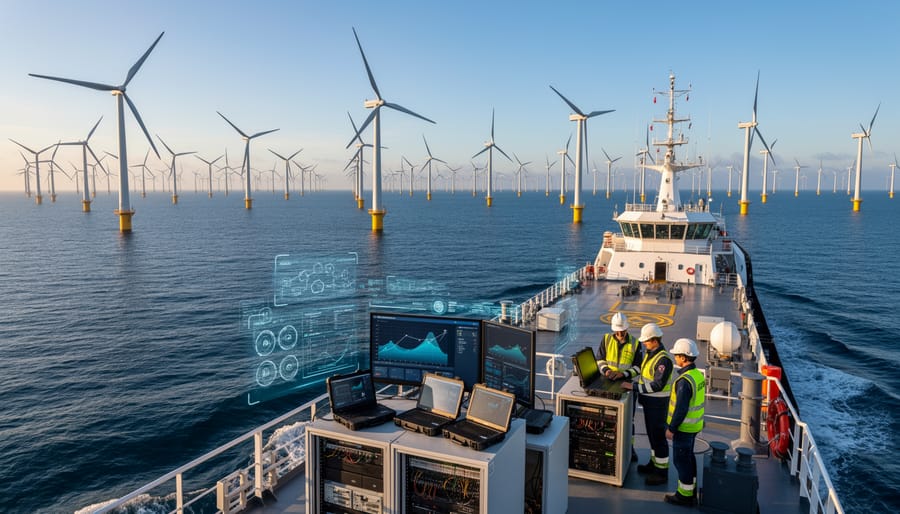
DeepMind’s collaboration with Google’s wind farms in the American Midwest demonstrates AI’s tangible impact on renewable energy production. Implemented in 2019, this project employed machine learning algorithms to predict wind power output 36 hours in advance, enabling operators to optimize energy delivery commitments to the electrical grid. The AI system analyzes weather forecasts, historical turbine performance data, and real-time operational parameters to make microsecond adjustments to individual turbine settings.
The results proved substantial. The predictive models increased the value of wind energy by approximately 20 percent compared to baseline scenarios without AI optimization. This improvement stems from the grid’s ability to schedule wind power more reliably, reducing dependence on fossil fuel backup generators during periods of uncertainty. The system dynamically adjusts turbine blade pitch angles and yaw positions based on incoming wind patterns, maximizing energy capture while minimizing mechanical stress on equipment.
Furthermore, the AI algorithms identified optimal turbine spacing configurations that reduced wake interference between adjacent turbines, a phenomenon where downstream turbines receive disrupted airflow from upstream units. By repositioning virtual wind farm layouts and testing configurations through simulation, operators achieved efficiency gains of 3-5 percent in total energy output. These quantifiable improvements demonstrate how machine learning transforms wind energy from an intermittent resource into a more predictable, valuable component of modern electrical grids, advancing both economic viability and environmental objectives.
Case Study 2: Solar Energy Forecasting
At the Longyangxia Dam Solar Park in China, one of the world’s largest solar installations with 850 MW capacity, AI-driven forecasting systems have transformed operational efficiency and grid stability. Implemented in 2019, the machine learning platform processes satellite imagery, historical performance data, weather patterns, and real-time sensor readings to predict solar generation with remarkable precision.
The system achieved a 15% improvement in day-ahead forecast accuracy compared to traditional numerical weather prediction models, reducing prediction errors to below 5% for next-hour forecasts. This enhanced accuracy allows grid operators to optimize reserve power allocation and minimize reliance on fossil fuel backup generators. The State Grid Corporation of China reported that accurate forecasting reduced curtailment—wasted solar energy—by approximately 20%, translating to millions of additional kilowatt-hours delivered to consumers annually.
The AI algorithms continuously learn from actual performance data, adapting to seasonal variations, equipment degradation patterns, and local microclimate effects that conventional models often miss. During the critical morning ramp-up period when solar generation increases rapidly, the system provides 15-minute interval predictions that enable smoother grid integration.
Economic benefits proved substantial: the installation reduced balancing costs by an estimated $2.3 million annually while improving power quality metrics. Grid operators gained sufficient confidence in AI predictions to reduce spinning reserves by 8%, freeing capacity for additional renewable integration. This case demonstrates that advanced forecasting transforms solar power from an intermittent challenge into a predictable, manageable resource within modern electricity systems.
The Energy Cost of AI: Addressing the Paradox
Making AI Greener
The technology sector is responding to AI’s growing energy footprint with innovative solutions that prioritize sustainability without compromising computational power. Leading tech companies are increasingly powering their data centers with renewable energy sources, with Google achieving 100% renewable energy matching for its global operations and Microsoft committing to becoming carbon negative by 2030. These initiatives demonstrate that large-scale AI infrastructure can align with environmental responsibility.
Researchers are developing energy-efficient algorithms that deliver comparable results while consuming significantly less power. Techniques like model pruning, which removes unnecessary neural network parameters, and quantization, which reduces computational precision requirements, can decrease energy consumption by up to 90% in certain applications. Similarly, federated learning allows AI models to train on distributed devices rather than centralized servers, substantially reducing data transfer energy costs.
Hardware innovations are equally transformative. Specialized AI chips designed for specific tasks consume far less energy than general-purpose processors. Companies like Cerebras and Graphcore are creating processors optimized for machine learning workloads, while neuromorphic computing mimics the human brain’s energy efficiency. These advances, combined with improved cooling systems using natural air and liquid immersion technologies, are reshaping data center operations. Together, these developments prove that artificial intelligence and environmental stewardship can progress simultaneously, offering a viable path toward sustainable technological advancement.
Barriers and Challenges to Widespread Adoption
Despite the considerable promise of AI in renewable energy, several substantial barriers impede widespread adoption across the sector. Understanding these challenges is essential for developing realistic implementation strategies and policy frameworks.
Infrastructure costs represent a primary obstacle, particularly for smaller utilities and developing regions. Deploying AI systems requires significant upfront investment in sensors, communication networks, and computing infrastructure. A 2023 industry analysis found that grid modernization projects incorporating AI typically require 30-40% higher initial capital expenditure compared to conventional upgrades, creating financial barriers for organizations with limited budgets.
Data quality and availability issues frequently undermine AI effectiveness. Machine learning algorithms depend on comprehensive, accurate datasets, yet many renewable energy facilities lack standardized data collection protocols. Legacy systems often generate incomplete or inconsistent information, while data silos between different operational units prevent the holistic analysis AI requires. According to energy analyst Maria Santos, “We often encounter situations where organizations have vast amounts of data but lack the standardization necessary for AI applications to deliver meaningful insights.”
The workforce skills gap presents another significant challenge. Successfully implementing AI solutions requires personnel who understand both renewable energy systems and data science—a rare combination. Many organizations struggle to recruit or retain talent with this dual expertise, while existing staff may lack training in AI technologies.
Regulatory frameworks have not kept pace with technological advancement. Many jurisdictions operate under energy regulations designed for centralized, predictable power generation, creating uncertainty about liability, data ownership, and AI-driven automated decisions in grid management.
Cybersecurity concerns also warrant attention, as AI systems create new vulnerabilities. Connected renewable energy infrastructure becomes susceptible to cyberattacks that could manipulate forecasting algorithms or disrupt grid operations. Addressing these security challenges requires ongoing investment and vigilance, adding complexity to already demanding implementation processes.
What Experts Say About the Future
Industry leaders and researchers paint an increasingly sophisticated picture of how artificial intelligence will reshape energy infrastructure over the coming decade. Dr. Elena Martinez, Chief Innovation Officer at GridFuture Systems, emphasizes that “edge computing represents the next frontier in renewable energy management, enabling real-time decision-making at the source rather than relying on centralized systems.” This distributed approach allows wind turbines and solar arrays to process data locally, responding to grid conditions within milliseconds rather than minutes.
The convergence of AI with emerging renewable technologies is accelerating the development of intelligent microgrids. According to research from the International Energy Agency, AI-enabled microgrids will manage over 30% of distributed energy resources by 2030. These systems continuously optimize energy flow between generation sources, storage units, and consumption points, creating resilient local networks that can operate independently during grid disruptions.
Professor James Chen from the Stanford Energy Institute highlights the transformative potential of IoT integration: “We’re moving toward billions of connected devices—from smart thermostats to industrial sensors—that collectively form a neural network for the entire energy system. AI algorithms process this massive data stream to identify patterns invisible to human operators.”
Policymakers are preparing frameworks for this transition. The European Commission’s recent roadmap envisions regulatory sandboxes where autonomous energy networks can be tested safely. Michael O’Brien, energy policy director, notes that “establishing trust in AI-driven systems requires transparent governance structures and robust cybersecurity protocols.”
The path toward fully autonomous energy networks involves graduated autonomy levels, similar to self-driving vehicles. Current systems operate at Level 2, with AI providing recommendations that humans approve. Experts project Level 4 autonomy—where systems manage routine operations independently while humans handle exceptional situations—becoming mainstream by 2035, fundamentally transforming how we generate, distribute, and consume renewable energy.
Action Steps for Stakeholders
The convergence of artificial intelligence and renewable energy requires coordinated action across multiple stakeholder groups to realize its full potential. Each actor in this ecosystem plays a distinct role in accelerating meaningful progress.
Policymakers must prioritize creating regulatory frameworks that encourage AI integration while maintaining grid security and data privacy standards. This includes establishing standardized protocols for AI-driven grid management, incentivizing utilities to adopt predictive maintenance technologies, and funding research into AI applications for renewable energy adoption. Governments should also invest in workforce development programs that equip energy professionals with data science skills necessary for this technological transition.
Energy companies should begin with targeted pilot programs in specific operational areas rather than attempting wholesale transformation. Starting with AI-powered forecasting systems for one solar or wind farm allows companies to measure performance improvements, refine algorithms, and build internal expertise before scaling. Establishing partnerships with technology firms can accelerate implementation while sharing development costs and risks.
Research institutions should focus on priority areas including improved algorithms for extreme weather forecasting, AI models that optimize energy storage systems, and methods for integrating distributed renewable resources into existing grids. Collaborative research initiatives that bring together computer scientists and energy engineers produce the most practical innovations.
Investors should identify opportunities in companies developing specialized AI solutions for renewable energy challenges rather than generic platforms. Look for ventures with proven performance improvements, partnerships with established energy companies, and scalable business models. The energy storage optimization and predictive maintenance sectors present particularly strong near-term opportunities.
Success requires sustained collaboration, realistic timelines, and commitment to measuring tangible outcomes rather than pursuing technology for its own sake.
The convergence of artificial intelligence and renewable energy represents far more than incremental technological advancement. AI has emerged as a fundamental enabler of the clean energy transition, transforming challenges that once seemed insurmountable into manageable engineering problems. From optimizing solar panel placement to predicting wind patterns with unprecedented accuracy, AI algorithms are unlocking efficiency gains that directly translate into faster deployment, lower costs, and more reliable renewable energy systems.
The evidence is compelling. Energy storage systems enhanced by machine learning achieve significantly higher performance metrics, grid operators balance supply and demand with remarkable precision, and predictive maintenance extends equipment lifespans while reducing operational costs. These are not theoretical benefits but measurable outcomes already reshaping the energy landscape. The renewable sector’s ability to compete with and increasingly surpass fossil fuels owes much to AI-driven optimization.
Yet realizing this potential demands continued innovation and collaboration across disciplines. Researchers must refine algorithms for edge cases and extreme weather events. Policymakers need to establish frameworks that encourage AI adoption while ensuring equitable access. Industry leaders should prioritize interoperability and data sharing. Energy professionals must embrace these tools while developing the expertise to deploy them effectively.
The path forward requires sustained investment in both artificial intelligence capabilities and renewable infrastructure. The challenges are real, but the trajectory is clear. By combining human ingenuity with computational power, we can accelerate the transition to clean energy systems that are not only sustainable but more efficient and resilient than their predecessors. The question is no longer whether AI will enable this transformation, but how quickly we can harness its full potential.