

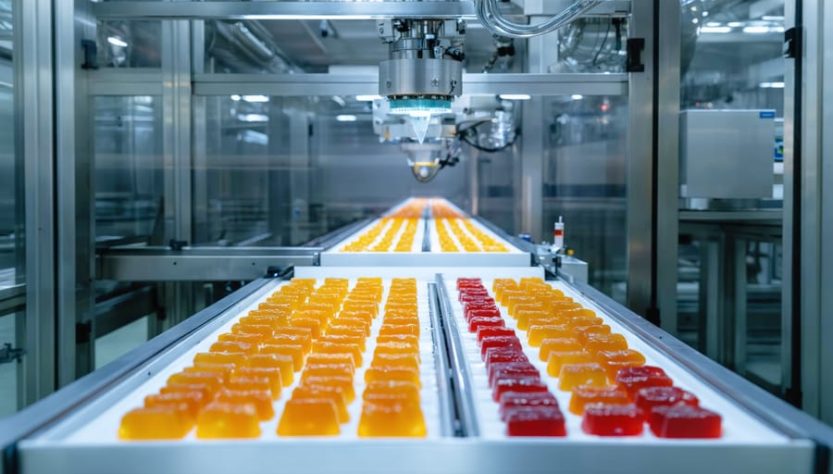
The cannabis edibles industry faces a critical sustainability challenge: manufacturing strong edibles demands substantial energy—from climate-controlled cultivation through extraction, infusion, and temperature-sensitive production processes. As THC gummies production scales to meet surging market demand projected to reach $11.5 billion by 2027, energy consumption has become both a significant operational cost and environmental concern.
Renewable energy integration offers cannabis manufacturers a strategic pathway to reduce carbon footprints while improving bottom lines. Solar, wind, and biomass systems can power energy-intensive operations like HVAC systems maintaining precise humidity levels, extraction equipment requiring consistent heating, and commercial kitchens producing thousands of gummies daily. Early adopters report 30-40% reductions in energy costs within three years of implementation.
The business case extends beyond cost savings. Sustainability credentials increasingly influence consumer purchasing decisions, with 67% of cannabis consumers preferring products from environmentally responsible producers. Regulatory landscapes in major markets like California and Colorado are tightening energy efficiency requirements, making renewable integration not just advantageous but potentially mandatory.
This article examines practical renewable energy solutions tailored for THC gummies production facilities. Through detailed case studies of cannabis manufacturers who’ve successfully transitioned to renewable power, expert analysis of energy consumption patterns across production stages, and economic modeling of various renewable configurations, we provide actionable intelligence for industry stakeholders navigating this critical intersection of sustainability and profitability. Whether you’re a facility manager evaluating solar installation, an investor assessing sustainable cannabis operations, or a policymaker shaping industry standards, understanding renewable energy applications in this sector is essential for future success.
The Energy Demands of THC Gummies Manufacturing
Cannabis Cultivation: The Primary Energy Consumer
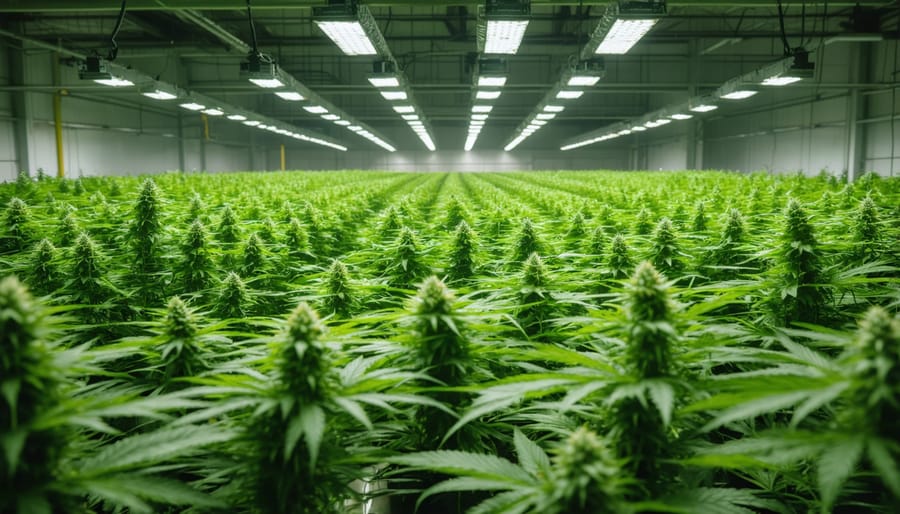
Indoor cannabis cultivation represents the most energy-intensive phase of THC gummies production, consuming approximately 75-85% of the total manufacturing energy footprint. Controlled environment agriculture facilities require substantial power to replicate optimal growing conditions year-round, with lighting systems accounting for 35-45% of total energy use.
High-intensity discharge lamps or LED lighting systems must operate 12-18 hours daily to support photosynthesis, typically requiring 30-50 watts per square foot of cultivation space. A medium-sized facility of 10,000 square feet can consume 300-500 kilowatts continuously during flowering cycles. HVAC systems constitute another 30-40% of energy demand, maintaining precise temperature ranges between 70-85°F while managing the considerable heat generated by lighting infrastructure.
Dehumidification emerges as the third major consumer, responsible for 15-20% of energy use. Cannabis plants release substantial moisture through transpiration, necessitating continuous humidity control to prevent mold and pathogen development. A single 1,000-watt lamp can require 3,000 BTUs of cooling capacity.
According to industry analysis, indoor cultivation facilities consume 1,400-2,000 kWh per pound of dried flower, translating to electricity costs of $200-400 per pound at average commercial rates. This intensive energy profile creates both economic vulnerability to utility rate fluctuations and significant carbon emissions—making the transition to renewable energy sources not merely environmentally responsible but economically strategic for long-term operational sustainability.
Extraction and Infusion Processes
THC extraction and gummies production represent energy-intensive operations requiring careful consideration of renewable power integration. The extraction phase typically employs CO2 supercritical extraction or ethanol-based methods, with CO2 systems consuming between 15-25 kW per extraction cycle. These systems demand consistent electricity for compressors, chillers, and temperature regulation equipment operating at specific pressure and thermal parameters.
Following extraction, the infusion process combines THC concentrate with gummy base ingredients through precision heating and mixing. Industrial mixers and depositors require 8-12 kW continuously, while maintaining temperature-controlled environments between 65-75°F throughout manufacturing facilities adds substantial HVAC loads. Temperature consistency proves critical for product quality and regulatory compliance.
A mid-scale facility producing 100,000 gummies daily typically consumes 200-300 kWh per production day. Solar photovoltaic installations sized between 100-150 kW can offset 70-85% of daytime energy demand, while battery storage systems ensure stable power during peak extraction cycles. One Colorado facility achieved 92% renewable energy coverage by pairing rooftop solar with smart energy management systems that schedule high-demand extraction cycles during peak solar generation hours. This strategic approach reduced operational costs by 40% annually while meeting sustainability objectives increasingly valued by consumers and investors alike.
Cold Storage and Distribution
Cold storage represents one of the most energy-intensive phases in THC gummies production, as these products require consistent refrigeration to maintain potency, prevent degradation, and ensure consumer safety. Temperature-controlled environments typically operate between 36-46°F (2-8°C), with refrigeration systems accounting for approximately 30-40% of total distribution energy costs. The challenge intensifies across multi-stage supply chains involving manufacturing facilities, distribution centers, retail locations, and last-mile delivery.
Renewable energy solutions are transforming this sector through several innovative approaches. Solar-powered refrigeration units with battery storage enable consistent temperature control while reducing grid dependence. A Colorado-based cannabis distributor reported a 45% reduction in cooling costs after installing rooftop solar arrays coupled with advanced insulation systems. Phase-change materials and smart monitoring systems further optimize energy use by minimizing temperature fluctuations.
Cold chain logistics present additional opportunities for renewable integration. Electric delivery vehicles powered by renewable electricity, combined with solar-assisted refrigerated containers, substantially decrease the carbon footprint of temperature-controlled transport. Industry experts emphasize that investing in efficient cold storage infrastructure not only ensures product quality but also positions manufacturers competitively as sustainability becomes a market differentiator in the cannabis sector.
Renewable Energy Solutions for Cannabis Production Facilities
Solar Power Integration
Cannabis manufacturers are increasingly turning to solar photovoltaic systems to offset the substantial energy demands of THC gummies production. Several pioneering facilities demonstrate the viability and economic advantages of this transition.
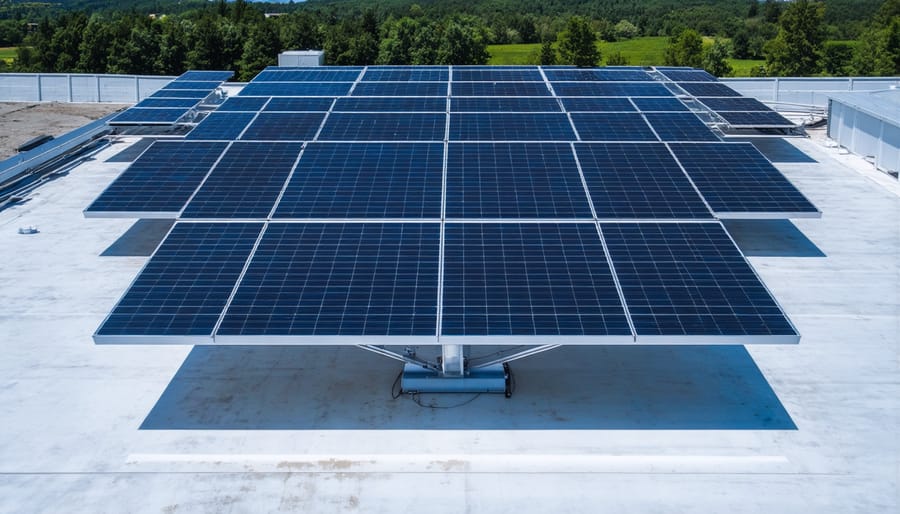
Green Horizon Edibles in Colorado installed a 500 kW rooftop solar array in 2021, covering approximately 40,000 square feet of their manufacturing facility. The system generates 650 MWh annually, offsetting 45% of their total energy consumption. With installation costs of $1.2 million and federal tax credits reducing the net investment to $840,000, the facility achieved a payback period of 6.2 years. Annual savings now exceed $78,000, with projections indicating a 25-year return on investment of 340%.
In California, Pacific Cannabis Solutions opted for a hybrid approach, combining a 750 kW ground-mounted array with a 200 kWh battery storage system. This configuration addresses peak demand periods during extraction and decarboxylation processes, which can spike to 300 kW. The battery system enables load shifting, reducing demand charges by 30% while providing backup power for critical refrigeration systems. Their investment analysis revealed that adding energy storage considerations increased upfront costs by 25% but improved overall ROI by reducing grid dependency during expensive peak hours.
Capacity sizing requires careful analysis of production schedules and equipment loads. Industry experts recommend systems sized to cover 40-60% of annual consumption for facilities without storage, and 60-80% when paired with batteries. This approach balances capital investment with utility interconnection policies and net metering benefits.
Solar integration also enhances brand positioning, with consumer surveys indicating 67% of cannabis purchasers prefer products from environmentally responsible manufacturers. These tangible financial returns, combined with reduced carbon footprints averaging 400 metric tons CO₂ annually, make solar power an increasingly strategic investment for cannabis edibles producers.
Wind Energy for Large-Scale Operations
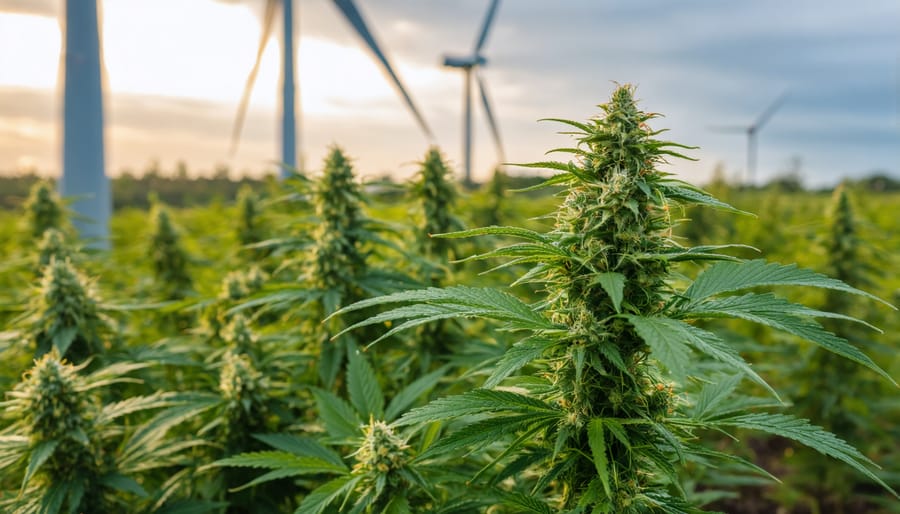
For cannabis manufacturers scaling production to industrial levels, wind energy solutions present compelling opportunities to offset substantial electricity demands. Large-scale THC gummies facilities consuming multiple megawatts annually can leverage wind power through strategic partnerships and procurement models that align with their operational requirements.
Power Purchase Agreements (PPAs) have emerged as the most viable pathway for cannabis operations to access wind energy. Through virtual PPAs, manufacturers can contract directly with wind farms to purchase electricity at fixed rates, often achieving 15-25% cost savings compared to conventional utility rates while securing price stability over 10-20 year terms. This model proves particularly advantageous in regions with robust wind resources, such as the Midwest and Great Plains.
Physical PPAs offer another approach, where facilities located near wind farms receive direct power transmission. Colorado-based cannabis manufacturer Green Dot Labs exemplifies this model, partnering with a regional wind farm to supply 60% of their production energy needs, resulting in annual carbon emission reductions equivalent to removing 400 vehicles from roadways.
For operations considering on-site installations, modern utility-scale turbines generating 2-3 MW can power entire manufacturing campuses. However, this requires significant capital investment—typically $3-4 million per turbine—alongside suitable land resources and favorable wind conditions. Community wind projects present an alternative, enabling manufacturers to co-invest in shared wind infrastructure while maintaining proportional energy rights. These collaborative models distribute financial risk while advancing regional renewable energy development.
Geothermal and Biomass Alternatives
Beyond solar and wind power, emerging renewable technologies offer promising alternatives for THC gummies manufacturing facilities seeking comprehensive energy solutions. Geothermal systems present particularly compelling opportunities for temperature-sensitive cannabis processing operations.
Geothermal heating and cooling systems leverage stable underground temperatures to regulate facility climates efficiently. For THC gummies production, which requires precise temperature control during extraction, infusion, and storage phases, geothermal installations can reduce HVAC energy consumption by 40-60% compared to conventional systems. A Colorado-based edibles manufacturer reported annual energy savings of $78,000 after implementing a geothermal loop system, with the installation paying for itself within five years.
Biomass energy represents another innovative pathway, transforming cannabis cultivation and processing waste into usable energy. Cannabis production generates substantial organic byproducts—stems, leaves, and plant matter—that can be converted into biogas through anaerobic digestion or combusted for heat generation. One Oregon facility successfully diverts 12 tons of cannabis waste annually to a biomass boiler, providing 30% of their facility’s heating requirements while simultaneously addressing waste disposal challenges.
These technologies prove particularly valuable when integrated with solar and wind systems, creating resilient hybrid renewable energy portfolios. Research indicates that facilities combining multiple renewable sources achieve 15-25% greater energy independence than single-source operations. For cannabis manufacturers facing grid reliability concerns and rising utility costs, such diversification strategies enhance operational stability while advancing sustainability objectives.
Economic and Environmental Benefits
Cost Savings and Energy Independence
Transitioning to renewable energy offers THC gummies manufacturers substantial financial advantages that extend well beyond environmental responsibility. While initial capital investment in solar panels, wind turbines, or biomass systems requires careful planning, the long-term return on investment typically materializes within 5-8 years for cannabis production facilities operating continuous high-energy processes.
The most immediate benefit manifests through dramatically reduced utility costs. Production facilities implementing comprehensive solar installations commonly report 60-80% reductions in monthly electricity expenses. Given that energy-intensive decarboxylation, extraction, and climate control systems can account for 30-40% of operational costs in gummies manufacturing, these savings significantly improve profit margins and competitive positioning.
Perhaps equally valuable is protection from energy price volatility. Traditional grid-dependent operations remain vulnerable to utility rate increases, which have averaged 2-3% annually over the past decade. Renewable energy systems provide predictable, fixed energy costs over 20-25 year lifespans, enabling more accurate long-term financial forecasting and business planning.
Government incentives further enhance economic viability. The federal Investment Tax Credit (ITC) currently offers 30% tax credits for solar installations, while many states provide additional rebates, grants, and accelerated depreciation schedules. Some jurisdictions specifically target cannabis businesses for renewable energy incentives to offset the industry’s substantial energy footprint. Net metering programs allow facilities to sell excess generated power back to the grid, creating additional revenue streams while supporting broader grid stability during peak production periods.
Carbon Footprint Reduction
Transitioning THC gummies production to renewable energy sources delivers measurable environmental benefits. Industry data indicates that solar-powered facilities can reduce carbon emissions by approximately 0.8 to 1.2 metric tons of CO2 equivalent per 1,000 units produced compared to conventional grid electricity, which typically relies on fossil fuel generation. A medium-sized production facility manufacturing 500,000 units monthly can prevent roughly 400-600 metric tons of CO2 emissions annually through solar integration alone.
When comparing energy sources, natural gas-powered operations emit approximately 0.53 kg CO2 per kWh, while coal-based electricity generates 0.96 kg CO2 per kWh. In contrast, solar and wind energy produce virtually zero direct emissions during operation. For cannabis edibles manufacturers consuming 200-300 kWh daily for extraction, infusion, and climate control systems, this translates to eliminating 35-105 tons of CO2 annually per facility.
These reductions align directly with corporate climate commitments and regional emissions targets. California’s cannabis sector, for instance, contributes toward the state’s goal of achieving carbon neutrality by 2045. Companies implementing comprehensive renewable strategies report 60-75% reductions in scope 2 emissions within the first operational year, demonstrating how environmental sustainability in energy choices directly impact climate outcomes. These metrics provide quantifiable evidence for sustainability reports, regulatory compliance documentation, and stakeholder communications while supporting broader decarbonization objectives across the cannabis manufacturing sector.
Real-World Implementation: Cannabis Companies Leading the Transition
Several forward-thinking cannabis manufacturers have demonstrated that transitioning to renewable energy is both economically viable and environmentally beneficial, offering valuable blueprints for industry-wide adoption.
**Canndescent**, a California-based premium cannabis producer, invested in a comprehensive solar installation that now provides 85% of their facility’s energy needs. The company installed 1,200 photovoltaic panels across their cultivation and processing facility, including their THC gummies production line. According to their sustainability director, the $2.1 million investment achieved payback within four years through reduced electricity costs and state renewable energy incentives. The solar array generates approximately 500 kW of power during peak production hours, directly offsetting the substantial energy demands of their decarboxylation ovens and climate-controlled curing rooms. Beyond financial returns, Canndescent reports that their renewable energy commitment has strengthened their brand positioning, with sustainability-conscious consumers showing 23% higher brand loyalty in consumer surveys.
**Green Thumb Industries** implemented a hybrid renewable approach across their multi-state operations, combining rooftop solar with purchased renewable energy credits (RECs) and strategic battery storage systems. Their Pennsylvania facility, which produces over 50,000 THC gummies daily, operates entirely on renewable sources. The company faced initial challenges with grid connection permits and equipment financing but overcame these obstacles by partnering with specialized renewable energy developers familiar with cannabis industry regulations. Their case demonstrates that even in states with complex cannabis laws, renewable integration remains achievable through persistent regulatory navigation and strategic partnerships.
**Kiva Confections**, a leading edibles manufacturer in California, took a different approach by purchasing wind energy through power purchase agreements (PPAs) rather than installing on-site generation. This strategy proved particularly effective for their urban facility where rooftop space was limited. Their 10-year PPA locks in predictable energy costs while ensuring 100% renewable electricity for their production operations.
These pioneers collectively demonstrate that regardless of facility size, location, or available capital, viable pathways exist for cannabis manufacturers to embrace renewable energy while maintaining production quality and improving bottom-line performance.
Regulatory Landscape and Policy Support
The regulatory environment for renewable energy adoption in cannabis manufacturing varies significantly across jurisdictions, creating both opportunities and challenges for THC gummies producers seeking sustainable operations. In the United States, several states have established progressive frameworks that incentivize clean energy integration within the cannabis sector.
California leads with its Cannabis Equity Act, which provides grants and technical assistance for energy-efficient operations, while Colorado’s Cannabis Sustainability Workgroup has developed voluntary benchmarking programs that reward facilities transitioning to renewable sources. These initiatives often combine state-level renewable energy credits with cannabis-specific business licensing requirements, creating powerful economic incentives for solar and wind adoption.
At the federal level, despite ongoing Schedule I classification of cannabis, certain renewable energy tax credits remain accessible. The Investment Tax Credit (ITC) for solar installations and Production Tax Credit (PTC) for wind energy can be claimed by cannabis facilities through careful structuring, as these incentives apply to energy infrastructure rather than the controlled substance itself. However, access to these programs requires navigating complex legal frameworks and often necessitates specialized consultation.
Canada’s federal legalization has enabled more straightforward policy integration. Provinces like British Columbia offer targeted rebate programs for licensed cannabis producers implementing renewable energy systems, with some providing up to 40% coverage of installation costs. The Canadian government’s Net-Zero Accelerator fund has also opened applications to cannabis manufacturers demonstrating substantial emissions reduction plans.
Industry experts emphasize that successful navigation of this regulatory landscape requires proactive engagement with local utilities, energy consultants familiar with cannabis regulations, and continuous monitoring of evolving policies as jurisdictions increasingly recognize sustainability as integral to responsible cannabis production.
The integration of renewable energy into THC gummies production represents not merely an environmental imperative but a strategic business opportunity. As demonstrated through emerging case studies, cannabis manufacturers adopting solar, wind, and biomass solutions are achieving measurable reductions in operational costs while positioning themselves favorably within increasingly regulated markets. The energy-intensive nature of cannabis processing—from cultivation through extraction and manufacturing—makes this sector particularly well-suited for renewable energy investments that deliver both immediate and long-term returns.
Industry experts consistently emphasize that the transition to clean energy is becoming essential rather than optional. Regulatory frameworks across North America and Europe are tightening environmental standards, while consumers demonstrate growing preference for sustainably produced cannabis products. Forward-thinking manufacturers who implement renewable energy systems today are establishing competitive advantages that will prove critical as the market matures.
Looking ahead, the convergence of declining renewable technology costs, advancing energy storage solutions, and supportive policy environments creates unprecedented opportunities. The next decade will likely witness widespread adoption of hybrid renewable systems, smart grid integration, and innovative approaches like on-site biogas generation from production waste. For cannabis manufacturers committed to long-term viability, renewable energy adoption is not a question of if, but when—and the most successful operations are already making that transition today.